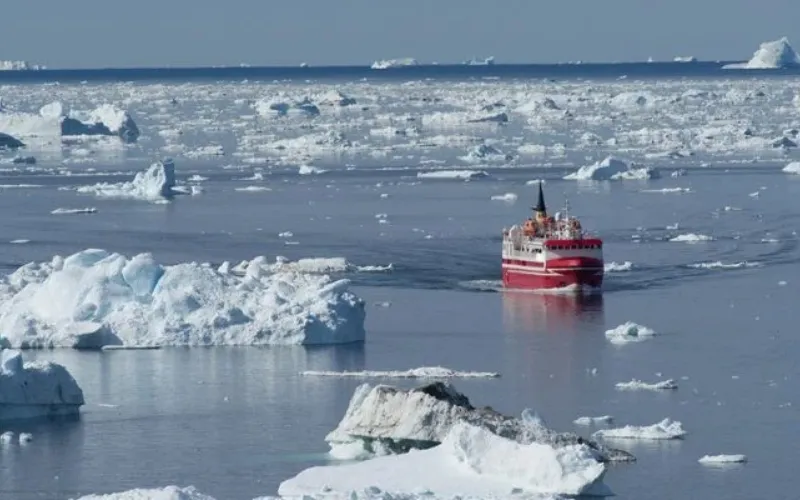
China is turning to a new shipping route through the Arctic as concerns grow over the increasing use of key maritime chokepoints in global trade.
According to The Financial Times, Beijing is preparing to launch a regular container shipping service through the Arctic to avoid major maritime chokepoints.
Chinese container shipping company Sea Legend will start its first regular service through the Arctic. The route is expected to reduce travel time between Asia and Europe while also providing access to markets in Turkey and North Africa.
The service will connect Ningbo, China, with Felixstowe, UK, through the Northern Sea Route along Russia’s Arctic coast. The route, known as the “Ice Silk Road,” is named after the historic trade routes that once connected China and Europe.
One of the main advantages of the route is that it could cut the usual 40-day journey between the two ports by about half. Melting Arctic ice caused by climate change is also making the route more accessible to ships without requiring icebreaker capabilities. Arctic sea ice decreased by 5.8% between 2024 and 2025 during the peak winter period.
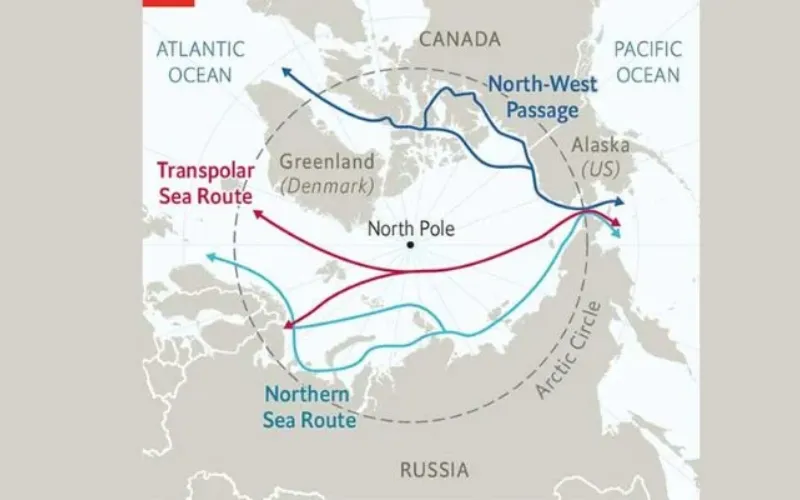
The Arctic route has gained importance as global tensions rise, particularly because of crises affecting the Strait of Hormuz and the Bab el-Mandeb Strait.
Rahul Khanna, global head of marine risk consulting at insurer Allianz, said there has been a clear increase in traffic through the Arctic and the Northern Sea Route. He said shipowners now see the route as an opportunity to save time and money while avoiding geopolitical chokepoints and conflict zones.
The Northern Sea Route is divided into 28 sections, each with different guidelines. Permits to travel through the route are often issued by the Northern Sea Route Administration, which is controlled by Russia’s Rosatom.
After Maersk conducted a trial voyage in 2018, many European shipping companies avoided the route because of worsening relations with Russia and concerns about possible environmental damage to the Arctic ecosystem.
The Arctic Ocean is increasingly becoming a contested area involving the U.S., Russia and China as polar ice continues to melt. Russia views its Arctic territory as an important economic lifeline, while China describes itself as a near-Arctic state and supports the idea of a “Polar Silk Road.”
The United States has opposed what it sees as a Sino-Russian monopoly in the region and has supported freedom of navigation.