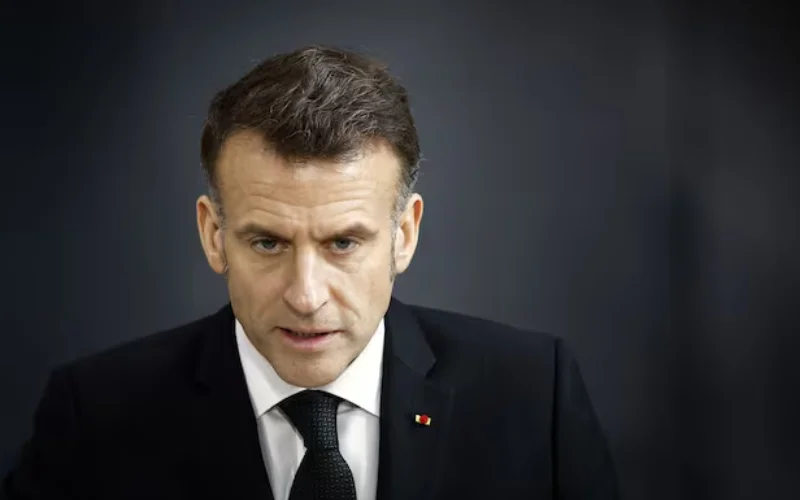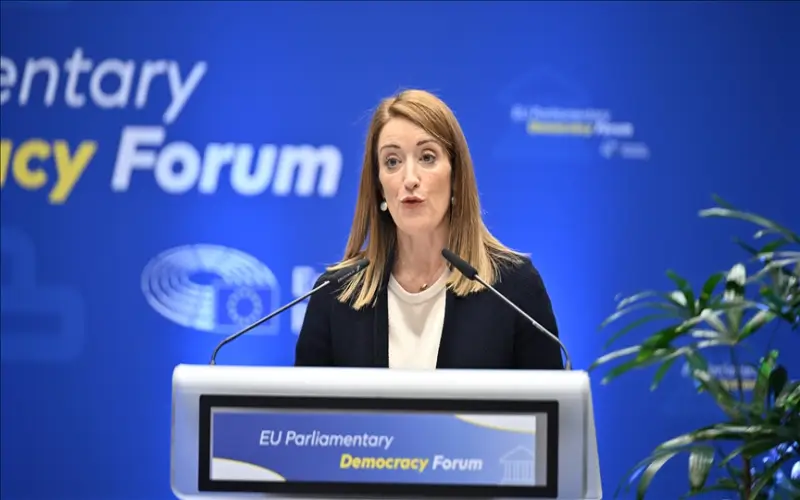
European Parliament President Roberta Metsola announced on Monday that all Iranian diplomats and representatives will be barred from entering European Parliament buildings in response to Iran’s violent crackdown on protesters. The decision comes as governments around the world continue to condemn the deadly actions taken against demonstrators.
In a post on social media platform X, Metsola said the Parliament would not help legitimize a regime that, in her words, has relied on torture, repression, and killings to stay in power. The ban will apply to all European Parliament premises in Brussels, Strasbourg, and Luxembourg and will remain in effect until a future president decides otherwise.
At the same time, the European Union is preparing to push for new sanctions against Iran following the harsh response to protests. Earlier on Monday, a spokesperson for the European Commission confirmed that Brussels is working on stricter sanctions using a special legal framework aimed at individuals and organizations accused of serious human rights abuses.
The spokesperson noted that any new sanctions must be approved unanimously by all EU member states. They also pointed out that the Islamic Revolutionary Guard Corps, which operates under the direct authority of Iran’s supreme leader, is already under EU sanctions but has not been officially listed as a terrorist organization. This issue has been debated for years within the bloc.
It cannot be business as usual.
As the brave people of Iran continue to stand up for their rights and their liberty, today I have taken the decision to ban all diplomatic staff and any other representatives of the Islamic Republic of Iran from all European Parliament premises.…
— Roberta Metsola (@EP_President) January 12, 2026
Under current EU rules, adding an individual or group to the terrorist list requires a ruling from a court in one of the 27 member states. In late 2024, EU officials identified a possible legal basis in a decision by a German court, which ruled that the 2022 attack on a synagogue in Bochum was ordered by an Iranian state agency. Despite this development, discussions stalled and no final decision was made.
Several EU countries, including Germany, France, and the Netherlands, have previously supported designating the IRGC as a terrorist organization. European Commission President Ursula von der Leyen and the European Parliament have also expressed support for the move. The United States and Canada have already officially classified the IRGC as a terrorist group.
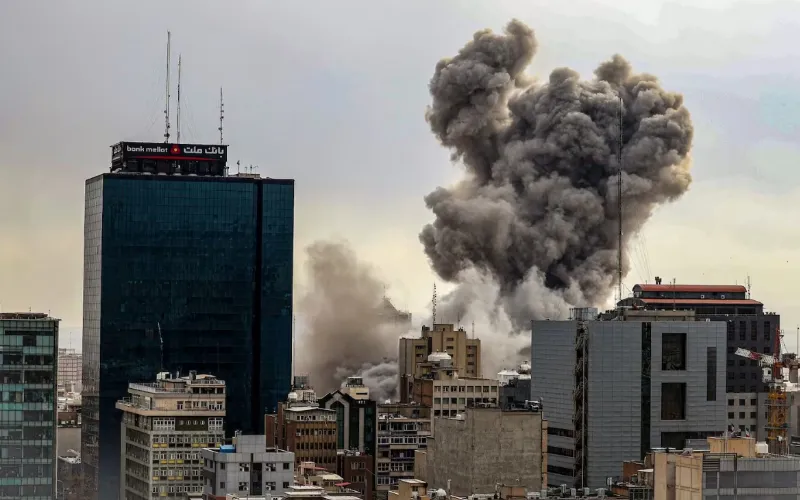
These developments come as the death toll in Iran continues to rise following protests that began on December 28 over the collapse of the Iranian rial. According to the US-based Human Rights Activists News Agency, more than 10,600 people have been arrested and over 500 killed during two weeks of escalating demonstrations. Among those killed, 48 were security personnel and 496 were protesters.