- She held various government positions, including home secretary from 2010 to 2016.
- May’s premiership was halted by Brexit, leading to her resignation in mid-2019.
- She faced criticism from then-US President Donald Trump for “making a mess” of Brexit.
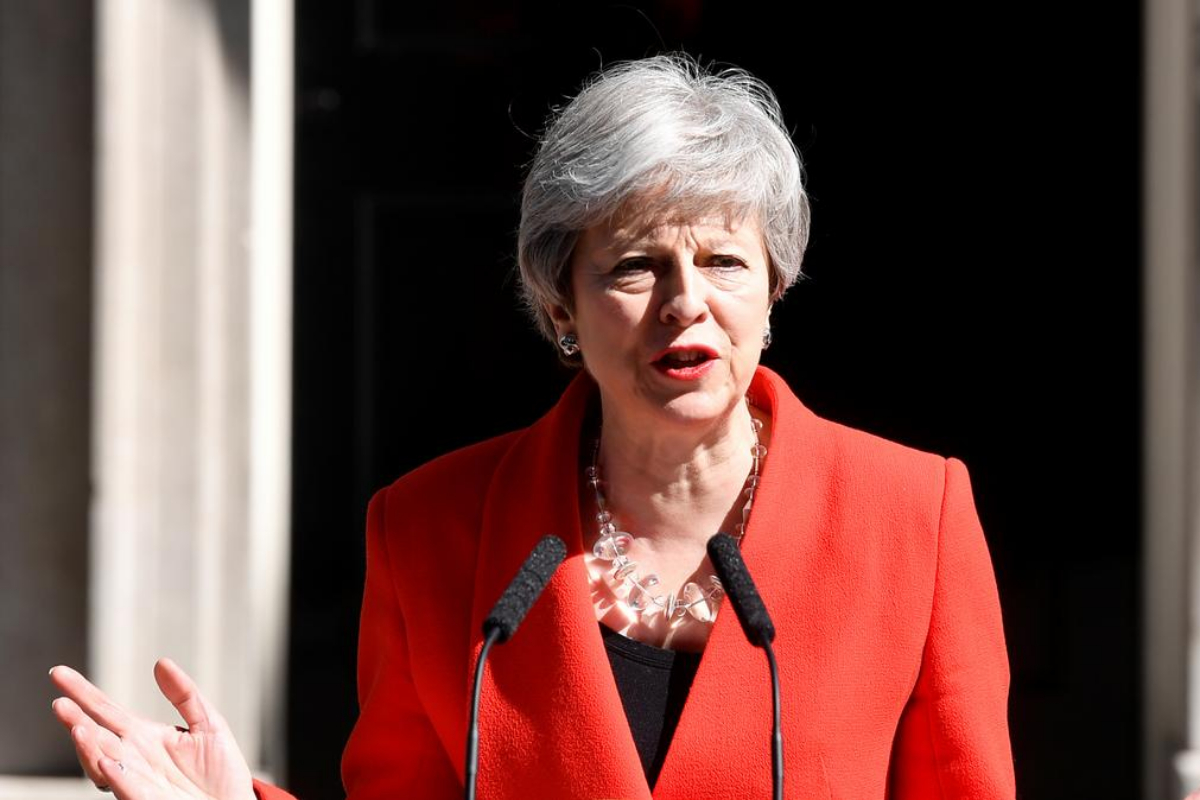
Former British Prime Minister Theresa May announced on Friday that she will quit as a lawmaker when an election is called this year, ending a 27-year parliamentary career that included three years as the nation’s leader during a period roiled by Brexit.
May informed her local newspaper, the Maidenhead Advertiser, that her work on fighting human trafficking and modern slavery was taking up more of her time and that she had realized she would no longer be able to carry out her duties as an MP in the manner she believed was right and that her constituents deserve.
May, aged 67, has been the Member of Parliament for Maidenhead, located west of London, since 1997. She held various government positions, including home secretary from 2010 to 2016, before being chosen as Conservative leader and prime minister in the turbulent aftermath of Britain’s June 2016 decision to leave the European Union. She became Britain’s second female prime minister, following fellow Conservative Margaret Thatcher.
Her premiership was ultimately derailed by Brexit, leading her to resign as party leader and prime minister in mid-2019 due to her repeated failures in getting her divorce deal with the EU approved by a deeply divided Parliament. She also faced strained relations with then-US President Donald Trump, who criticized her for “making a mess” of Brexit.
In contrast to many former prime ministers who tend to leave Parliament swiftly after stepping down from office, May chose to stay on as a backbench legislator while her three Conservative successors – Boris Johnson, Liz Truss, and Rishi Sunak – grappled with the political and economic repercussions of Brexit.
In public, she occasionally expressed criticism towards her more populist successors, particularly Johnson, whose political maneuvers contributed to her downfall. Sunak tweeted that May “epitomizes what it means to be a public servant.”
Sunak is obligated to call an election by the year’s end, but the specific date rests with him. He has indicated that it is likely to take place in the fall. Recent opinion polls indicate that the Conservatives, who have been in power since 2010, are significantly behind the main opposition Labour Party.
Nearly 100 out of the 650 lawmakers in the House of Commons have declared that they will not seek re-election, with 64 being Conservatives – a notably high figure.
[embedpost slug=”who-is-david-cameron-uks-former-pm-and-brexit-architect/”]