Israel announced on Thursday that 37 humanitarian organizations providing aid in Gaza would be banned from operating, as they failed to meet required "security and transparency standards," despite strong international criticism.
These international NGOs, which had been ordered to disclose detailed information about their Palestinian staff, are now mandated to cease their operations by March 1. The United Nations has raised alarms, warning that this decision will exacerbate the already dire humanitarian situation in Gaza.
In a statement, Israel’s Ministry of Diaspora Affairs and Combating Antisemitism stated, “Organizations that fail to meet the required security and transparency standards will have their licenses suspended.”
Several humanitarian groups have voiced concerns, arguing that the new requirements violate international humanitarian law and could compromise their independence.
The Israeli government justifies the new regulation as a measure to prevent groups it accuses of supporting terrorism from operating within Palestinian territories. Prominent organizations impacted by the ban include Doctors Without Borders (MSF), the Norwegian Refugee Council (NRC), World Vision International, and Oxfam.
In MSF's case, Israel alleged that two employees were affiliated with Palestinian militant groups, including Hamas and Islamic Jihad. However, MSF has strongly rejected these accusations, emphasizing that it would never knowingly employ individuals engaged in military activities.
NRC’s spokesperson, Shaina Low, told AFP that the local staff in Gaza are "exhausted," and international staff provide critical protection and support. She stated that submitting staff names was "non-negotiable," adding that alternative solutions proposed by NRC were rejected by Israeli authorities.
The Israeli Ministry said that the central issue was the NGOs' refusal to provide verifiable and complete information about their employees, which is necessary to prevent terrorist operatives from infiltrating humanitarian efforts.
In March, Israel gave NGOs a 10-month deadline to comply with the new regulations, which required full disclosure of personnel, funding sources, and operational structures. The 37 organizations have been informed that their licenses will be revoked starting January 1, 2026, and that they must stop all operations by March 1, 2026. However, they could have their licenses reinstated if they comply with the requirements before the deadline.
Israel’s Minister of Diaspora Affairs and Combating Antisemitism, Amichai Chikli, stated, “The message is clear: humanitarian aid is welcome, but humanitarian frameworks cannot be exploited for terrorism.”
On Thursday, 18 Israel-based left-wing NGOs condemned the decision, arguing that it violates core humanitarian principles such as neutrality, independence, and impartiality. They warned that the “weaponization of bureaucracy” is creating unnecessary barriers to life-saving aid.
Philippe Lazzarini, head of the UN Palestinian refugee agency, called this decision a “dangerous precedent,” stressing that failing to counter attempts to control aid organizations undermines fundamental humanitarian principles globally.
Earlier this week, foreign ministers from 10 countries, including France and the United Kingdom, urged Israel to “guarantee access” to humanitarian aid in Gaza, where the humanitarian crisis remains "catastrophic."
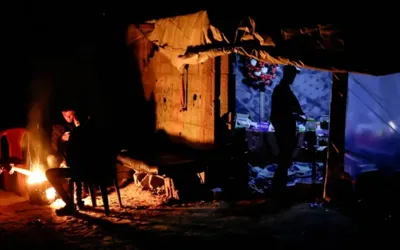
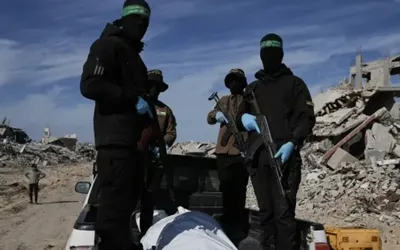
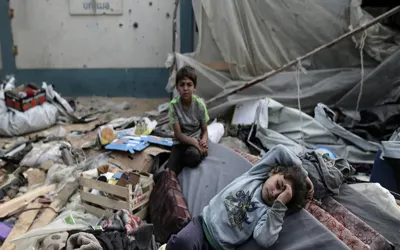
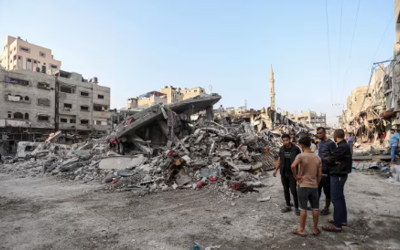
Since October, a fragile ceasefire has been in place following the Israel-Hamas conflict, which resulted in widespread destruction in Gaza. Nearly 80% of Gaza's buildings have been damaged or destroyed, with about 1.5 million residents displaced, according to UN reports.