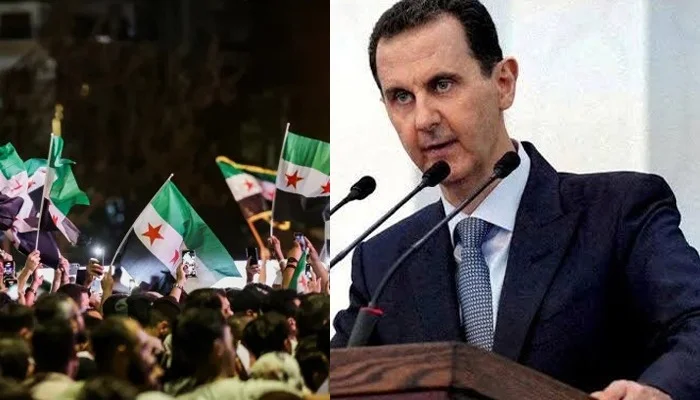
Syria is commemorating the one-year anniversary of the fall of Bashar al-Assad’s longstanding regime, ending nearly 14 years of brutal civil war.
On December 8 last year, Damascus was seized by Islamist rebels, leading to the collapse of the Baath Party’s rule. President Bashar al-Assad fled to Russia, where he was granted asylum, as the country’s control shifted.
In January, a transitional government was established under the leadership of Ahmed al-Sharaa, aiming to manage the country’s recovery amid ongoing challenges. The United Nations has expressed concern over renewed violence, displacement, and increasing polarization, warning of an uncertain future for Syria.
The conflict, which erupted in 2011 following the regime’s violent suppression of protests, has devastated the nation. Over 6 million Syrians have fled abroad, seeking refuge across the Middle East, while more than half a million people have lost their lives. Despite the turmoil, approximately 1.2 million refugees have returned home over the past year, according to UN estimates.
The civil war fractured Syria into various regions controlled by different militias and terrorist groups, notably the Islamic State. The Islamist rebels who overthrew Assad originated from Hay’at Tahrir al-Sham, a designated terrorist organization.
However, many have rebranded themselves as Syria’s transitional government, promising to focus on rebuilding the war-torn country and improving relations with neighboring countries and the West.
The United States has lifted many sanctions, offering the new government a chance to stabilize and foster reconstruction efforts. The coming months will be critical in determining whether Syria can move towards peace and recovery after years of devastating conflict.