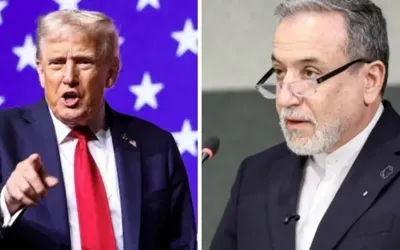
Thailand has carried out airstrikes along its contested border with Cambodia after both nations accused each other of violating a ceasefire agreement brokered by U.S. President Donald Trump.
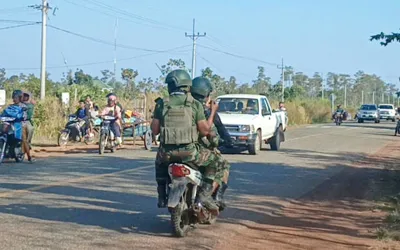
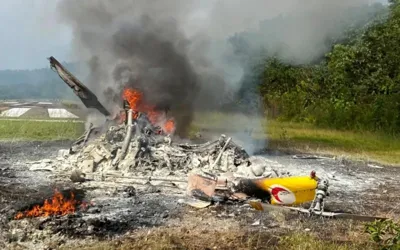
The Thai military stated that the strikes followed clashes on Monday morning, which left one Thai soldier dead and four others injured. Thailand’s air force reported targeting military positions in several areas, claiming Cambodia had deployed heavy weaponry and repositioned troops.
Cambodia’s Ministry of National Defence, however, blamed Thailand for the escalation, asserting that Thai forces attacked Cambodian troops despite days of “provocative actions,” and noted that Cambodia had not retaliated.
This incident occurs just six weeks after the Trump-brokered ceasefire aimed at ending a five-day conflict in July, which left at least 48 people dead and displaced 300,000.
Cambodia’s former Prime Minister Hun Sen, who continues to wield significant influence and is the father of the current leader Hun Manet, called for restraint. He warned that Thailand was attempting to provoke retaliation, and emphasized the need for military commanders to educate troops on the established “red line” for response.
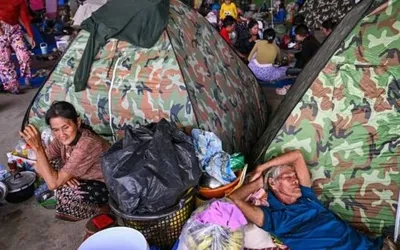
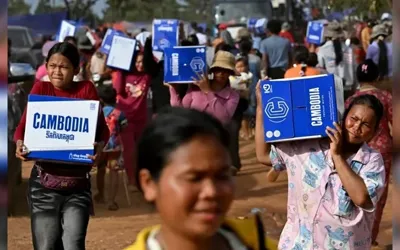
In preparation for potential escalation, Thailand evacuated residents from villages in four border provinces on Sunday, with roughly 35,000 people now in shelters.
Thai army spokesperson Winthai Suvaree confirmed that soldiers had been attacked with supporting fire weapons, resulting in casualties, and that airstrikes were being used to target Cambodian military positions.
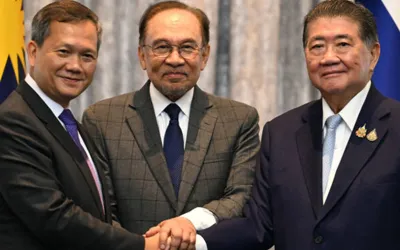
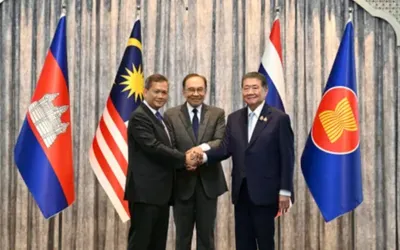
Malaysian Prime Minister Anwar Ibrahim, who helped broker the initial ceasefire, urged both sides to remain calm and maintain communication channels, cautioning that renewed fighting could undo the progress made. As ASEAN chair, Anwar stressed the importance of restraint and the use of established mechanisms to manage tensions.