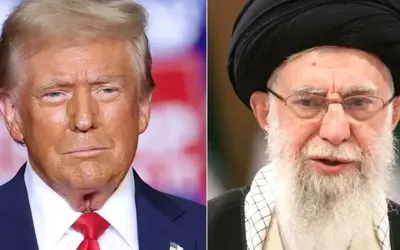
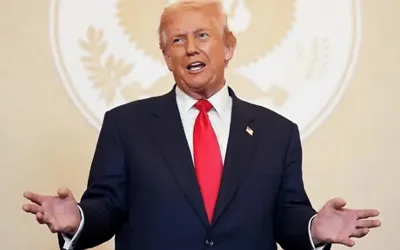
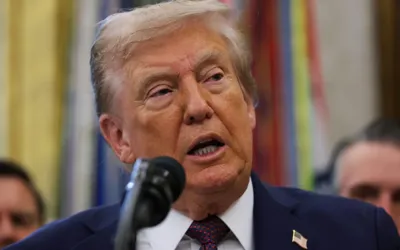
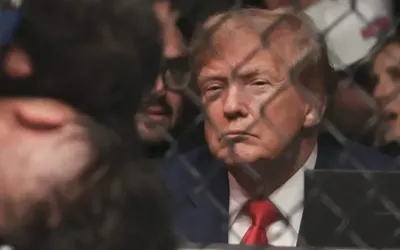
US President Donald Trump said on Friday that the United States held “very good talks” with Iran following indirect negotiations mediated by Oman in the Gulf state of Muscat.
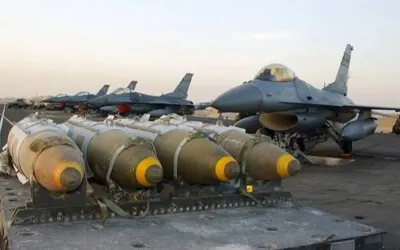
The talks, held without face-to-face meetings between the delegations, marked the first engagement between the two rivals since June 2024, after the United States joined Israel in military strikes on Iranian nuclear facilities. The discussions come amid heightened regional tensions, with a US naval fleet led by an aircraft carrier currently deployed in Middle Eastern waters.
Speaking to reporters aboard Air Force One while traveling to his Florida residence, Mar-a-Lago, Trump said, “We had very good talks with Iran,” adding that further negotiations were expected to take place early next week. He cautioned, however, that failure to reach a deal would result in “very severe” consequences.
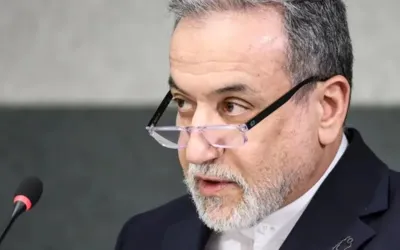
Iran also described the talks positively. Foreign Minister Abbas Araghchi, who led the Iranian delegation, said discussions were conducted in a “very positive atmosphere” and focused entirely on Iran’s nuclear program. Western powers suspect the program is aimed at developing nuclear weapons, an accusation Tehran denies, insisting it is for peaceful purposes.
Araghchi told Iranian state television that both sides exchanged views and agreed to continue negotiations. Speaking to the state news agency IRNA, he expressed hope that the United States would avoid “threats and pressure” to allow diplomacy to move forward.
Several sessions were held in the morning and afternoon, with both delegations travelling to and from the residence of Omani Foreign Minister Badr Albusaidi.
Qatar’s foreign ministry expressed hope the talks would “lead to a comprehensive agreement that serves the interests of both parties and enhances security and stability in the region.”
The White House has said it wants negotiations to curb Iran’s ability to produce a nuclear weapon, an ambition Iran has consistently denied.
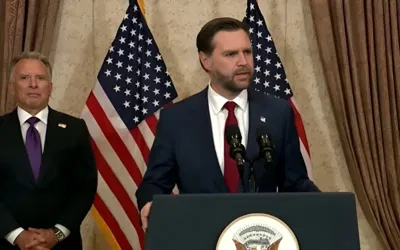
The US delegation was led by Middle East envoy Steve Witkoff and included Jared Kushner, Trump’s son-in-law. Washington has indicated it wants broader issues addressed in the talks, including Iran’s ballistic missile program, support for militant groups, and its handling of domestic protests.
Shortly after the talks concluded, the United States announced new sanctions targeting shipping companies and vessels linked to Iran’s oil exports. It was not immediately clear whether the sanctions were directly related to the Muscat negotiations.
Despite cautious optimism from both sides, the talks unfolded against a backdrop of military warnings from Washington and firm responses from Tehran, underscoring the fragile nature of the renewed diplomatic effort.