WASHINGTON: President Donald Trump ordered renewed airstrikes against Iran on Saturday after the Islamic Revolutionary Guard Corps attacked a commercial ship transiting the Strait of Hormuz, the U.S. military said.
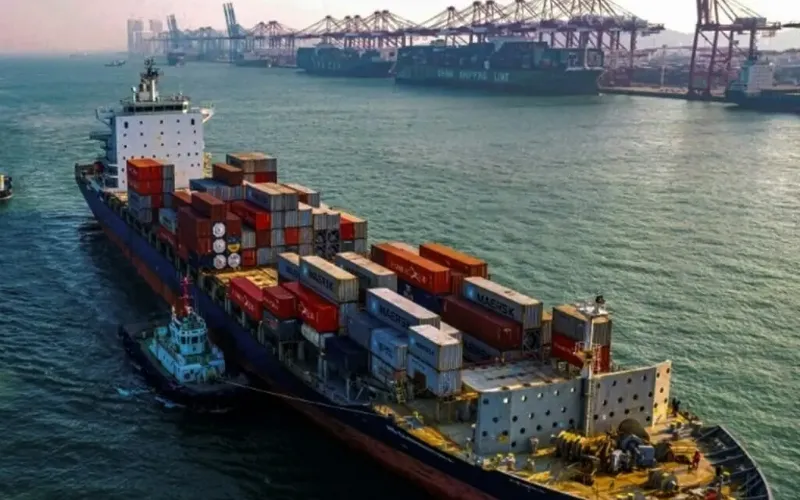
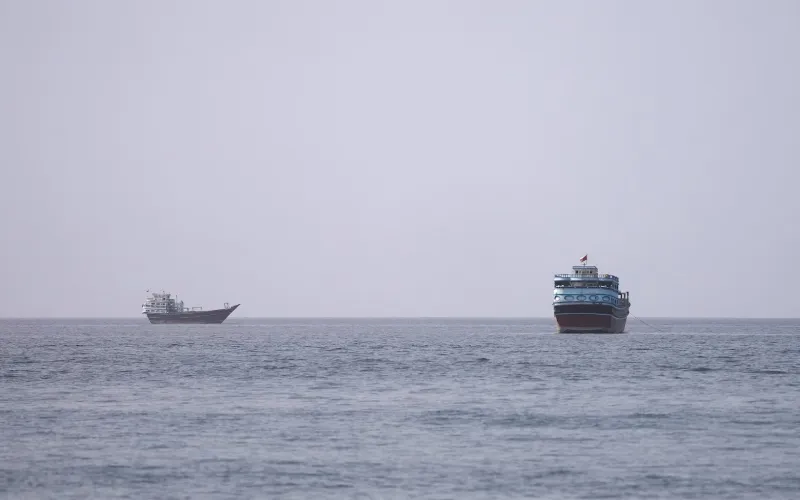
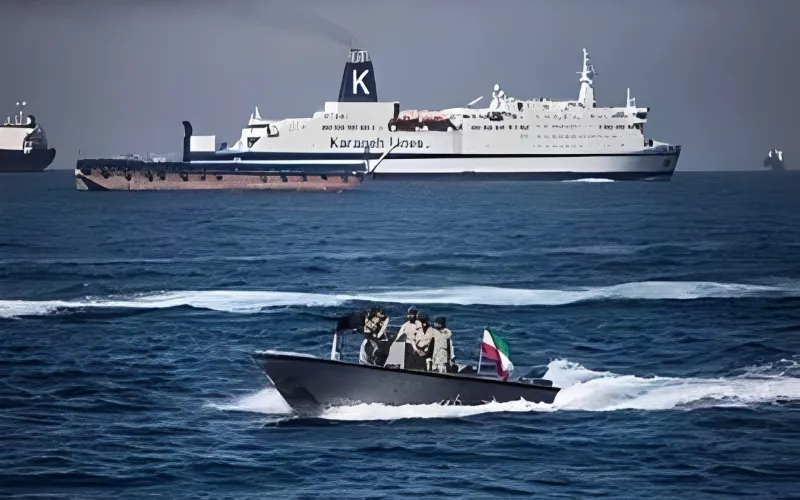
The M/V GFS Galaxy, a container ship sailing under the flag of Cyprus, sustained significant damage after the Iranian attack caused an onboard fire and damaged the vessel’s engine room, U.S. Central Command said in a statement. A civilian crew member is missing, Centcom said.
At 7:15 p.m. ET today, U.S. Central Command forces began launching the third round of strikes this week against Iran after Islamic Revolutionary Guard Corps forces blatantly attacked M/V GFS Galaxy, a Cyprus-flagged container ship transiting the Strait of Hormuz. A civilian crew…
— U.S. Central Command (@CENTCOM) July 11, 2026
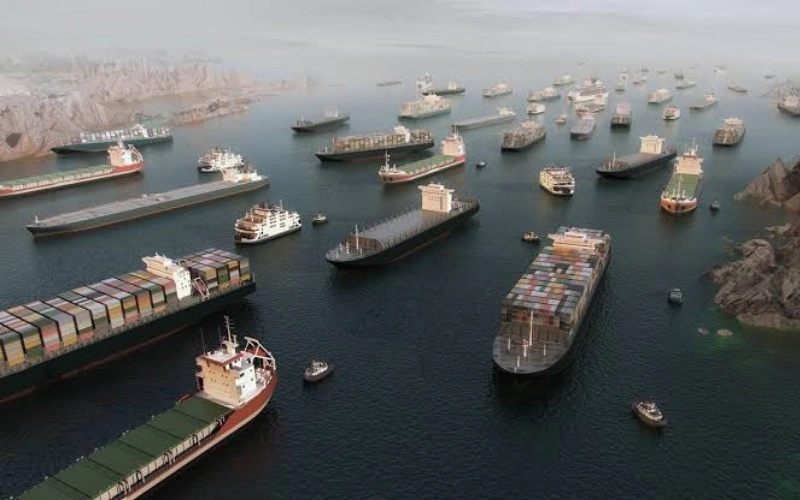
The airstrikes on Saturday are the third time the U.S. has bombed Iran this week in retaliation for attacks on commercial vessels transiting the strait. Iran has attacked ships using a southern route along Oman’s coast protected by the U.S. military, demanding that vessels use a northern route through its territorial waters.
Iran Closes Strait, Vows Revenge
The Revolutionary Guard said it has closed Hormuz to all ship traffic “until further notice,” according to Iranian state news outlet PressTV.
“No vessel will be permitted to transit the strait,” the Guard said in a statement.
Iran struck Gulf neighbors Sunday in response to fresh American attacks on its forces, which the Pentagon said followed an Iranian assault on a merchant ship in the Strait of Hormuz. Sirens and explosions were reported across Qatar, the United Arab Emirates and Bahrain, further undermining an interim deal between Washington and Tehran meant to end the Middle East war.
The Revolutionary Guards said the strait would stay closed until American operations there end. Iranian media reported explosions in Bandar Abbas, Sirik, Jask and on Qeshm Island, along with blasts in Khuzestan province near the Iraqi border. No casualties were immediately reported from those strikes.
The latest strikes came as Iran’s new supreme leader vowed revenge for the killing of his father and predecessor, hours after Trump warned of severe reprisals over any attempt on his own life.
“Vengeance is the will of our nation and must inevitably be carried out,” Mojtaba Khamenei said in a written message, his first since his father’s funeral this week.
Khamenei said Iran had compiled a list of individuals to target and added that the campaign would continue regardless of whether officials remain in place. He has not appeared in public since before the war and was reportedly wounded in the strikes that killed his father.
U.S. Vows to ‘Degrade’ Iranian Capabilities
“In response, the United States is imposing a heavy cost by continuing to degrade Iran’s ability to attack civilian mariners and commercial ships freely transiting the strait,” Centcom said in a social media post.
“Iran made a poor choice. Now they pay,” Defense Secretary Pete Hegseth said in a post on X.
Trump has declared the ceasefire over while leaving room for talks, and mediators are still working to salvage a diplomatic path. The Pentagon said it struck Iran early Sunday after the Revolutionary Guards fired on the Cyprus-registered container ship for sailing an “unauthorized route” through the strait.
Iran’s Guards said they had struck and stopped a vessel that ignored repeated instructions to use an approved shipping corridor, according to state news agency IRNA. Iran described the strike as “warning shots,” but the U.S. military said Tehran had “blatantly attacked” the ship.
Diplomatic Efforts Continue Amid Dispute
The U.S. and Iran signed a memorandum of understanding on June 17 to reopen the strait, but Washington and Tehran are now disputing the terms under which Hormuz was supposed to reopen. Under the agreement, Iran promised to “make arrangements using its best efforts” to ensure safe passage for ships and agreed to not charge a toll for 60 days, but the agreement left the precise transit routes undefined.
“The underlying problem here is that the memorandum of understanding did not reach an understanding with respect to the management of ship traffic through the strait,” said David Goldwyn, who served as the U.S. State Department’s special envoy for international energy affairs under former President Barack Obama. “It essentially punted that issue,” Goldwyn said.
Energy Secretary Chris Wright said last month that the U.S. military would “assure the flow of energy out of the Gulf with or without an agreement with Iran.”
“Iran will not have the ability to close the Strait of Hormuz going forward,” Wright said at a conference in New York City on June 24. “That’s their key leverage and we’re taking that leverage away from them.”
Earlier Saturday, Iran’s Tasnim News Agency reported that Iranian Foreign Minister Abbas Araghchi arrived in Oman for talks with Foreign Minister Sayyid Badr bin Hamad Al Busaidi. Oman has been one of the key mediators in efforts to end the war between the U.S. and Iran.
A U.S. official told MS Now that its technical negotiations team was not involved in the discussions in Oman. A senior Middle East diplomat with direct knowledge of the talks told MS Now that France and the U.K. are studying proposals drafted by Oman that may allow the charging of navigational fees in the strait, so long as the tolls are not compulsory and have the support of the U.N.’s International Maritime Organization, which regulates sea transport.