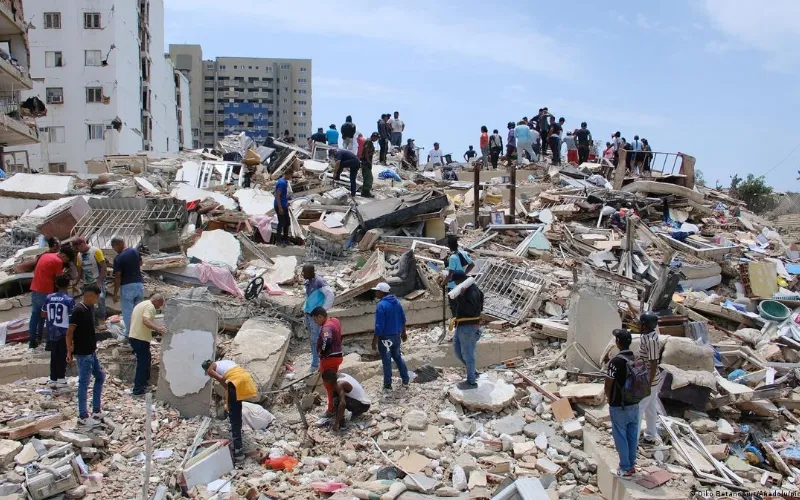
According to the US Geological Survey, a magnitude 7.2 earthquake struck around 160 kilometres west of Caracas on Wednesday evening, followed within seconds by an even more powerful magnitude 7.5 tremor the strongest seismic event recorded in the country since 1900.
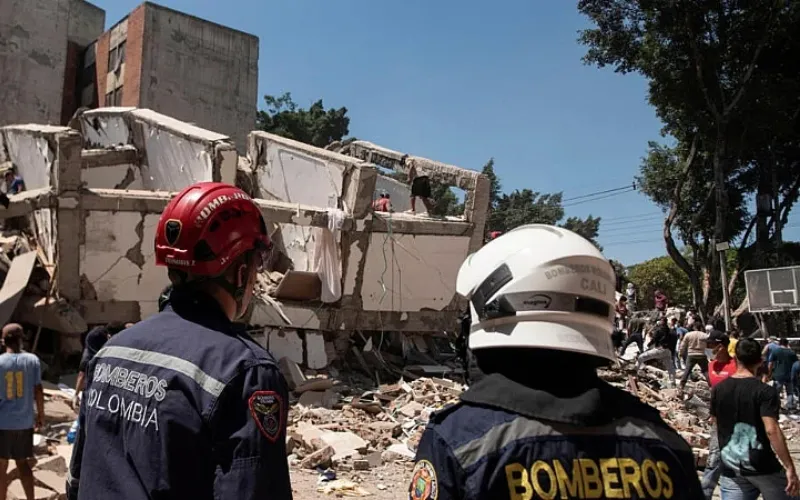
The twin quakes unleashed widespread destruction, triggering collapsing buildings, infrastructure failures, and continuous aftershocks that have severely hampered rescue operations.
Health Minister Carlos Alvarado confirmed that approximately 235 bodies had been received at medical centres, while warning that the toll is expected to rise significantly as search efforts continue in heavily damaged zones. Authorities fear the scale of devastation may still be unfolding.
Jorge Rodríguez, head of Venezuela’s National Assembly, said around 200 people were trapped under debris, while nearly 250 buildings were either destroyed or severely damaged.
Critical infrastructure, including at least eight hospitals, the Venezuelan Red Cross headquarters, and the French embassy, also sustained major damage.
Interior Minister Diosdado Cabello stated that nearly 70,000 families in La Guaira state have been affected, with entire communities devastated.
Read More: Twin earthquakes strike Venezuela, by facing 164 dead and thousand injured
Acting President Delcy Rodríguez described the region as a “catastrophic disaster zone,” as emergency teams struggled to access hard-hit areas amid damaged roads and power outages.
Caracas airport was forced to shut down after suffering structural damage, while eyewitness footage showed panic inside terminals as ceiling panels collapsed during the tremors. Electricity shortages have further worsened conditions across several districts.
Rescue operations are underway, but officials and residents alike report that response efforts have been overwhelmed by the scale of destruction. In multiple areas, civilians have joined rescue teams, digging through rubble with bare hands in desperate attempts to locate survivors.
In La Guaira city, heartbreaking scenes have emerged of families waiting beside collapsed buildings. One resident said her 19-year-old son remains trapped under the ruins of a seven-storey apartment block, with no heavy machinery available to reach him.
Near the epicentre in Morón, Carabobo state, residential complexes were flattened, leaving hundreds of families stranded without water, electricity, or shelter. Many survivors have been forced to sleep in open streets or seek refuge with relatives after losing everything.
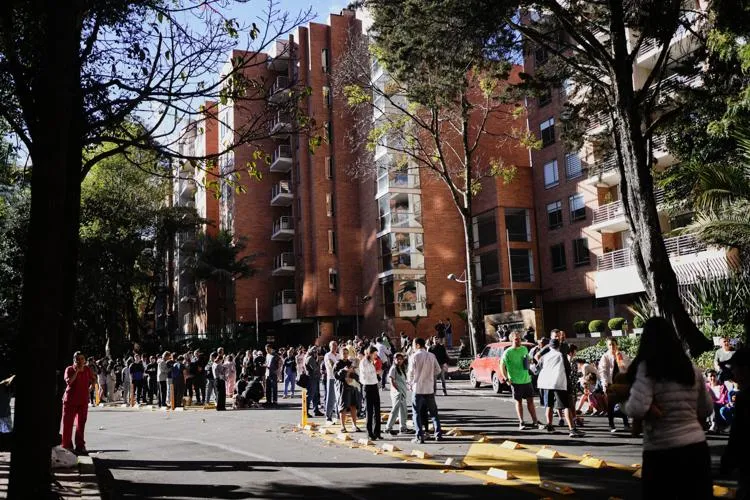
Witnesses described moments of terror as buildings swayed violently during the quake, with residents rushing outdoors as structures crumbled around them. Many were caught off guard during a public holiday when most people were at home.
Preliminary modelling by the USGS suggests the death toll could rise into the thousands, with a significant probability that fatalities may exceed 10,000 as more areas are accessed. An unverified tracking platform has also reported more than 46,000 people missing, though these figures remain unconfirmed.
International aid has begun mobilising rapidly. Multiple countries have pledged assistance, including search and rescue teams, emergency supplies, and logistical support.
The United States said it is ready to assist immediately, while also easing sanctions to facilitate humanitarian operations.
The United Nations has warned that a “massive coordinated global response” will be required, noting that millions in Venezuela were already in need of humanitarian assistance before the disaster struck.
SpaceX’s Starlink has announced free connectivity services in affected regions to help restore communication networks and support emergency coordination.
Despite the widespread devastation, Venezuela’s oil infrastructure appears largely unaffected, with operations continuing in key energy zones.