Catastrophic flooding, driven by extreme weather and an intense monsoon spell, has killed at least 695 people across Pakistan, with more than 100 still missing. The northwestern province of Khyber Pakhtunkhwa has suffered the worst devastation, bearing the brunt of this escalating climate disaster.
Unprecedented Monsoon Spell Triggers Widespread Disaster:
Since late June, an unusually severe monsoon spell—amplified by climate change—has unleashed torrential rains across Pakistan and Pakistan-administered Kashmir. The relentless weather has triggered flash floods, deadly landslides, and large-scale destruction of infrastructure.

In Khyber Pakhtunkhwa, the worst-affected region, entire communities have been swept away by raging rivers and landslides. Roads, homes, and power lines have collapsed under the force of the floodwaters.
Buner District: Epicentre of the Flood Tragedy:

The mountainous district of Buner, located 100km (62 miles) northwest of Islamabad, emerged as the epicentre of the tragedy. In just two days, at least 207 people died following a rare cloudburst on Friday morning that dropped over 150mm (6 inches) of rain within one hour.
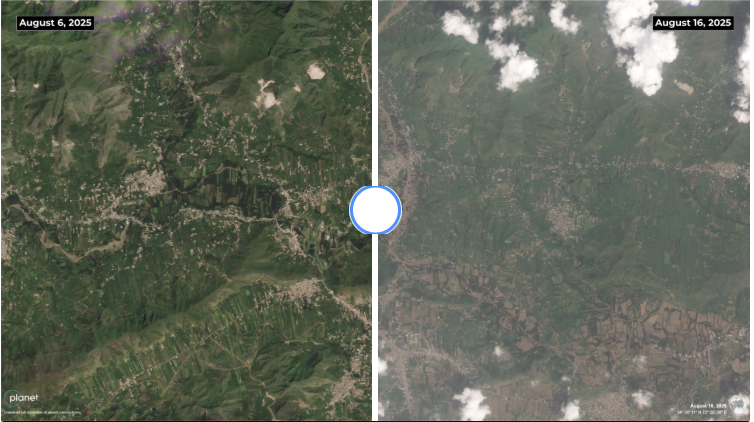
Satellite images reveal the town of Pir Baba and its surrounding villages completely buried under mud, debris, and water. Homes crumbled under the intense pressure of the flash floods and landslides, leaving families trapped and entire communities inaccessible.
Buner’s vulnerability stems from a combination of loose soil, hilly terrain, and rampant deforestation, making it prone to weather-driven disasters during every monsoon spell.
Climate-Intensified Monsoon Weather Patterns:
According to Lieutenant General Inam Haider Malik, chairman of the National Disaster Management Authority (NDMA), this year’s monsoon spell is 50–60% more intense than last year, signaling a dangerous shift in Pakistan’s weather patterns.
From July to mid-August, Pakistan has recorded:

695 deaths and 958 injuries
425 deaths in Khyber Pakhtunkhwa
164 deaths in Punjab
2,707 homes damaged or destroyed
More than half of the casualties were caused by flash floods, with many others perishing as their homes collapsed amid the violent weather.
Early Warning Failures in Flood Zones:
In Buner, residents have condemned the lack of timely warnings. The traditional method of using mosque loudspeakers to issue evacuation alerts was reportedly not used before the flood struck. Authorities acknowledged that while early warning systems exist, the cloudburst’s speed and scale made timely alerts nearly impossible.
Pakistan’s Climate Crisis and Urgent Need for Preparedness:
Despite contributing minimally to global emissions, Pakistan remains among the top 10 most climate-vulnerable countries. Erratic weather patterns and intensifying monsoon spells continue to wreak havoc year after year. The ongoing crisis underlines the urgent need for:
Resilient infrastructure
Climate adaptation strategies
Stronger flood warning systems
As the monsoon spell extends into September, authorities warn of continued weather threats, including additional flooding and landslides. Local administrations have been urged to remain alert and to prepare communities for possible evacuations.
What is Cloudburst?

A cloudburst is an extreme weather event in which over 100mm of rain falls within an hour across a small area—typically 20 to 30 square kilometers. The Buner event saw over 150mm of rain in less than 60 minutes, alongside thunder, lightning, and hail. These rapid downpours can instantly overpower natural and man-made drainage, causing lethal flooding and landslides.