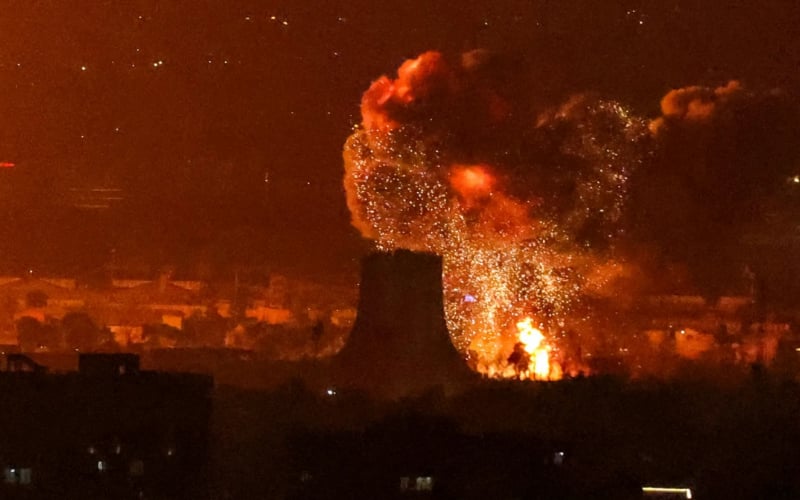
In a joint military operation on Friday night, the United States and Jordan launched a series of airstrikes against over 70 ISIS targets in Syria, marking a significant escalation in the ongoing fight against the militant group.
The operation, dubbed “Operation Falcon Eye” by U.S. Central Command (CENTCOM), targeted ISIS infrastructure, weapons caches, and militant positions across central Syria. The strikes come in response to recent attacks on U.S. and Syrian forces in the strategic city of Palmyra.
Operation Overview
U.S. forces deployed an array of air and ground assets, including F-15 fighter jets, A-10 ground attack planes, Apache helicopters, and artillery, while Jordanian forces contributed with F-16 fighter jets and HIMARS rocket artillery. Over 100 precision-guided munitions were used in the operation, aiming to deal a significant blow to ISIS’ operational capabilities.
CENTCOM emphasized the close coordination with regional allies, noting that the operation reflects the continued commitment to counterterrorism efforts in the region. Admiral Brad Cooper, CENTCOM commander, highlighted the importance of the mission in disrupting ISIS’ ability to plan and execute terrorist attacks.
Context of the Strikes
The airstrikes are part of a larger campaign against ISIS in Syria and Iraq, where U.S. and allied forces have conducted more than 80 missions over the past six months, resulting in the killing or capture of 23 ISIS militants. Despite ISIS losing most of its territorial control in recent years, analysts say the group continues to pose a threat through its clandestine operations and networks.
President Donald Trump, commenting on the operation, affirmed that the U.S. will not relent in its pursuit of ISIS, promising continued strikes against the group’s hardened positions in Syria.
“We are delivering severe retribution,” Trump stated, stressing that U.S. forces would maintain pressure on ISIS to prevent the group from launching new attacks against the United States or its allies.
Rising Tensions in Syria
The strikes coincide with rising tensions in Syria, where both U.S. and allied forces have been on heightened alert following a series of ISIS attacks targeting military personnel in Palmyra. Analysts say the operation underscores the strategic importance of the region, with the U.S. continuing to focus on counterterrorism efforts despite shifting priorities in other global hotspots.
This joint operation marks a further demonstration of U.S.-Jordanian cooperation in the fight against terrorism, as both nations seek to curtail ISIS’ resurgence and strengthen regional stability.
Impact on the Ground
On the ground, the strikes have caused significant damage to ISIS infrastructure, according to CENTCOM reports, though it remains unclear how many militants were killed in the operation. As of now, no civilian casualties have been reported, but the situation in Syria remains fluid, with local forces continuing to monitor the aftermath of the operation.
While the broader geopolitical landscape in Syria remains complex, these airstrikes signal a continued U.S. commitment to countering ISIS in the region, even as the group’s territorial caliphate has collapsed.
The operation marks one of the largest U.S.-Jordanian collaborative military efforts in Syria in recent months, underscoring the significance of international alliances in the fight against terrorism.