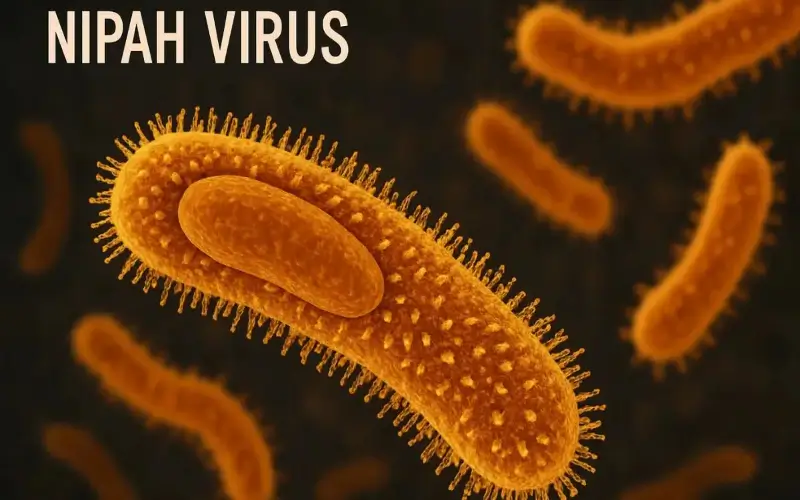
Cases of the Nipah virus, considered more dangerous than coronavirus, have been reported in India’s state of West Bengal, prompting authorities to issue a health alert.
According to Indian media reports, health officials have described the Nipah virus as more deadly than Covid-19. A senior health department official said that out of two nurses infected with the virus, one has shown signs of improvement, while the condition of the other remains critical.
The medical staff contracted the virus while on duty in the Purba Bardhaman district. However, authorities say the exact source of the outbreak and the mode of transmission are still unclear.
The West Bengal government has issued detailed guidelines focusing on early detection of the virus, strict isolation of patients, and treatment under established protocols to prevent further spread.
What is the Nipah virus?
The Nipah virus is a zoonotic virus, meaning it spreads from animals to humans. It was first identified during an outbreak in Malaysia in 1998–99. Fruit bats are the primary carriers of the virus. Humans can become infected through direct contact with infected bats, contaminated food, infected animals, or close contact with infected individuals.
Why is the Nipah virus dangerous?
Nipah virus infection has a very high fatality rate, which has ranged from 40 to 75 percent in past outbreaks. Symptoms usually begin with fever, headache, muscle pain, and vomiting, and can quickly progress to severe respiratory distress and brain inflammation.
Currently, there is no approved antiviral treatment or vaccine for the Nipah virus. Treatment mainly involves supportive care to manage symptoms, maintain vital body functions, and prevent complications.