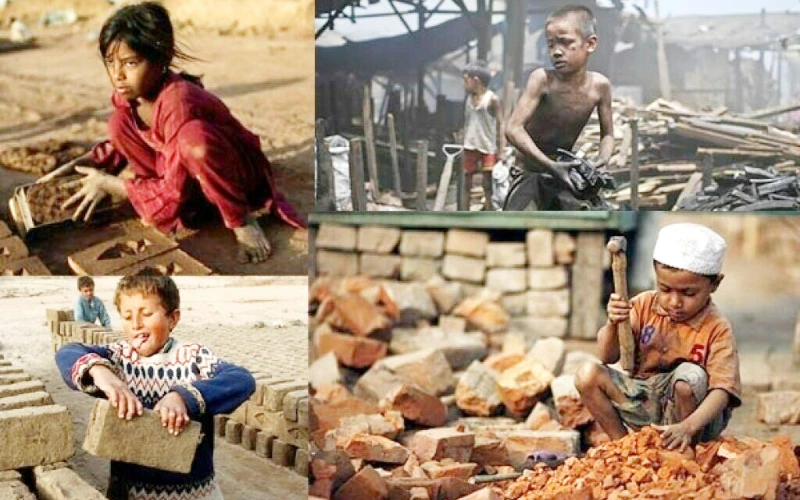
According to the ILO, child labor is “work that is mentally, physically, socially or morally dangerous and harmful to children and/or interferes with their schooling by depriving them of the opportunity to attend school, obliging them to leave school prematurely, or requiring them to attempt to combine school attendance with excessively long and heavy work.
Children in Pakistan are vulnerable to many forms of violence (physical, psychological, sexual) and exploitation, including economic exploitation and child trafficking. Nearly 30 years after Pakistan ratified the Convention on the Rights of the Child (CRC), no public coordinated child protection case management and referral system, as aligned with international standards, has been established, said UNICEF.
A report from 2026, estimates that 8.6 million children from ages 5-17 are currently working in Pakistan, and data collected in 2023 establishes that at least 2.2 million are under 14.
Many of these children work long hours in difficult and sometimes hazardous conditions to help support their families.
The main reasons behind child labor are poverty, inadequate access to quality education, and a lack of economic opportunities for families.
Statistics show most of the working children are employed in the agricultural sector, while others work in manufacturing, services, workshops, and domestic jobs.
Child labor not only deprives children of their basic rights but also limits their future opportunities and contributes to the cycle of poverty.
High-Profile Abuse Incidents
Child domestic laborers in Pakistan frequently grieve extreme physical abuse, psychological trauma, and hazardous working conditions. Several notable cases are below:
Zohra Shah (2020, Rawalpindi): An eight-year-old domestic worker was beaten to death by her employers after she accidentally released their pet parrots. Her brutal murder sparked a massive outcry on social media and catalyzed legislative changes, leading the government to classify domestic work as a hazardous occupation and outlaw child domestic labor.
Tayyaba Torture Case (2016, Islamabad): A 10-year-old child maid working at the home of a serving civil judge was found with severe burn marks and a horrifically bruised face. The leaked photographs went viral, driving widespread media condemnation of judicial and elite complicity in abusing underage domestic laborers.
Shazia Masih (2010, Lahore): A 12-year-old Christian housemaid working for the family of a prominent lawyer died in the hospital after enduring severe physical and sexual torture. The fatal abuse brought the intersection of minority rights, bonded labor, and child protection under intense international and local scrutiny.
Addressing this issue requires stronger enforcement of labor laws, improved access to education, poverty reduction measures, and greater public awareness. Ensuring that children receive education and protection is essential for Pakistan’s social and economic development.
A recent judgment by the Lahore High Court sheds light on the pervasive issue of child labor in Pakistan and underscores the urgent need for comprehensive action to eradicate this scourge.
Pakistan Law About Child Labor
According to Pakistan law, Article 11 of the Constitution of Pakistan prohibits children under 14 from hazardous employment, while Article 25-A mandates the compulsory education of children aged 5 to 16. The Employment of Children Act of 1991 added more restrictions to the employment of children in hazardous sectors and set out additional rights for workers aged 14 to 18. In the 2010s, provinces introduced their own laws limiting child labor and punishing its usage, such as the ICT Child Protection Act of 2018, Punjab Restriction of Employment of Children Act 2016 and Sindh Prohibition of Employment of Children Act, 2017.
World Day Against Child Labor
World Day against Child labor is observed every year on 12 June to raise awareness and encourage action against child labor. The 2026 observance follows the Sixth Global Conference on the Elimination of Child Labor in Marrakech, where participants renewed their commitment to ending the practice.
This year’s campaign, under the slogan “Red Card to Child Labor: Fair Play for Children, Decent Work for Adults,” calls for better education, stronger social protection, decent jobs for adults, and stricter enforcement of laws.
Despite progress, child labor remains a global issue, with 138 million children affected worldwide, including nearly 54 million working in hazardous conditions.