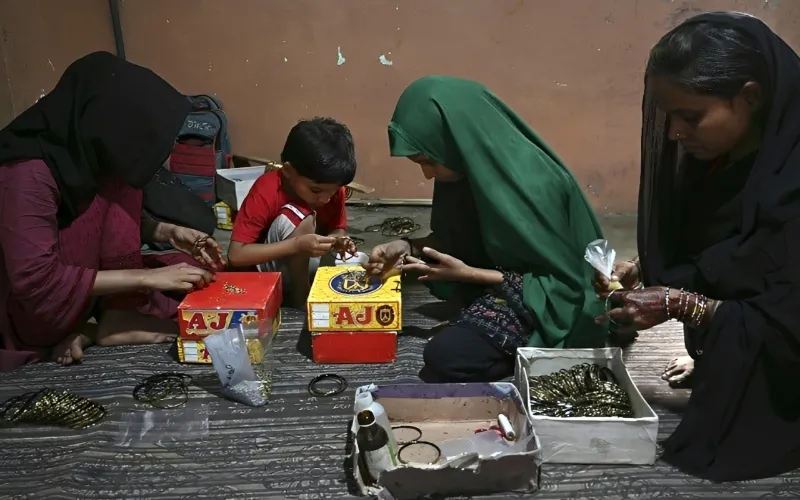
HYDERABAD: Glass bangles factories in Hyderabad are facing serious production losses due to the unavailability and high cost of liquefied petroleum gas (LPG).
While natural gas supply also remains restricted. The crisis has hit Sindh traditional glass bangle industry, which depends heavily on both factories and home based workers for production.
Many small factories now struggle to continue operations because LPG is either not available or is sold at very high prices. The shortage became worse after a crackdown on illegal LPG sales following a tragic incident in Paretabad on May 30, 2024, where a gas related fire killed 27 people, including 19 children. After this, authorities tightened controls, which reduced supply in the market.
Industry representatives say production has slowed sharply as essential finishing work cannot be completed at home. The Glass Bangle Manufacturers Association President Saleem Khan said factories are often forced to shut down because unfinished bangles pile up without further processing. He added that factories also receive little to no gas during peak working hours, which increases delays.
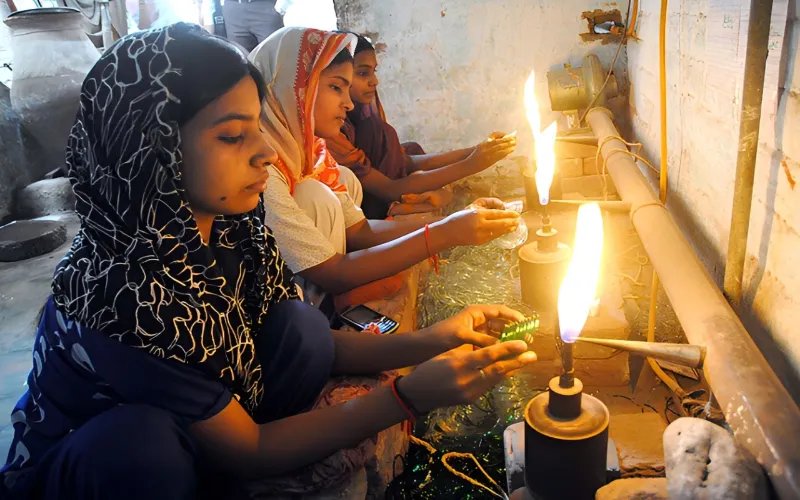
Moreover, most of the final work in the bangle making process is done by women working from home. These workers perform tasks like joining and smoothing glass bangles using flame based methods. However, they now struggle because LPG is either unavailable.
Workers and union leaders say this situation has reduced their earnings and increased production costs. Jamila Abdul Latif said home based workers cannot continue their work regularly due to rising LPG prices and supply shortages.
Until two decades ago, these women were paid Rs7 per bunch or a ‘tora’ of unfinished bangles. Now they are paid Rs27 per bunch, according to their union leader, Jamila Abdul Latif further said about the women workers.
She added that many workers are forced to buy gas from distant areas, which makes the work less profitable.
Overall, stakeholders warn that unless gas supply issues are resolved, both factory owners and thousands of home based workers may continue to face heavy income losses.