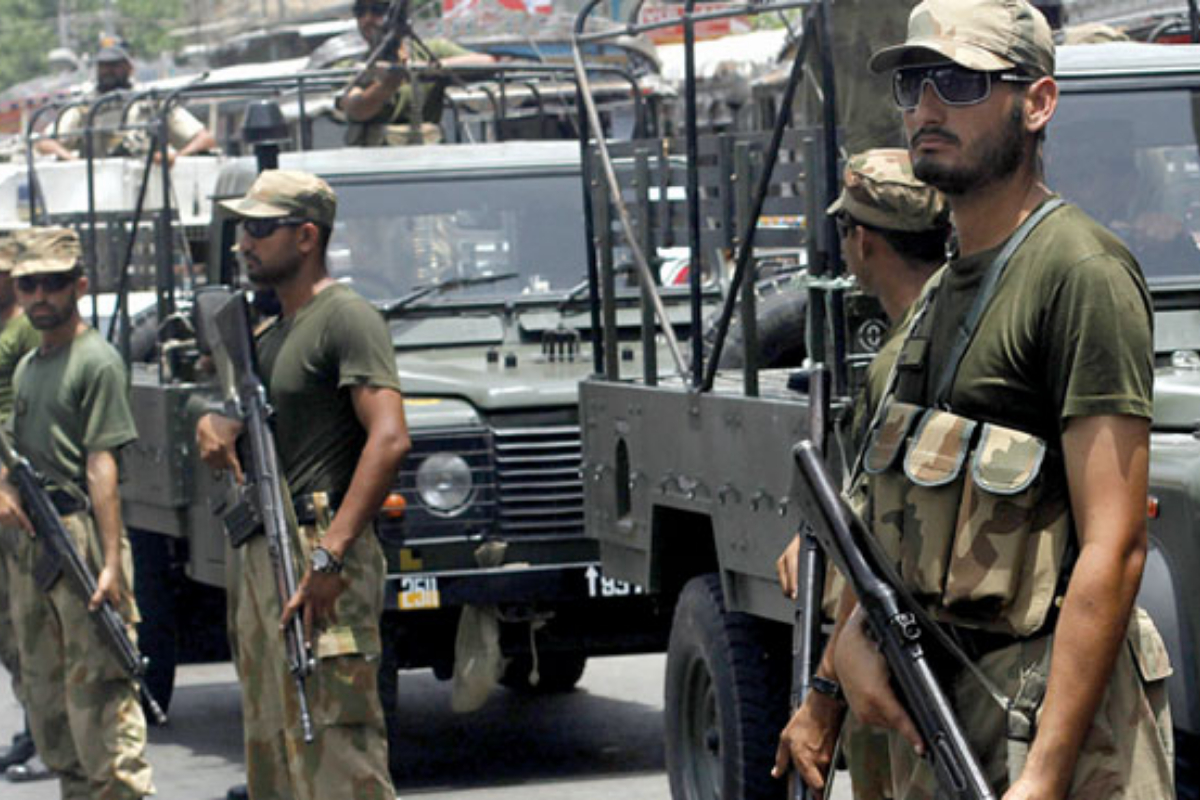
KARACHI: A terrorist attack on a Pakistan Rangers camp that resulted in martyrdom of three security personnel and injuries to several others has reignited the debate over how international media outlets, particularly the BBC, report on terrorism in Pakistan.
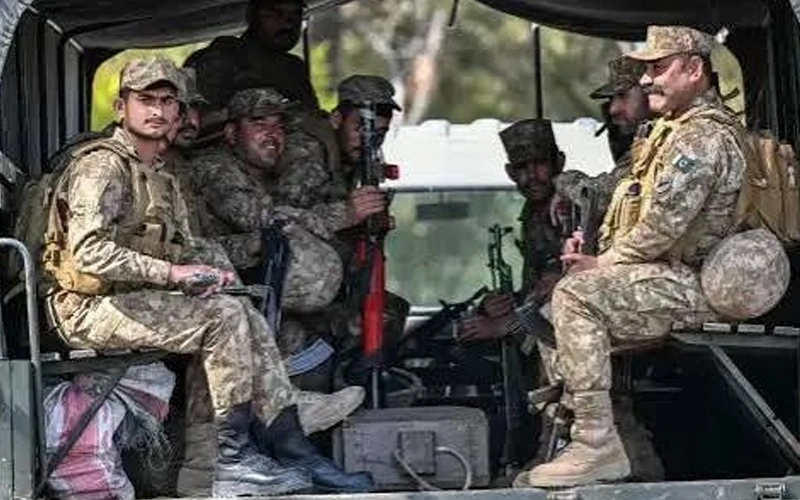
The June 28 assault, claimed by the proscribed Jamaat-ul-Ahrar group, was repelled by security forces who killed three attackers and captured one Afghan national, according to the military’s media wing, Inter-Services Public Relations (ISPR).
But a critical examination of the BBC Urdu report on the attack reveals what analysts describe as a troubling pattern of editorial bias that extends beyond the facts of the incident.
The report repeatedly uses terms like “militants” and “separatists” to describe Jamaat-ul-Ahrar, a group designated as a terrorist organization by Pakistan and the United States. Critics argue this terminology stands in stark contrast to coverage of attacks in Western cities.
“When militants attack New York or London, they are called terrorists without hesitation,” said a former Pakistani intelligence official who spoke on condition of anonymity.
“But when Pakistani security forces and civilians are targeted, the same groups are described with softer language. This double standard has real consequences.”
Beyond word choice, the BBC report devotes extensive detail to the internal politics, leadership disputes and organizational structure of Jamaat-ul-Ahrar, according to media analysts who reviewed the coverage.
The report, which runs more than 800 words, quotes a former Taliban spokesman extensively and describes disagreements within the group’s leadership in Afghanistan. It names specific commanders and explains the ideological motivations behind the group’s formation.
What the report does not fully emphasize, critics say, is the human cost of the terrorism Pakistan has endured.
Pakistan has lost more than 94,000 civilians and security personnel to terrorism since 2001, according to government figures. The country continues to conduct counterterrorism operations along its border with Afghanistan.
Responsible journalism requires balance. But balance does not mean putting the killer and the victim on the same level.
The BBC report mentions the casualties but does not include extensive interviews with families of victims or detailed accounts of the security forces’ sacrifices. Security personnel who responded to the attack are quoted briefly, but the report’s structure emphasizes the attackers’ narrative and background.
The focus on the internal dynamics of a banned group creates the impression that the terrorists’ story is more important than the lives they took.
This approach, critics argue, runs counter to guidance from media regulators who caution broadcasters against content that may inadvertently glorify attackers or amplify their messages.
The BBC defended its coverage, stating that its reporting follows editorial guidelines and aims to provide comprehensive context.
But for many Pakistanis, the coverage of the attack and terrorism in general has become a litmus test for whether international media treat Pakistani lives with the same seriousness as they do Western lives.
The Karachi attack was not an isolated incident. In October 2024, two Chinese nationals were killed in a suicide blast near Karachi’s airport. In February 2023, armed militants attacked the Karachi Police Office, killing at least four people. The Pakistani Taliban claimed responsibility for that assault.
In each case, Pakistani security forces responded, and casualties included both security personnel and civilians.
Pakistani soldiers and police officers face these threats every day. They know their families are at risk. They continue to serve. That sacrifice should be the center of the story, not the group that sent the attackers.
Media analysts say the solution lies in adherence to consistent standards.
When reporting on terrorism, the terms must reflect the gravity of the act. Terrorists should be called terrorists. Their victims should be given a voice. And the sacrifices of those who protect the public should be acknowledged without reservation.