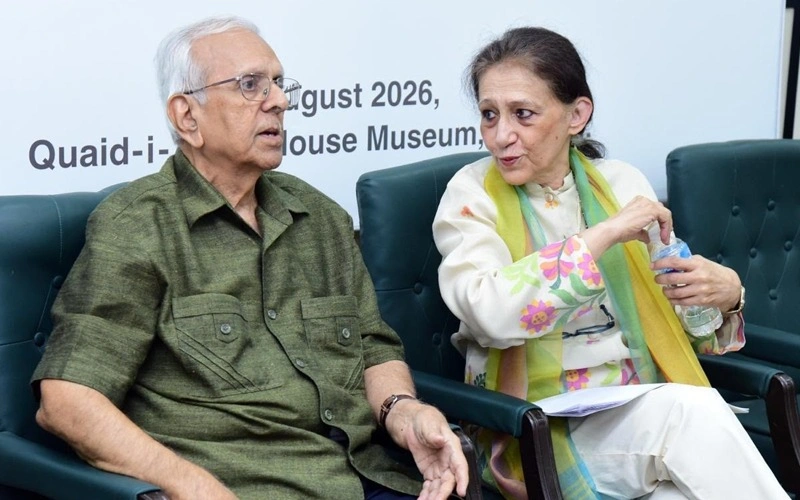
KARACHI: Renowned historian Dr Ayesha Jalal highlighted the political vision of Quaid-e-Azam Muhammad Ali Jinnah and discussed its relevance to present-day regional challenges during a special talk hosted by the Quaid-e-Azam House Museum’s Institute of Nation Building at Flagstaff House in Karachi.
The event brought together scholars, media professionals, diplomats, and members of civil society for a discussion on history, diplomacy, and Pakistan’s role in the changing global landscape.
Dr Jalal, the Mary Richardson Professor of History at Tufts University and a leading scholar on Jinnah and South Asian politics, delivered the keynote address, examining Jinnah’s stance on Palestine and drawing connections between historical developments and current regional crises.
Her talk focused on the importance of understanding history in shaping contemporary political perspectives, followed by an engaging question-and-answer session where participants discussed diplomacy, regional affairs, and Pakistan’s future role.
The programme began with a welcome address by Liaquat Merchant, Senior Vice Chairman of the Quaid-e-Azam House Museum. Ameena Saiyid, Member of the Board of Governors, introduced the keynote speaker, while Ikram Sehgal, Vice Chairman of QAHM, delivered the closing remarks and vote of thanks.
The event was attended by prominent figures from academia, diplomacy, and the arts, including Shahnaz Wazir Ali, Nasreen Jalil, Ghazi and Sadeqa Salahuddin, General Moinuddin Haider, Noorjehan and Aqeel Bilgrami, and Sirajuddin Aziz.
Dr Ayesha Jalal is the author of several influential works on South Asian history and politics, including “The Sole Spokesman: Jinnah, the Muslim League and the Demand for Pakistan,” “The Struggle for Pakistan: A Muslim Homeland and Global Politics,” “The State of Martial Rule,” “Partisans of Allah: Jihad in South Asia,” and “Muslim Enlightened Thought in South Asia.”
She also co-authored “Modern South Asia” with Sugata Bose and edited “The Oxford Companion to Pakistani History.”
The Quaid-e-Azam House Museum continues to promote discussions on Pakistan’s history, national identity, and its place in the international community through academic and cultural initiatives.