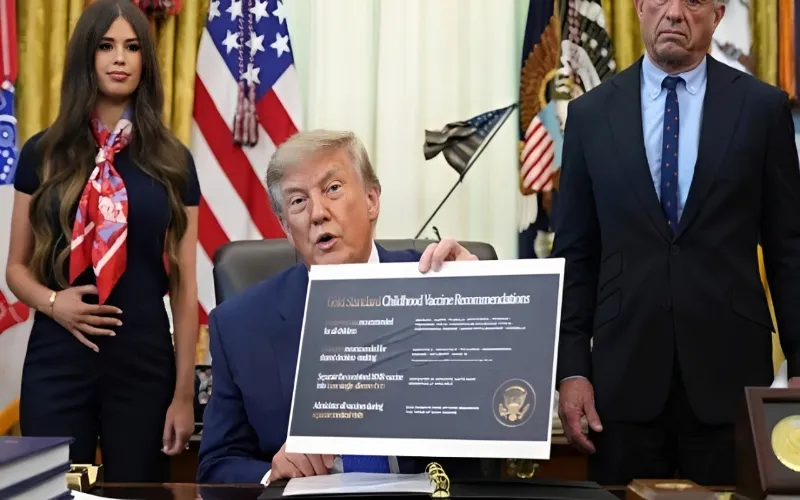
WASHINGTON: US President Donald Trump signed an executive order on Monday, Aug. 10, to change childhood vaccination policies, limiting federal support to vaccines protecting against 11 diseases and directing health officials to review current immunisation recommendations.
Trump said the changes would provide children with what he called “gold standard” protection and bring the United States closer to countries that recommend fewer childhood vaccines.
The executive order also called for reviewing the current schedule of the measles, mumps and rubella (MMR) vaccine. It recommended separating the combined MMR vaccine into three individual shots that would be given during different medical appointments.
The decision follows efforts by Health Secretary Robert F. Kennedy Jr., who has previously supported reducing the number of vaccines included in the recommended childhood vaccination schedule.
However, scientists and medical experts have repeatedly rejected claims promoted by Kennedy that suggest a connection between vaccines and autism. Major health organisations have said extensive research has found no evidence supporting such a link.
The latest changes have drawn criticism from medical groups and vaccine manufacturers. The American Academy of Pediatrics (AAP) said it was reviewing the order and considering its next steps.
“We are evaluating our next steps,” said Richard Hughes IV, lead counsel for the organisation.
Vaccine manufacturer Merck also criticised the move, saying there is no scientific evidence showing that separating the MMR vaccine provides additional benefits. The company warned that the change could lead to delays or missed vaccinations among children.
Republican Sen. Bill Cassidy, a physician, also opposed Trump’s decision and questioned whether such changes would improve child health protection.
“I’m a doctor, this executive order is wrong. The president does not have the expertise to make these changes,” Cassidy said.
Cassidy warned that dividing combination vaccines could increase the number of medical visits and shots children need while providing the same level of protection.
Health experts have expressed concerns that changes to vaccination policies could affect childhood immunisation rates and increase challenges in preventing diseases.
The Trump administration’s decision has intensified the ongoing debate over vaccine policies, public health recommendations and the role of federal agencies in setting immunisation guidelines.
The executive order now moves to health officials, who will be responsible for reviewing existing recommendations and determining possible changes to federal vaccine support programs.