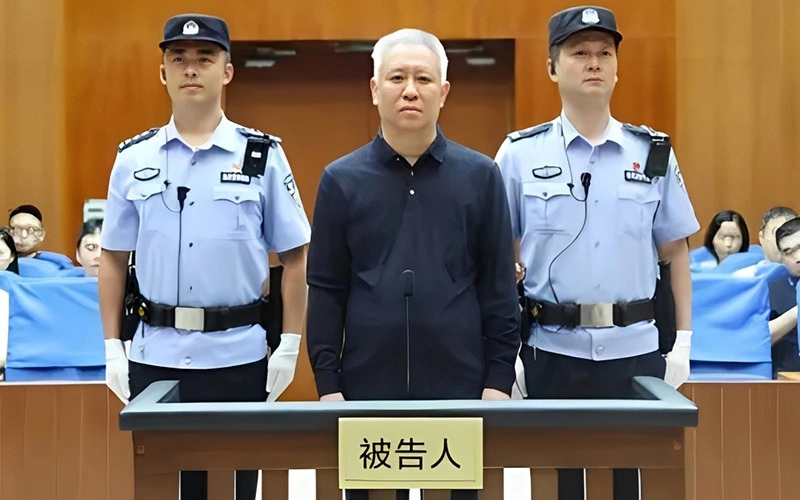
HONG KONG: The man behind one of China’s biggest property empires will spend the rest of his life behind bars after a court sentenced Evergrande founder Hui Ka Yan to life in prison Thursday.
The ruling marks a major reckoning over the debt-fueled collapse that shook the country’s property sector.
The Shenzhen Intermediate People’s Court also ordered Hui’s personal property confiscated after he pleaded guilty in April to eight charges, including misuse of funds, fundraising fraud and illegally taking public deposits.
The court fined Evergrande Group 8.82 billion yuan ($1.31 billion) and its main subsidiary, Hengda Real Estate, 7 billion yuan. Five other senior executives were also sentenced to prison terms ranging from six to 18 years and fined.
Evergrande, once China’s largest property developer, defaulted in 2021 after accumulating about $300 billion in liabilities. Its collapse left creditors and investors facing major losses and deepened a property downturn that continues to weigh on China’s economy.
Read More: Evergrande Wealth Unit Staff Detained by Chinese Police
Hui, also known as Xu Jiayin, founded Evergrande in 1996 after growing up in rural China. He built the company into a property powerhouse through rapid expansion financed heavily with borrowed money.
At its peak, Evergrande’s stock market value exceeded $50 billion, making Hui one of China’s most prominent business figures.
The company’s aggressive expansion became increasingly difficult to sustain as property demand weakened and authorities tightened restrictions on excessive borrowing by developers.
Evergrande’s 2021 default became a defining moment in China’s prolonged property crisis, affecting creditors, investors, banks, suppliers and homebuyers.
Hui’s sentence represents a major legal consequence of the company’s collapse, although it does not resolve the broader financial losses stemming from Evergrande’s debt crisis.
The case has become a prominent example of the risks created by excessive borrowing in China’s property sector, which authorities continue to struggle to stabilize.