KARACHI: Pakistan is among the hardest-hit nations as the Strait of Hormuz crisis has choked off vital liquefied natural gas supplies, exposing the country’s heavy reliance on a single source for its energy needs, according to the 2026 Global Gas Report released by the International Gas Union, Snam and Rystad Energy.
The report, published in August, found that Pakistan experienced sharp declines in LNG imports during the crisis, with the country recording a drop of between 0.8 billion and 1.5 billion cubic meters in April 2026 compared with the same month the previous year. The disruption has forced Pakistan to join other price-sensitive markets across emerging Asia and Africa in reducing natural gas consumption and resorting to fuel switching to manage the shortfall.
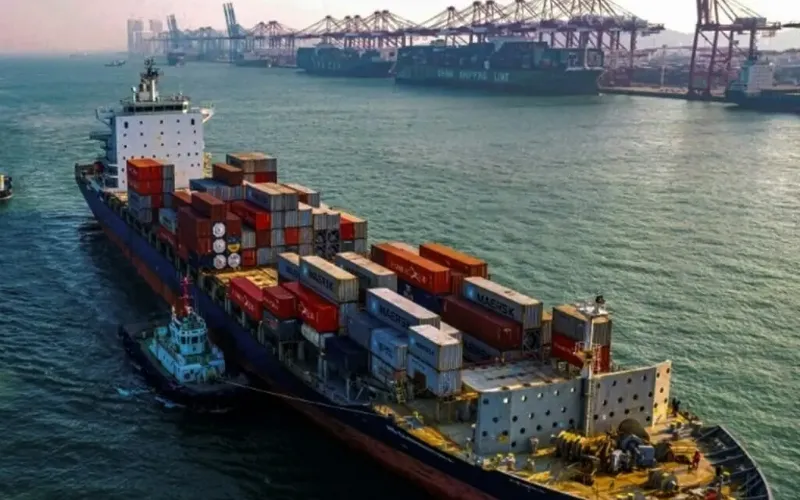
Global natural gas demand is projected to decline for the first time since 2022 as the Strait of Hormuz crisis has constrained approximately 20% of global LNG supply, equivalent to about 3% of total natural gas supply, the report stated. The conflict, which broke out in late February, has driven a sharp contraction in global trade, with LNG trade falling 4% between January and June 2026 compared with the same period last year.
Asian importers have borne the heaviest impact, accounting for more than 80% of the import shortfall, according to the report. Price-sensitive markets such as Pakistan, along with other emerging Asian economies and African nations, have been most acutely affected since the crisis began.
The report documented how Qatar bore the brunt of the disruption, with LNG exports falling 91% in May 2026 compared with May 2025. QatarEnergy declared force majeure on supplies through mid-June following Iranian missile strikes on the Ras Laffan liquefaction plant, which damaged LNG Trains 4 and 6 and forced a broader halt to upstream natural gas production.
The crisis has also demonstrated the global natural gas system’s greater resilience compared with the 2022 energy crisis, according to the report. The benchmark Dutch TTF price surged to above US$20 per million British thermal units in March 2026 but remained well below the 2022 peak above US$70 per million British thermal units. This resilience was underpinned by diversified supply, additional liquefaction capacity and storage availability that provided markets with greater optionality.
The United States played a significant role in the supply response, with US LNG accounting for more than half of European imports in 2025 and US terminals initially pushing to 119% utilization in March to maximize exported volumes in the high-price environment. The report noted that Golden Pass LNG exported its first cargo on April 23, 2026, providing a means for QatarEnergy to meet some of its contractual commitments despite the disruption.
Looking ahead, the report warned that resilience depends on continued investment. If demand follows recent historical trends, global gas demand could reach around 4,516 to 4,575 billion cubic meters by 2030, compared with about 3,670 billion cubic meters from sanctioned supply, implying a potential supply gap of 846 to 905 billion cubic meters.
The report emphasized that the 2022-2026 geopolitical shocks have not weakened the global gas system but have accelerated diversification across supply, infrastructure and procurement. However, it noted that as future LNG supply growth becomes more concentrated around the United States, a new concentration risk could emerge for importing countries.
The outlook for Pakistan and other affected nations remains highly contingent on the progress of resolution to the Strait of Hormuz crisis. A memorandum of understanding was signed between the United States and Iran on June 17, but vessel transit through the Strait remains contested, with shipping activity stalling temporarily following a strike on the Al Rekayyat LNG carrier on July 7. The report assumes a gradual reopening of the Strait from the third quarter of 2026 with a normalization of flows by the fourth quarter, though it noted that a materially slower or faster restart would shift the extent of the decline.