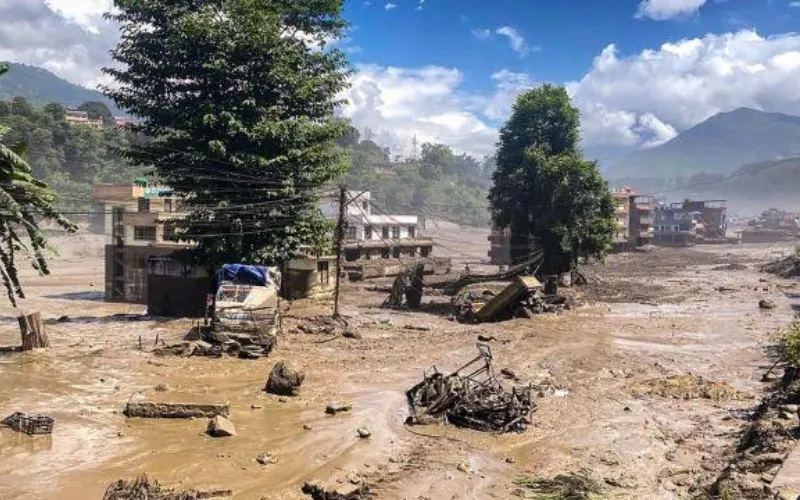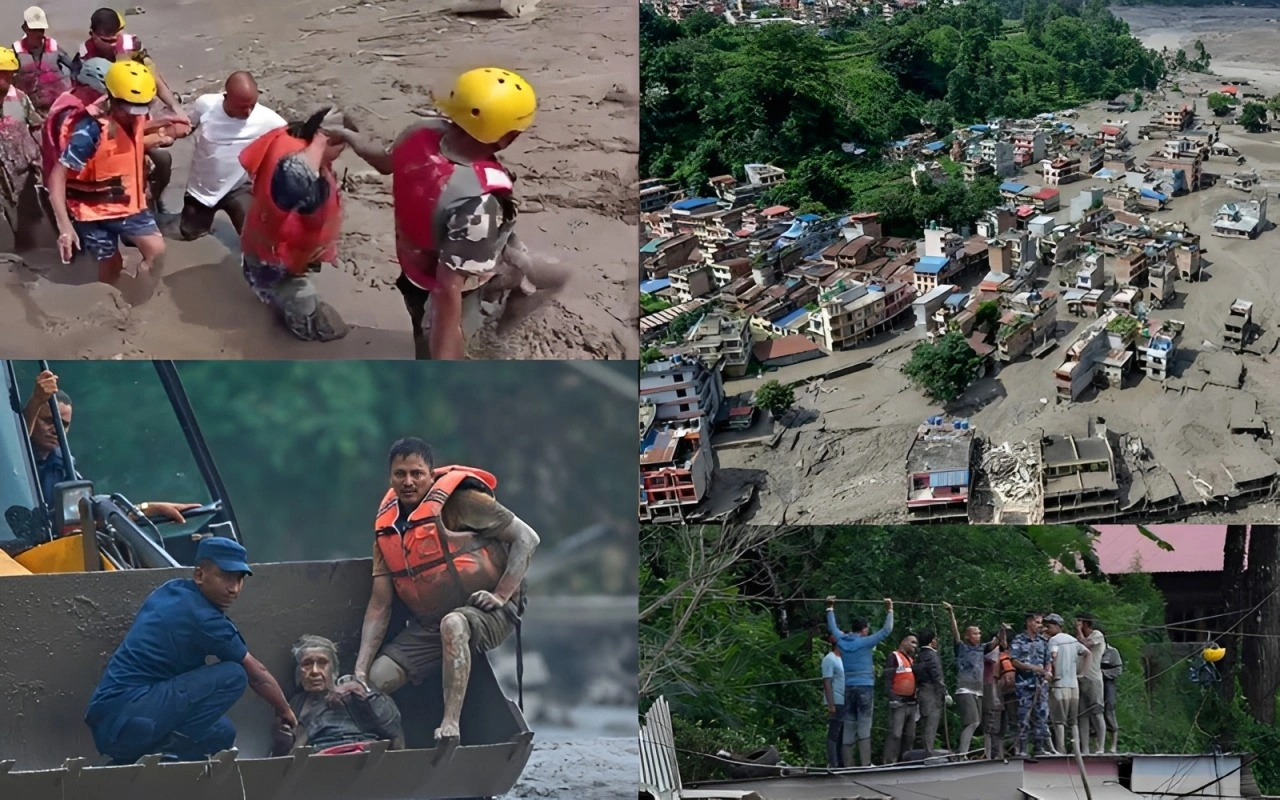
TRISHULI, Nepal: A wall of mud, rock and water tore through communities along the Nepal-China border, killing at least 165 people and leaving nearly 1,400 reported missing as rescuers raced Thursday to reach survivors across the devastated Himalayan region.
The disaster swept through Nepal’s Rasuwa district and Tibet’s Gyirong county, destroying homes, roads, bridges and power infrastructure and leaving hundreds of tourists and pilgrims unaccounted for.
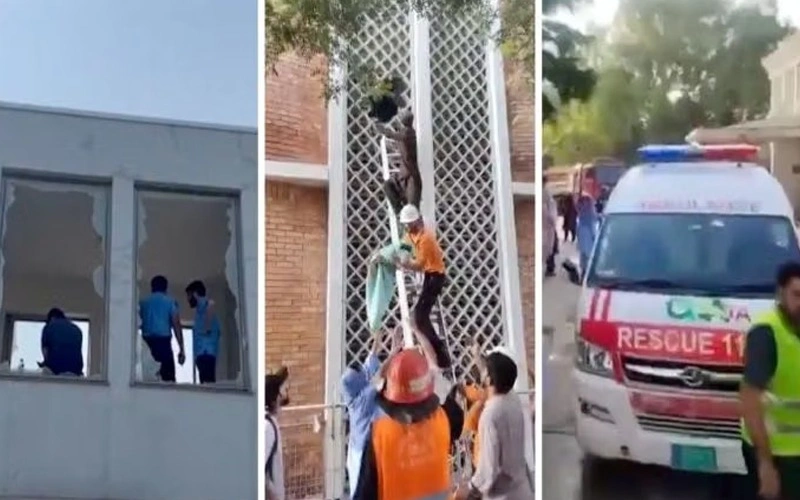
Rescue teams deployed helicopters, drones, soldiers and police to search riverbanks and isolated communities, while aircraft delivered food, tents and other emergency supplies to areas cut off by the destruction. More than 5,000 Nepal Army and police personnel were mobilized as high water, damaged roads and thick mud complicated the rescue effort.
Nepalese authorities reported 826 people missing, including 579 tourists. Chinese authorities separately reported 558 people missing in Tibet’s Gyirong county, including 260 foreign nationals. Because the two figures may overlap, officials have not established the number of unique people missing across the border.
Among the missing tourists in Nepal were 177 Indians, 63 Americans, 34 Australians, 33 Britons and 25 Canadians. Many were traveling toward Kailash Mansarovar, a high-altitude site in Tibet revered by Hindus and Buddhists.
The disaster struck along a major route linking Nepal with Tibet, sending torrents of water, mud and debris through villages and settlements. Homes, vehicles, bridges, roads and power infrastructure were destroyed, while communications were disrupted in several areas.
“It was a huge gush of mud coming straight toward us,” said Keshav Prasad Baral, a 68-year-old survivor being treated at a hospital.
“As it got closer, it kept rising higher and higher,” Baral said. He tried to pull his wife toward safety after floodwaters entered their home, but she was swept away. A helicopter rescued him several hours later, but his wife remained missing.
Read More: Nepal-China border hit by deadly floods, 95 bodies recovered
Another survivor said he escaped by clinging to a mango tree as he watched the house where he had been working disappear beneath the floodwaters.
Rescue efforts expand
Helicopters were dropping tents, food and other emergency supplies in the hardest-hit districts as rescue workers searched for survivors and recovered bodies. India has provided emergency assistance, while international agencies have begun mobilizing additional support.
Families of missing people gathered outside a Nepal Army training center being used as a base for helicopter operations. Damaged roads, power failures and disrupted communications have made it difficult for authorities to reach some areas and determine the full scale of the disaster.
“There is devastation everywhere we look,” said Tula Bahadur BK, a health worker in Rasuwa. “The settlements next to the river have been completely swept away. Five of my own relatives are missing.”
Glacial collapse triggered floods
Officials initially considered whether an earthquake had triggered the disaster. The U.S. Geological Survey later determined that the seismic energy detected during the event was generated by a collapse of glacial rock and ice, followed by a debris flow.
Satellite imagery showed an ice-and-rock landslide entering the Lhende River and sending a powerful surge of debris downstream toward Nepal. Chinese authorities were also monitoring a potentially dangerous lake upstream in Gyirong, raising concerns about further flooding and complicating rescue operations.
The disaster has highlighted the risks facing communities and infrastructure in the Himalayan region, where steep terrain, unstable slopes and glacial formations can make rescue operations particularly difficult.
International aid arrives
The United States said it would send a disaster response adviser and provide $500,000 in assistance. The United Nations also said its teams and partners were preparing to provide supplies and personnel to affected communities.
Canada described the disaster as “absolutely devastating,” while Australia said it was closely monitoring the situation as its citizens remained among those reported missing.
As helicopters continued flying over the devastated valleys Thursday, rescuers faced a race against time to locate survivors beneath thick layers of mud while families waited for news of relatives still unaccounted for.