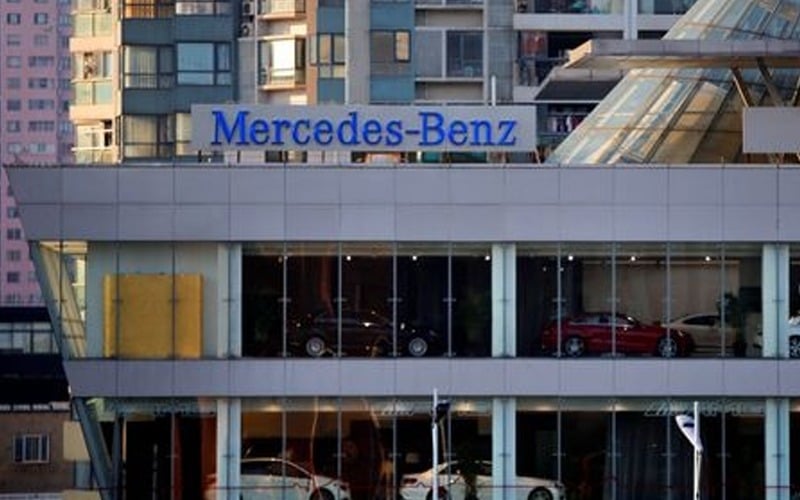
BERLIN: Mercedes-Benz is facing a tougher road ahead as the German luxury automaker cuts its 2026 outlook, citing weakening sales in China, rising tariff costs, and growing competition from local electric vehicle makers despite posting higher second-quarter profits.
The company now expects both vehicle sales and group revenue to come in slightly below last year’s levels, revising its earlier forecast of stagnation. Mercedes also announced plans to accelerate cost-cutting efforts, with a particular focus on its German plants.
Mercedes reported a 22% increase in second-quarter operating profit to €1.5 billion ($1.7 billion), supported by reduced administrative and research and development spending. However, the result fell short of the €1.6 billion estimate from Visible Alpha consensus.
The company’s shares were indicated 2.5% higher in pre-market trading following the results.
The quarterly performance was boosted by strong earnings from its financial services and vans divisions, along with a €131 million gain from the planned sale of its leasing subsidiary Athlon.
“Despite a demanding market environment, we remained on track in the second quarter while continuing to advance our product launch programme,” CEO Ola Källenius said, adding that further cost-cutting measures would continue in the second half of the year.
Mercedes maintained its profit margin forecast for its core cars business, although CFO Harald Wilhelm said the margin is expected to remain at the lower end of the 3% to 5% range this year.
The company’s biggest challenge remains China, the world’s largest auto market, where second-quarter vehicle sales dropped 30% as Chinese manufacturers gained ground with cheaper, technology-focused electric vehicles.
Mercedes said it has reduced fixed costs by 25% since 2019 and has intensified global productivity measures, particularly at its German locations, to improve efficiency amid a challenging market environment.