Headline CPI falls back to single digits for the first time in months, though economists warn the drop owes more to statistical base effects than to any real cooling of price pressures.
Pakistan’s inflation rate slowed to 9.2% year-on-year in July 2026, according to fresh data released by the Pakistan Bureau of Statistics (PBS) on Monday, a notable pullback from June’s 11.1%, though still more than double the 4.1% recorded in July of last year.
On a month-on-month basis, however, prices actually accelerated, rising 1.2% in July after a 0.3% decline in June. That compares with a much sharper 2.9% monthly jump in July 2025.
Urban vs. Rural: A Mixed Picture
The national figure masks a split between city and countryside:
- Urban inflation came in at 8.7% YoY, down from 11.2% in June (but up from 4.4% a year earlier). Month-on-month, urban prices rose 1.2%.
- Rural inflation ran hotter at 9.9% YoY, though this too eased from June’s 10.9% (compared with 3.5% in July 2025). Rural prices also rose 1.2% on the month, after being flat in June.
What the Government Is Saying
The State Bank of Pakistan’s Monetary Policy Committee met for the first time in fiscal year 2026-27 and opted to hold the policy rate steady at 11.5%, even as the Finance Division flagged concerns about persistent inflation, projecting CPI in the 9-10% range for July amid rising global oil prices.
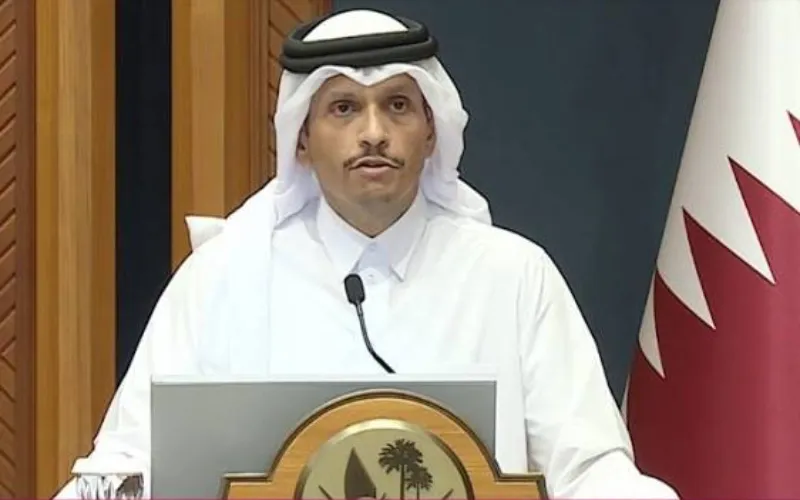
SBP Governor Jameel Ahmad struck a more optimistic tone in a press briefing, saying he expects inflation to keep easing and to land within the central bank’s target band by the end of the fiscal year.
“We expect the CPI to clock in at the upper band of our target range of 5-7% by the end of this fiscal year,” Ahmad said.
That optimism comes against a difficult backdrop: foreign direct investment plunged 33.9% in FY2024-25, dropping from $2.48 billion to $1.64 billion.
Analysts: A Base Effect, Not a Breakthrough
Ahead of the release, private-sector economists had already penciled in a return to single-digit inflation, but most were quick to caution that the improvement is largely arithmetic rather than a genuine easing of price pressure.
- Ismail Iqbal Securities projected 9.3% YoY, explicitly framing the drop as base-driven.
- JS Global forecast 9.1% YoY.
Both estimates landed close to the actual print, reinforcing the view that July’s relief reflects last year’s high comparison base rather than a real slowdown in underlying prices.
The Bigger Structural Story
A July 2026 report from the Policy Research Institute of Market Economy (PRIME), a private think tank, paints a more sobering picture of where Pakistan’s economy stands.
Recovery losing steam. PRIME describes Pakistan’s nascent macroeconomic recovery, which began in 2025, as stalling amid geopolitical pressures, with inflation having briefly climbed back into double digits (10.9-11.7%) between April and June, while the Sensitive Price Indicator hit 12.8% in June.
Revenue squeezed by debt and defence. According to the report, debt servicing and defence spending together consume 94% of net federal revenue, leaving just 6% for health, education, infrastructure, social protection, and every other core government function.
An uneven tax burden. PRIME highlights a stark disparity rooted in Pakistan’s informal economy, where 80.8% of the labour force works, per the 2025 Labour Force Survey.
A salaried worker earning Rs5 million a year faces an effective tax rate of 33.29% via source deduction, while a shopkeeper earning the same amount pays just 0.5% under presumptive and fixed tax schemes. The FY2026-27 budget, the report notes, did little to narrow that gap.
A “Repressed” economic freedom score. Using the Heritage Foundation’s Index of Economic Freedom methodology, PRIME scored Pakistan at 48.9, placing it in the “Repressed” category. Component scores included:
| Indicator | Score |
|---|---|
| Property Rights | 25.7 |
| Judicial Effectiveness | 27.6 |
| Government Integrity | 26.3 |
| Fiscal Health | 10.1 |
| Government Spending | 88.5 |
| Tax Burden | 78.2 |
| Financial Freedom | 60.0 |
PRIME argues several of these headline scores are misleading. The high Government Spending and Tax Burden figures might suggest a lean, low-tax state, “Pakistan is neither,” the report states. Similarly, the Financial Freedom score of 60.0 obscures a credit market where government borrowing (Rs37.2 trillion as of May 2026) dwarfs private-sector credit (Rs13.8 trillion) by nearly three to one.
Some Bright Spots
Not everything in the report is negative:
- The National Tariff Policy 2025-30 cut customs duties across 3,125 tariff lines, yet customs revenue still rose from Rs1.588 trillion to Rs1.651 trillion in FY26.
- The recent budget offered targeted relief for salaried taxpayers, trimmed the super tax, and eliminated it entirely for firms earning 80%+ of revenue from exports.
- The income surcharge was scrapped, and the fiscal deficit is projected to narrow to 3.6% of GDP with a 2% primary surplus — though PRIME notes this owes largely to falling interest rates rather than structural reform.
What PRIME Recommends
The think tank’s policy prescription centers on shifting Pakistan away from reactive, IMF-driven stabilization toward a resilience-based framework built on economic freedom. Specific recommendations include:
- Broadening the tax base to allow lower overall rates
- Cutting the GST rate to 15%
- Reducing the corporate tax rate to 25%
- Fully abolishing the super tax
- Reducing government reliance on bank borrowing through differentiated capital adequacy rules
- Legislating the National Tariff Policy’s proposed 15% customs duty ceiling
- Replacing the volatile Petroleum Development Levy with a uniform GST rate to improve pricing transparency for consumers
The Bottom Line
July’s dip to 9.2% offers a headline that looks better than June’s, but the consensus among analysts and independent researchers is that it reflects favorable year-over-year comparisons rather than a durable easing of Pakistan’s inflation problem. With debt and defence consuming nearly all federal revenue, credit markets skewed heavily toward government borrowing, and structural tax inequities still unresolved, the country’s underlying fiscal and monetary pressures remain very much intact.