ISLAMABAD: Pakistan has turned to the United States for a $10 billion financial support facility, seeking to strengthen its fragile economy, shore up foreign exchange reserves and reduce pressure on the Pakistani rupee as it continues implementing IMF-backed reforms.
According to a source familiar with the matter, Islamabad has requested a five-year Bilateral Exchange Stabilisation Support Facility from the US Treasury. If approved, the arrangement would provide Pakistan with a significant financial cushion at a time when the country remains heavily reliant on external financing.
The proposed facility is aimed at strengthening Pakistan’s foreign exchange reserves, improving currency stability and reducing dependence on multilateral lenders while supporting the government’s ongoing economic reform agenda.
The request comes as Pakistan looks to expand economic engagement with Washington following its recent diplomatic role during the US-Iran conflict, which has opened new avenues for bilateral cooperation.
Read More: Iranian business leaders call for new era of economic cooperation with Pakistan
Neither the US Treasury Department nor Pakistan’s Ministry of Finance has officially confirmed the reported request. The US Treasury declined to comment, while Pakistan’s finance ministry did not immediately respond to media queries.
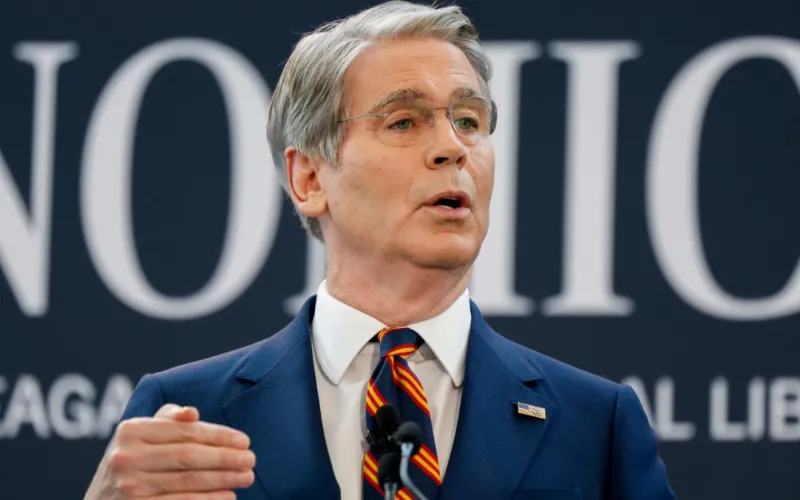
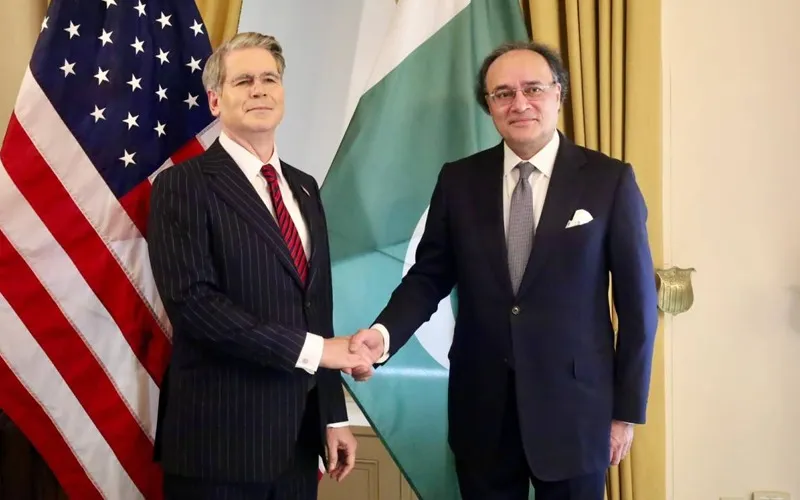
Finance Minister Muhammad Aurangzeb discussed Pakistan’s economic outlook during a meeting with US Treasury Secretary Scott Bessent in Washington on Tuesday.
According to the Ministry of Finance, Aurangzeb highlighted the country’s vulnerability to regional geopolitical developments and sought greater US support to improve access to international capital markets, strengthen foreign exchange reserves and enhance Pakistan’s sovereign credit rating.
The ministry said both sides reaffirmed their commitment to expanding bilateral economic cooperation, encouraging greater US investment and advancing strategic development projects. However, the official statement did not mention the reported $10 billion request.
Pakistan is currently implementing reforms under a $7 billion International Monetary Fund (IMF) Extended Fund Facility, along with a separate $1.3 billion IMF programme focused on climate resilience.
While the reforms have helped stabilise the economy, Pakistan’s foreign exchange reserves continue to depend on IMF disbursements and financial support from friendly countries, including China and Saudi Arabia.
Earlier this year, the country’s financial vulnerability was highlighted when Pakistan repaid nearly $3.5 billion to the United Arab Emirates equivalent to almost one-fifth of its foreign exchange reserves before receiving fresh financial assistance from Saudi Arabia.
Exchange stabilisation facilities are rarely offered by the United States. Managed through the US Exchange Stabilization Fund (ESF), these arrangements are designed to help partner countries strengthen foreign exchange reserves and stabilise their currencies during periods of financial stress.
Argentina received a similar facility in 2025, marking the first new operation of its kind since Uruguay in 2002, excluding the long-standing US-Mexico swap arrangement.
Analysts say approval of the proposed facility would not only strengthen Pakistan’s external financial position but also send a positive signal to international investors by demonstrating stronger US economic backing.
Pakistan has also been working to deepen economic cooperation with Washington through partnerships in digital finance, mining and infrastructure.
Recent initiatives include a stablecoin agreement with an affiliate of World Liberty Financial, discussions over the redevelopment of New York’s Roosevelt Hotel, and $1.25 billion in financing announced by the US Export-Import Bank for the Reko Diq mining project.
If approved, the proposed facility could provide Pakistan with a major financial buffer, strengthen investor confidence and support the country’s long-term efforts to achieve economic stability and reduce external financing risks.