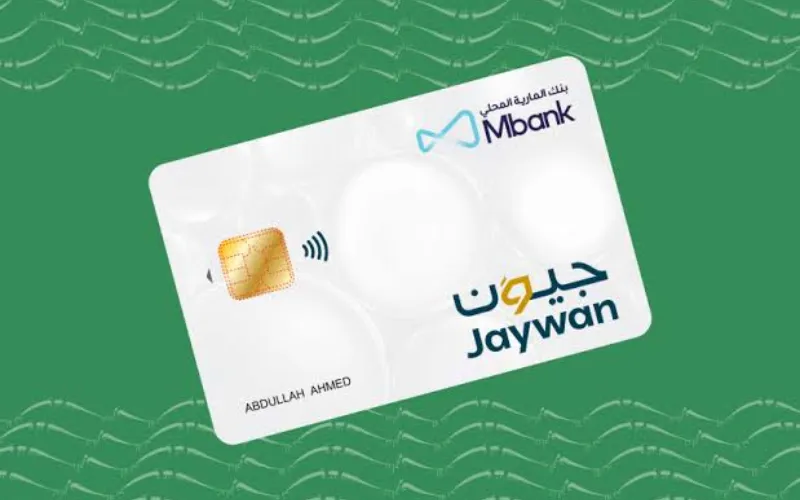
The UAE has officially begun issuing Jaywan cards across the country, giving residents wider access to the new national payment system through banks, licensed financial institutions and exchange houses.
The nationwide rollout began after Sheikh Mansour bin Zayed Al Nahyan, vice president, deputy prime minister, chairman of the Presidential Court and chairman of the Central Bank of the UAE, officially launched Jaywan, the country’s first national card scheme.
Banks and other licensed institutions will introduce the cards in phases over the coming months. First Abu Dhabi Bank has already launched a Jaywan debit card, Commercial Bank of Dubai is introducing Jaywan prepaid cards, and Network International has enabled online payments using the cards at thousands of merchants across the UAE.
The rollout covers key parts of the payment system, including debit cards linked to bank accounts, prepaid cards and broader acceptance for online payments.
Jaywan cards can be used for in-store and online purchases, ATM withdrawals and compatible digital wallets. International use will depend on the type of card issued and applicable rules.
What is Jaywan?
Jaywan is operated by Al Etihad Payments, a subsidiary of the Central Bank. It provides a domestic network through which card transactions can be routed, authorized and processed.
International networks have traditionally handled much of this process. Jaywan creates a locally governed alternative intended to strengthen the UAE’s control over its payment infrastructure and keep domestic payment data within the country.
Sheikh Mansour highlighted how the nationwide issuance marked a strategic step that strengthened the UAE’s sovereignty over its financial infrastructure.
“This achievement reflects the UAE’s commitment to developing a more efficient, resilient and competitive financial sector that unlocks broader opportunities for innovation, promotes financial inclusion, and further strengthens the UAE’s position as a leading global financial hub,” he said.
Debit, prepaid, credit
Jaywan will offer different types of payment cards, including debit, prepaid and credit cards. The type of card available will depend on each customer’s bank or issuing institution.
Ali Al Najjar, chief executive officer of Al Ansari Exchange, said Jaywan is an important national payment system that provides a secure and reliable way to make payments through point-of-sale terminals, e-commerce platforms, ATMs and digital wallets.
He said the integrated system will improve the customer experience, promote greater financial inclusion and create new opportunities for innovation in financial products and services.
Al Najjar added that the participation of banks, financial institutions and licensed exchange houses reflects the strong cooperation between the Central Bank of the UAE and the country’s financial sector. He said it will also help develop more efficient and accessible payment solutions that meet the evolving needs of both individuals and businesses.
FAB’s Jaywan debit
FAB’s Jaywan debit card is available to customers with eligible accounts. Existing customers can apply through the FAB Mobile app or at a branch, while Elite and Private Banking customers can contact their relationship managers.
Residents without a FAB account must open an eligible account before applying. As a debit card, money spent or withdrawn comes directly from the linked account. The card can be used at merchant outlets across the UAE, on UAE-based online platforms and at ATMs nationwide.
It also supports compatible digital wallets, 3D Secure authentication for online transactions, and Chip and PIN technology for in-person purchases. FAB did not disclose issuance fees, eligible account categories, rewards or other card charges.
CBD prepaid cards
Commercial Bank of Dubai’s (CBD) Jaywan product will be offered as a prepaid card instead of a debit card. Customers will need to load money onto the card before using it and will only be able to spend the available balance.
The bank said the prepaid cards will be issued under a corporate arrangement but will be used by retail customers. It has not announced a public application process, launch date, spending limits or fees.
The cards can be used for in-store purchases, online payments, ATM withdrawals and contactless transactions. They will also support tokenization, which replaces card details with a secure digital identifier when used with compatible mobile wallets.
Use Jaywan online?
Cards need acceptance infrastructure before customers can use them widely. Network International has now added Jaywan to its e-commerce payment gateway, enabling cardholders to pay across thousands of its online merchants in the UAE.
Network had previously enabled Jaywan for in-person purchases across its merchant network. The latest integration extends that acceptance to online shopping.
The company said merchants using its gateway would not pay an additional fee for Jaywan transactions processed through the platform. This applies to merchant charges and does not mean every Jaywan card will be free of customer fees.
“Every issuer, acquirer, and payment service provider that enables the scheme expands where customers can use their cards, whether in-store, online or through mobile wallets,” said Andrea Cianchetti, Chief Products Officer at Al Etihad Payments.
Overseas usage?
The Central Bank said Jaywan cards can support domestic and international transactions, subject to applicable rules. Yet not every card will automatically work outside the UAE.
Jaywan-only cards primarily use the domestic network. Co-badged cards combine Jaywan with an international network, allowing eligible overseas and international online payments.
Al Etihad Payments has established partnerships with Visa, Mastercard, Discover and Union Pay to support international use through co-badged products.
FAB has described its new card as currently available for domestic use. Customers should check the logos on their card and confirm overseas acceptance, foreign transaction fees, ATM charges and currency-conversion costs with their bank before travelling.
Eligibility of rewards
The Central Bank of the UAE said Jaywan cardholders will have access to various benefits and offers through partners in the travel, shopping, hospitality and lifestyle sectors. However, it has not announced details of those offers or the eligibility requirements.
Individual banks will be able to set their own card tiers, rewards, fees and account requirements.
For residents, using a Jaywan card will be similar to using any other payment card. They can insert or tap the card to make payments, enter the card details when shopping online or add an eligible card to a supported digital wallet.
The main difference is that Jaywan processes domestic payments through the UAE’s national payment infrastructure as the country continues to expand its locally operated payment system.