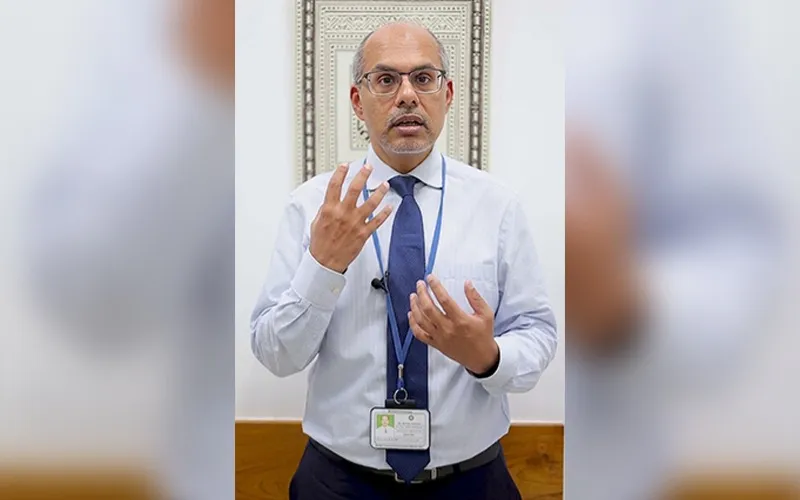
Repeated HIV outbreaks among children in Sindh have raised serious concerns about infection prevention and patient safety in Pakistan’s healthcare system. In this exclusive interview, Dr Faisal Mahmood, Professor of Infectious Diseases, explains the factors driving these outbreaks and why they continue to occur. He discusses the role of unsafe injection practices, weak infection-control measures, and gaps in surveillance and regulation.
Q: What are the key factors behind the repeated HIV outbreaks among children in Sindh, and why do such incidents continue to occur?
The key factors behind the repeated HIV outbreaks among children in Sindh are poor injection safety and inadequate infection prevention and control practices in healthcare facilities.
These facilities include hospitals, clinics, and dispensaries. Because infection prevention and control protocols are often poorly regulated or inadequately enforced, such incidents continue to occur.
Q: What have investigations revealed about the role of unsafe medical practices, including the reuse of syringes and poor infection-control measures, in the recent Karachi outbreak?
I am not entirely sure what this question is asking. However, because the affected children are older, and because parents in similar outbreaks have usually tested negative, unsafe injection practices are the most likely route of transmission.
This can happen in several ways. A needle may be reused for more than one child. A saline bottle used to prepare medications may be used for multiple patients and become contaminated. Infection can also spread if medication from the same vial or syringe is shared between different children.
Q: How widespread is HIV among children in Pakistan, and are similar risks present in provinces beyond Sindh?
It is difficult to answer this question because children have not been systematically screened across the country. However, it is clear that the same risk factors observed in Sindh also exist in other provinces, as similar outbreaks have been reported outside Sindh.
Q: What immediate steps should hospitals and clinics take to prevent healthcare-associated HIV transmission among children?
First, every healthcare facility should review its safe injection practices. If staff are uncertain about the correct procedures, they should seek guidance from infection prevention and control experts within the province.
Second, when preparing intravenous drips, saline solutions and syringes should never be reused for another child. Medication vials should also not be shared between different patients.
Third, a new sterile syringe and needle should be used for every injection.
Another simple but important measure is to avoid giving injections unless they are medically necessary. For example, injections should not be routinely used for multivitamins or fever reduction when effective oral alternatives are available. Reducing unnecessary injections also reduces the risk of transmitting infections.
Q: How effective are Pakistan’s surveillance, screening, and infection-control systems in detecting and preventing HIV outbreaks at an early stage?
I think I need a little more clarity on this question. If it is asking how quickly our surveillance and screening systems can detect HIV outbreaks, the answer is that they are currently not very effective.
Although HIV is a notifiable disease, many healthcare facilities do not consistently report cases. Even when cases are reported, the data are often not analyzed in real time. In addition, because people with newly acquired HIV infection usually do not have symptoms, an outbreak may become quite widespread before it is detected.
Q: What challenges do affected children and their families face in accessing lifelong HIV treatment, counseling, and social support?
HIV treatment is lifelong, but it is available free of charge through HIV treatment centers. These centers also provide counseling and, when needed, some level of social support.
If HIV is diagnosed early and managed appropriately, and if there are no other serious medical conditions, treatment is highly effective. Although HIV is not curable, people living with HIV can generally expect to have a normal life expectancy.
The challenge for many of these children is that they often have other medical conditions in addition to HIV, which can make their care more complex.
Q: What lessons should Pakistan learn from the 2019 Ratodero HIV outbreak and the recent Karachi outbreak to prevent future cases?
The most important lesson from both the Ratodero outbreak and the recent Karachi outbreak is that Pakistan must significantly improve infection prevention and control practices across its healthcare system.
These outbreaks should not be viewed solely as an HIV problem. Pakistan also has one of the highest burdens of hepatitis C, which has spread through many of the same unsafe healthcare practices. Similarly, inadequate infection prevention and control measures have contributed to the growing problem of infections caused by antimicrobial-resistant bacteria and other difficult-to-treat organisms.
Taken together, these outbreaks highlight broader systemic weaknesses in healthcare delivery. Improving infection prevention and control, ensuring safe injection practices, strengthening regulation, and enhancing oversight should be national priorities.
Q: How can federal and provincial governments strengthen regulation, monitoring, and accountability of public and private healthcare facilities to stop such outbreaks?
That is a difficult question. Since health is a devolved subject in Pakistan, the primary responsibility for strengthening infection prevention and control in healthcare facilities rests with the provincial governments.
Public sector hospitals are directly managed by provincial health departments, making monitoring and accountability relatively straightforward. However, more than half of healthcare services are delivered by the private sector, which includes both licensed and informal providers, such as unlicensed practitioners. Regulating and monitoring this diverse sector is considerably more challenging and requires stronger enforcement mechanisms.
Q: What role can public awareness, safe injection practices, blood screening, and community education play in reducing HIV transmission among children across Pakistan?
Pakistan has one of the highest rates of therapeutic injections in the world, making public awareness essential for reducing unnecessary injections. People need to understand that injections should only be given when they are medically necessary. They should not request injections for every fever or whenever they feel weak or unwell.
Every injection carries a risk of transmitting infections such as HIV and hepatitis C if safe practices are not followed. Patients should therefore ask healthcare workers to use a new, sterile syringe and needle for every injection and, whenever appropriate, a new medication vial.
Global HIV funding falls as UN warns AIDS progress is at risk
When undergoing any medical procedure, people should choose reputable healthcare facilities that follow proper sterilization, disinfection, and infection prevention practices. Public education, combined with stronger regulation and safer healthcare practices, can play a critical role in preventing future outbreaks.