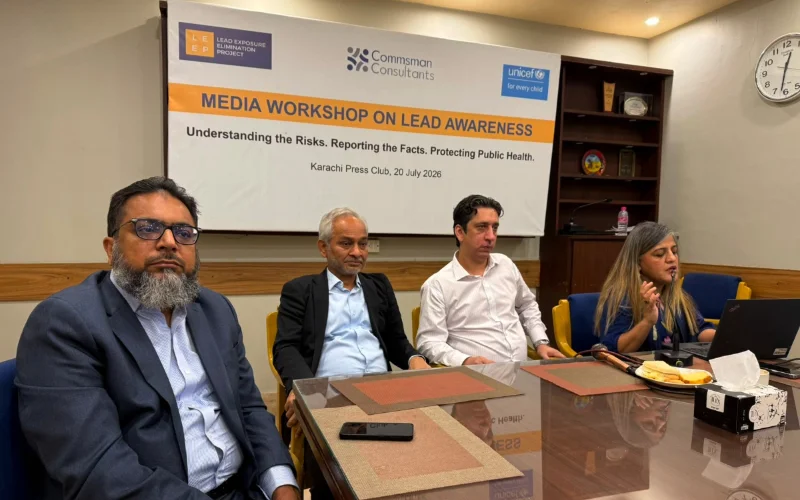
KARACHI: Health experts, government officials and UNICEF representatives urged Pakistani journalists to raise public awareness about childhood lead poisoning, warning that millions of children remain at risk from a preventable but often overlooked public health threat.
The appeal came during a day-long media workshop organized by the Lead Exposure Elimination Project (LEEP) in collaboration with UNICEF Pakistan and Commsman Consultants at the Karachi Press Club.
More than 30 health and environmental journalists attended the event, where experts discussed the latest evidence on childhood lead exposure, major sources of contamination and strategies to reduce the health risks.
Prof Dr Zafar Fatmi of Aga Khan University described lead poisoning as a “silent” public health crisis, noting that affected children often show no visible symptoms despite suffering irreversible neurological damage.
He said there is no safe level of lead exposure and identified deteriorating lead-based paint, lead-contaminated spices, traditional cosmetics such as surma and informal lead-acid battery recycling as major sources of exposure.
Presenting findings from the Pakistan Childhood Lead Exposure Survey, UNICEF Health Specialist Dr Humaira Irshad said the study screened 2,175 children aged 12 to 36 months in seven high-risk cities. About one in four children had elevated blood lead levels, while nearly 39% of children in surveyed high-risk communities in Karachi were found to have elevated lead levels.
She stressed that the survey was limited to selected urban communities and called for a nationally representative survey to determine the true scale of the problem.
LEEP Pakistan Country Head Abid Hassan said a nationwide blood lead level survey and source identification study were essential for developing a comprehensive national action plan.
He added that international development partners had expressed willingness to support such an initiative to guide coordinated action across the health, environment, industry and food safety sectors.
Hassan said LEEP Pakistan is focusing on eliminating lead exposure from decorative paints, traditional eyeliners (surma/kajal) and lead-adulterated turmeric.
He noted that Pakistan has already introduced a mandatory 90 parts per million (ppm) limit for lead in decorative paints and a 5 ppm maximum limit for turmeric, while the Pakistan Standards and Quality Control Authority is working to establish national standards for lead in surma.
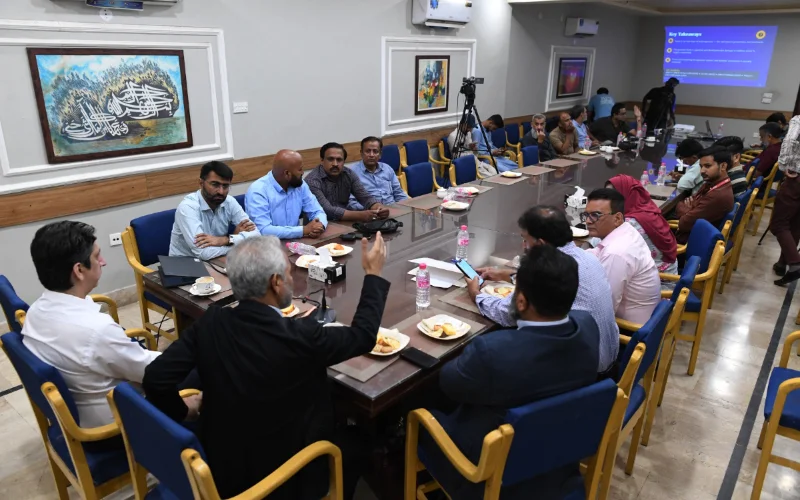
Officials highlighted progress in reducing lead exposure through stronger regulations and enforcement. Sindh Environmental Protection Agency Regional Director Imran Sabir said the agency is taking action against illegal lead-acid battery recycling units, while Sindh Food Authority Technical Director Dr Ahmed Ali Shaikh said sustained inspections and awareness campaigns had reduced lead chromate contamination in turmeric from more than 90% of tested samples to around 5%.
More read, WHO warns ‘DRAP’ about counterfeit blood cancer medications
Senior health journalist Waqar Bhatti called on the media to investigate environmental pollution, unsafe industrial practices and contaminated consumer products, saying evidence-based reporting can help drive public awareness and stronger policy action to protect children from lead poisoning.