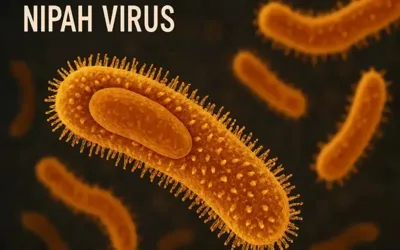
The Nipah virus (NiV) is a serious zoonotic virus that has recently drawn global attention following confirmed cases in West Bengal, India, prompting health screenings at airports across several Asian countries.
What Is Nipah Virus?
Nipah virus is a zoonotic pathogen, meaning it can be transmitted from animals to humans and between humans in close contact.It belongs to a group of viruses known as Henipaviruses and can cause a range of illnesses, from mild fever to severe encephalitis (brain swelling) and respiratory issues.
There is no specific vaccine or approved antiviral treatment currently available, though candidate vaccines are under development.
The virus carries a high fatality rate of roughly 40–75% in known outbreaks.
Read more: Federal govt inaugurates digitalized dispensary in Karachi’s FC area
How Does Nipah Virus Spread?
1) From Animals to HumansThe natural hosts of the virus are fruit bats (Pteropus species), which can carry Nipah without showing illness. Human infections often begin when people come into contact with infected bats or animals that have been exposed. Fruit bats can shed the virus in their saliva, urine, or feces, contaminating fruit or other food items.
2) Through Contaminated Food
Humans can be infected by consuming foods and drinks contaminated by bat secretions, such as raw date palm sap or partially eaten fruits.
3) Human-to-Human Transmission
While not highly efficient, Nipah can spread between people through close contact with an infected individual’s bodily fluids (e.g., saliva or respiratory secretions), especially among caregivers or healthcare workers.
Read more: Stomach gets weird in winters? Causes and home remedies
Authorities in countries like Thailand, Singapore, Malaysia, Hong Kong, and Nepal have tightened health checks and airport screening as a precaution amid the outbreak, even as the World Health Organization (WHO) says the risk of widespread international transmission remains low.