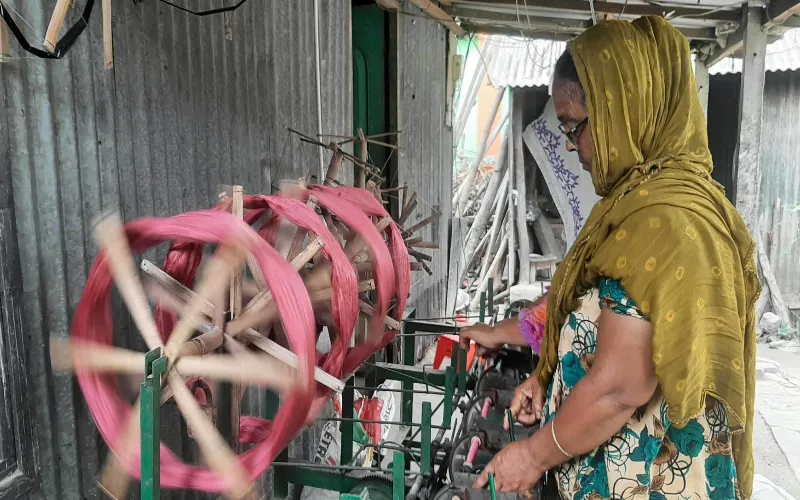
Weavers in Tangail, Bangladesh, continue handcrafting the region’s iconic sari using centuries old techniques passed down through generations, even as the garment’s global recognition brings new attention to a fashion tradition still cherished by everyday wearers today.
The intricate designs and fine textures of Tangail saris earned UNESCO recognition in December 2025 as intangible cultural heritage, honored for reflecting local social and cultural traditions.
For many Bangladeshi women, the sari remains more than a special occasion outfit. Kaniz Neera, said the sari remains central to her identity, noting that her mother wears one both at home and in public, while she herself wears it mostly outside the house.
View this post on Instagram
Creating a single Tangail sari involves a detailed division of labor, men typically lead the weaving, dyeing, and design process, working the handloom by hand to interlace warp and weft threads. Women prepare the threads, apply rice starch, and add finishing touches before the garment is complete.
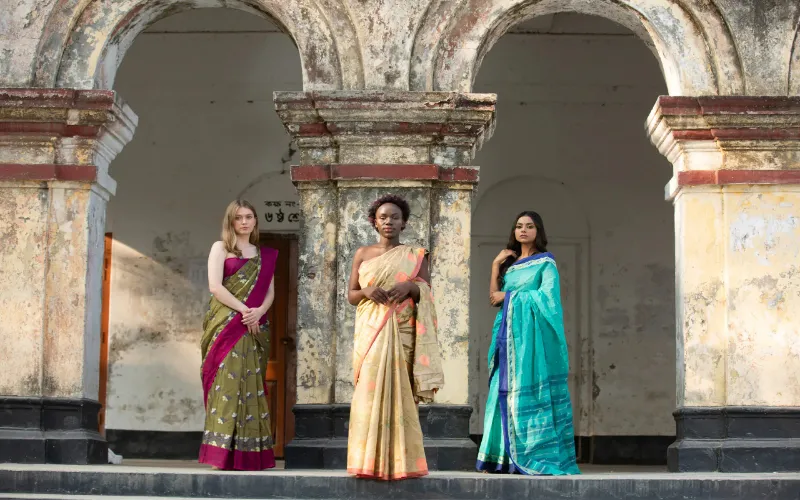
The Tangail sari traces its origins to descendants of Dhakai muslin weavers, whose intricate fabrics once captivated royal courts and European aristocracy centuries ago. Author Shawon Akand, who has written extensively on the craft, said Tangail weavers inherited fine yarn techniques from their ancestors while developing their own distinctive designs.
In the 1960s, the sari became a broader cultural symbol as Bengalis in what was then East Pakistan embraced their ethnic identity, a legacy that continues to shape how the garment is worn and valued today.
While younger generations increasingly reserve saris for special occasions rather than everyday wear, the garment continues to hold cultural significance across Bangladesh.
Tangail sari is a sumbol of garment that blends comfort, craftsmanship, and a deep sense of cultural identity, one that continues to hold its place in wardrobes across generations.