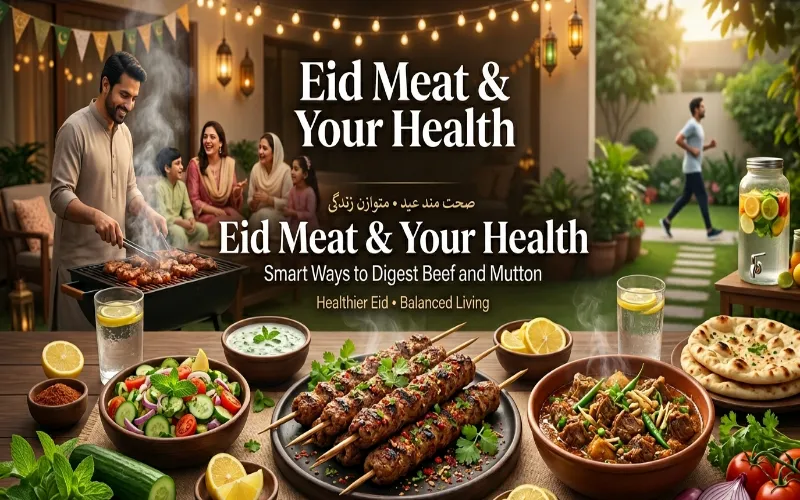
Eid-ul-Azha brings joy, family gatherings, and the rich aroma of traditional meat dishes. In Pakistan, homes become filled with the smell of BBQ, karahi, pulao, kebabs, and freshly cooked kaleji. Beef and mutton are an important part of Eid celebrations because they are deeply connected with culture, hospitality, and togetherness.
Although meat is full of nutrients, many people feel heaviness, acidity, bloating, or tiredness after Eid meals. This usually happens because red meat takes longer to digest than lighter foods. During Eid, people also eat more oily and spicy dishes than usual, which can slow down digestion further.
Understanding how the body digests meat can help people enjoy Eid food in a healthier and more balanced way.
How the digestive system breaks down meat:
The digestion process begins in the mouth. Chewing meat properly is very important because it breaks food into smaller pieces. Smaller pieces are easier for the stomach to digest. Many people eat quickly during dawat gatherings, but slow eating supports better digestion.
After swallowing, the meat travels to the stomach. The stomach releases strong acids and digestive enzymes that start breaking down proteins found in beef and mutton. Since red meat contains dense muscle fibers and fats, the stomach needs more time and energy to process it.
The partly digested food then moves into the small intestine. Here, the liver and pancreas help release digestive juices that continue breaking down proteins and fats. The small intestine absorbs important nutrients from the meat, including protein, iron, zinc, selenium, and vitamin B12.
Protein helps repair muscles and body tissues. Iron supports healthy blood circulation and energy levels. Zinc strengthens the immune system, while vitamin B12 supports brain function and nerve health.
Finally, the remaining waste moves into the large intestine, where water is absorbed before the body removes waste naturally.
Beef and mutton are healthy sources of protein, but they contain more fat than lighter meats like chicken or fish. Fat slows down digestion because the stomach takes longer to process oily foods.
During Eid-ul-Azha, people often eat large portions several times a day. Rich dishes cooked in extra oil, butter, or desi ghee can place extra pressure on the digestive system. Soft drinks, sweets, and less physical movement can also increase feelings of heaviness and laziness.
Late night BBQ gatherings and overeating may disturb normal digestion and sleep patterns. This is why many people experience acidity or discomfort during Eid holidays.
Avoid eating large plates full of meat in one sitting. Smaller portions help the stomach digest food more comfortably and reduce bloating. Proper chewing supports digestion because the stomach receives smaller food particles. Eating slowly also prevents overeating.
Water supports the digestive system and helps the body process protein rich meals. Staying hydrated is especially important during hot weather in Pakistan. Fresh salads, cucumbers, onions, lettuce, mint, and lemons improve digestion because they contain fiber and water. Fiber keeps the digestive system active and balanced.
Grilled meat, boiled yakhni, and lightly cooked BBQ are usually easier to digest than deep fried dishes. Less oily food helps the body feel lighter and healthier. Raita and yogurt contain probiotics that support gut health. Mint also gives a cooling effect and helps reduce stomach discomfort after spicy meals.
A short walk after dinner improves digestion and blood circulation. Light movement prevents the body from feeling lazy after heavy meals.
Nutritional benefits of Eid meat:
When eaten in moderation, beef and mutton provide many health benefits. They are rich in high quality protein, which helps maintain muscle strength and body repair. The key to healthy eating during Eid-ul-Azha is balance. Meat becomes more beneficial when combined with vegetables, water, and lighter cooking methods.
Understanding how the digestive system processes meat can help people make healthier food choices during Eid, can improve digestion and keep the body fresh and energetic throughout the celebrations.