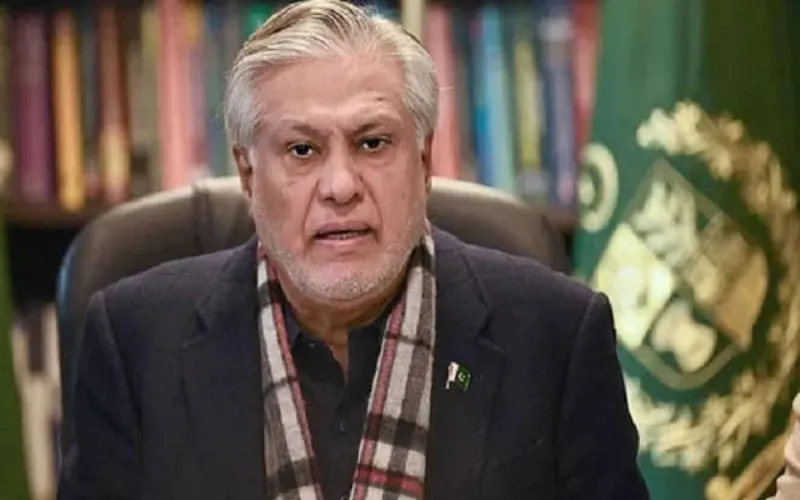
ISLAMABAD: Deputy Prime Minister and Foreign Minister Ishaq Dar said Sunday that the Makkah Joint Defense Agreement signed with Saudi Arabia and Türkiye remains open to regional countries that support its principles, while officials emphasized that the pact is designed only for defense and regional stability.
Dar said the agreement is not aimed at any country and focuses on strengthening cooperation, security and peace among participating nations.
The statement came a day after Türkiye’s Foreign Minister Hakan Fidan said Egypt could potentially join the agreement after completing necessary technical arrangements.
The defense pact, signed in Makkah on Friday, aims to improve collective security among Pakistan, Saudi Arabia and Türkiye. Under the agreement, an armed attack against one member would be considered an attack against all three countries.
In a statement shared on social media platform X, Dar described the agreement, known as the Makkah Accord, as a result of years of discussions and cooperation between the three nations.
In the light of ongoing discussion and interest surrounding the “Makkah Joint Defence Agreement” (The Makkah Accord) over the past two days, the following context and clarity on this Agreement may be useful for everyone to note:
• The Makkah Joint Defence Agreement, jointly…
— Ishaq Dar (@MIshaqDar50) August 9, 2026
He said the agreement reflects strong relations between the countries and represents a shared effort to address security challenges while promoting regional peace, stability and development.
Dar clarified that the pact does not replace or cancel any existing agreements between the signatory countries or their partnerships with other nations and international organizations.
He said the agreement follows the right of individual and collective self-defense recognized under Article 51 of the United Nations Charter.
“The Makkah Accord is purely defensive in nature,” Dar said, adding that its purpose is to support peace and stability rather than target any country.
He added that the agreement remains open to countries in the region that respect its principles and seek to resolve disputes through cooperation and peaceful methods.
Earlier, Fidan said Egypt could become part of the alliance once technical matters are completed. He said Egypt was already a close partner on many issues and could join the agreement in the future.
Fidan also said other countries had shown interest in joining the pact, but the founding members were discussing how expansion should take place.
He explained that Pakistan, Saudi Arabia and Türkiye would remain the core members responsible for setting the alliance’s structure and standards, while other countries could join with approval from the founding states.
Fidan said the initiative should expand beyond three countries and described the agreement as similar to NATO’s Article 5 mutual defense principle.
He added that Pakistan’s involvement gives the agreement a broader regional scope beyond the traditional Middle East framework.