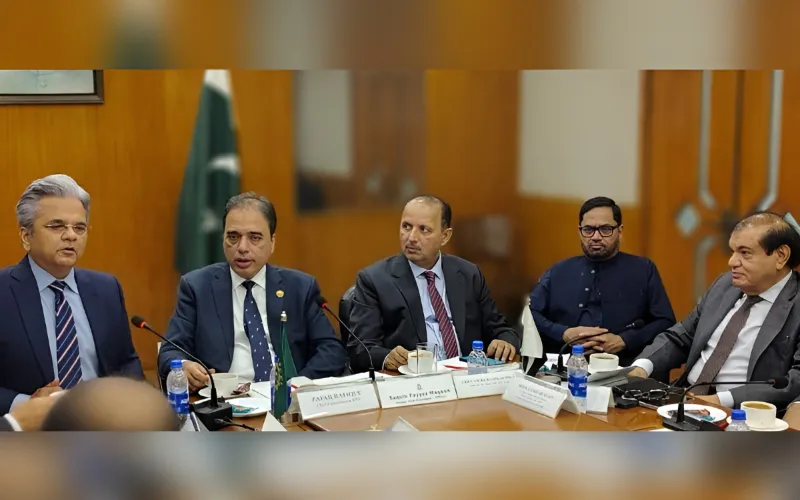
KARACHI: Karachi Chamber of Commerce and Industry President Rehan Hanif has rejected a proposed Fuel Charges Adjustment of Rs2.5182 per unit for July 2026 and urged regulators to reject an expected Quarterly Tariff Adjustment of about Rs1.34 per unit, warning that the combined increase could push struggling industries toward closure.
In a statement Tuesday, Hanif said the two adjustments, if approved and applied together, could add nearly Rs3.86 per unit to September electricity bills before taxes.
He said the impact could be even greater because a negative QTA relief of Rs1.9857 per unit expires after August, while August bills already include a positive FCA of Rs0.7503 per unit.
Hanif described the proposed increases as a threat to the government’s efforts to revive industry and reduce the cost of doing business.
He said repeated electricity price shocks could particularly hurt small and medium-sized enterprises that lack the financial capacity to install large-scale renewable energy systems.
“When small industries disappear, the entire industrial supply chain weakens,” Hanif said, noting that large manufacturers depend on SMEs for components, packaging, processing and other services.
According to data submitted by the Central Power Purchasing Agency-Guarantee to the National Electric Power Regulatory Authority, about 15.12 billion units of electricity were generated in July.
The agency calculated the actual fuel cost at Rs9.6112 per unit, compared with a reference cost of Rs7.0929, resulting in the proposed FCA of Rs2.5182 per unit.
NEPRA is scheduled to hear the FCA request on Aug. 27.
Hanif questioned why consumers should bear the cost when reference prices are based on inaccurate or unrealistic forecasts. He said repeated positive FCAs undermine tariff predictability and increase the cost burden on businesses and households.
He also raised concerns about the power sector’s circular debt, saying consumers continue to pay debt service surcharges, FCAs, QTAs and other charges despite repeated efforts to restructure the sector’s liabilities.
The government recently announced a Rs1.225 trillion circular-debt restructuring arrangement with 18 banks, including Rs660 billion in restructured existing loans and Rs565 billion in fresh financing. The loans are expected to be repaid through a Debt Service Surcharge of Rs3.23 per unit over six years.
Hanif said circular debt nevertheless increased by Rs61 billion during fiscal year 2025-26, rising from Rs1.614 trillion to Rs1.675 trillion. He said borrowing to settle existing liabilities would not solve the problem if new debt continued to accumulate because of inefficiencies, weak recoveries and governance problems.
He also called for a transparent reconciliation of the Rs421 billion reportedly shown as receivable from K-Electric, including Rs197 billion in principal and Rs224 billion in markup, saying consumers should not be required to pay disputed or unverified amounts.
Hanif warned that Pakistan’s industrial recovery remains too fragile to absorb another major increase in energy costs. Pakistan Bureau of Statistics data showed that large-scale manufacturing grew 4.98% during fiscal year 2025-26, but output fell 3.48% year over year and 6.08% month over month in June 2026.
Textile production declined 0.63% year over year, while iron and steel production fell 7.84%, according to the data.
Pakistan’s merchandise exports reached $2.962 billion in July, up 10.4% from a year earlier, while imports increased 18.9% to $6.94 billion, producing a monthly trade deficit of $3.978 billion.
Hanif said higher and unpredictable electricity costs could erode industrial margins, undermine the competitiveness of Pakistani exports and make it harder for the country to reduce its trade deficit.
He said industry was not seeking an unjustified subsidy but a stable and transparent electricity tariff based on realistic reference costs, efficient generation planning and stronger accountability.
The KCCI president urged NEPRA to reject or substantially reduce the proposed July FCA at its Aug. 27 hearing and withhold notification of the proposed positive QTA until an independent technical and financial audit is completed.
More read, KCCI voices support for mining sector amid tax dispute
He also called on Prime Minister Shehbaz Sharif to convene a meeting involving KCCI, major industrial associations, NEPRA, the Power Division, CPPA-G and the Independent System and Market Operator to align power-sector policies with the government’s industrial and export goals.