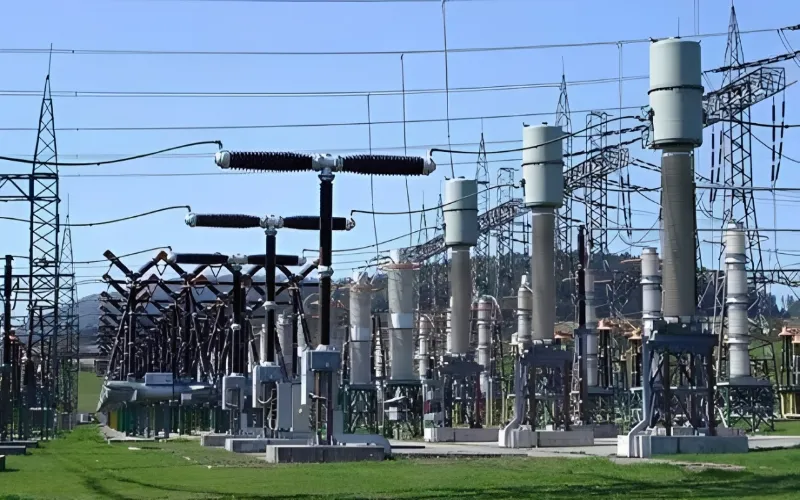
Pakistan’s power generation rose 7% year-over-year to 15,112 GWh in July 2026, as higher hydel and coal output helped lift electricity production, according to Arif Habib Limited (AHL).
Generation stood at 14,123 GWh in July 2025, while July’s output was 13% higher than the 13,431 GWh recorded in June 2026. AHL said July’s generation was the second highest recorded for any July. It was supported by record hydel, local coal, and imported coal generation.
Power generation also exceeded the National Electric Power Regulatory Authority (NEPRA) reference, according to AHL. The increase was linked to lower tariffs, more industrial consumers shifting to the national grid, an additional consumption package for industrial and agricultural users, and improved economic activity.
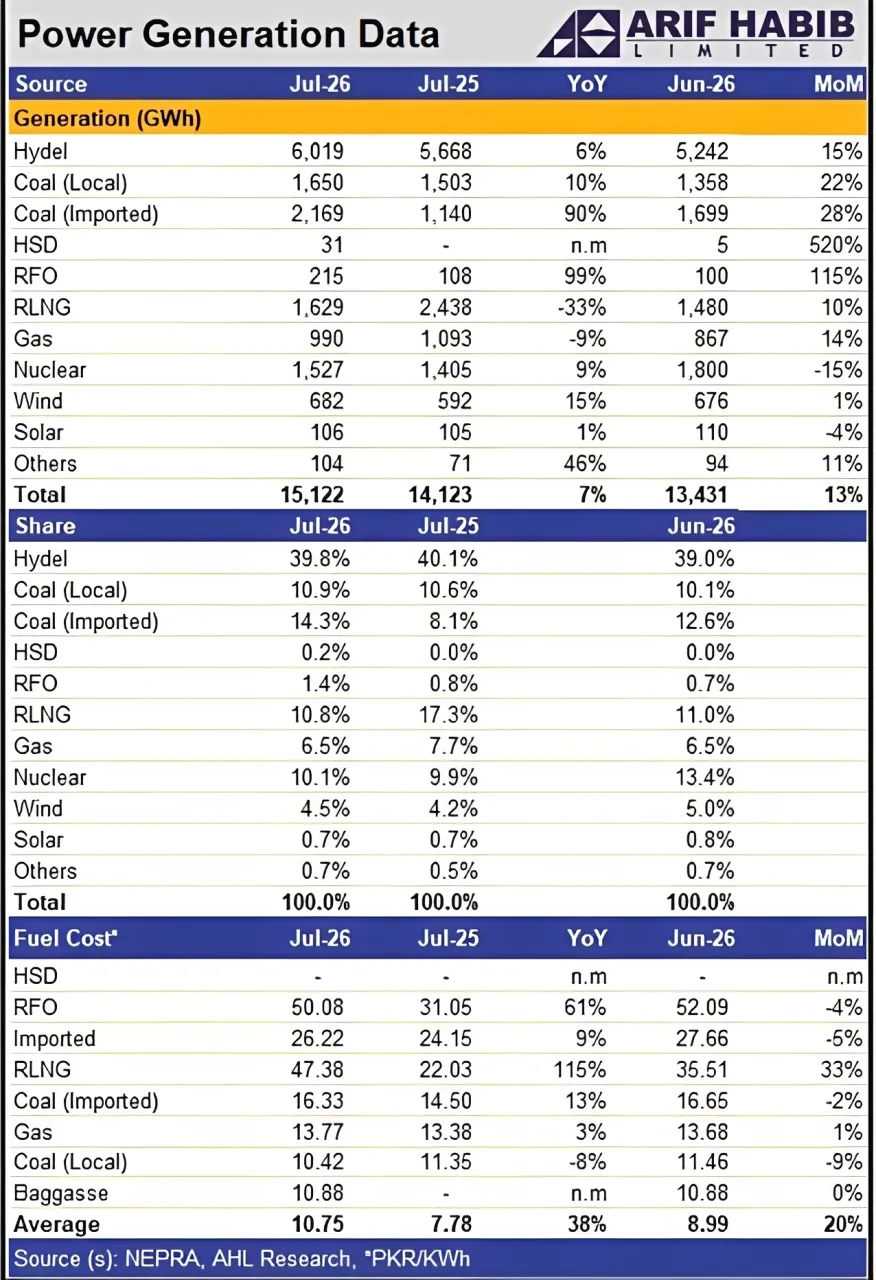
However, the higher electricity output came with a sharp rise in generation costs. The cost of producing electricity increased 38% year-over-year to Rs10.75/kWh in July 2026, compared with Rs7.78/kWh in July 2025.
As a result, distribution companies (DISCOs) sought a positive fuel cost adjustment (FCA) of Rs2.52/kWh for July 2026. AHL said this was the highest FCA request since June 2024.
On a monthly basis, the cost of power generation increased 20% from Rs8.99/kWh in June 2026. Hydel power was the largest source of electricity in July, making up 39.8% of the total generation mix. Coal ranked second at 25.2%, while RLNG accounted for 10.8%.
Nuclear power contributed 10.1% of the generation mix, while gas accounted for 6.5%. RLNG generation declined 33% year-over-year in July. At the same time, its fuel cost increased 115% year-over-year and 33% month-over-month.
Renewable reports also contributed to the electricity mix. Wind power accounted for 4.5% of total generation, while solar power made up 0.7%. The July figures show that Pakistan generated more electricity compared with both July 2025 and June 2026.