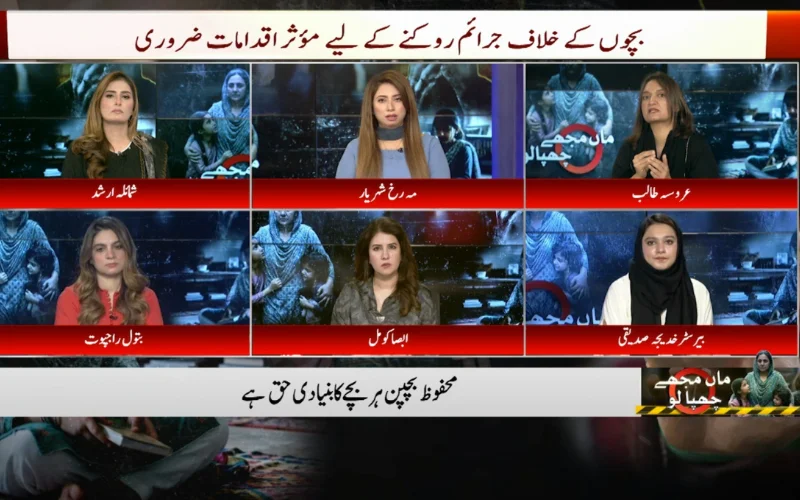
A first for Pakistani television. BOL Network ran its transmission using an all-female broadcast team. From the studio anchors to the field reporters and political analysts on the ground, every person on screen was a woman.
Media doesn’t just report the news, it should educate, empower, and protect society.
That philosophy shaped one of the broadcast’s key segments, a special discussion on child abuse and kidnapping, one of the most urgent issues facing families in Pakistan today.
The network brought together some well-known names in journalism and public life including senior anchorpersons Absa Komal and Batool Rajpoot, anchorpersons Mahrukh Shehryar and Shumaila Arshad, human rights lawyer Khadija Siddiqui, and neuropsychiatrist Uroosa Talib.
Together, they discussed how families can protect children, what legal options victims have, and the psychological toll these crimes leave behind.
Instead of only discussing female leadership as a topic, the network put it into practice, showing that women can run large, high-pressure international news coverage from start to finish.
High-impact broadcast, such as the Maa Mujhe Chhupaalo Special Transmission, looks deep into the rising numbers of child abductions and severe physical abuse cases nationwide.
Senior female anchors use these platforms to express heavy criticism and emotional urgency regarding how society handles crimes against vulnerable groups.
The program openly talked about the critical need for professional mental health counseling for victims and call out the shortcomings of legal protections.
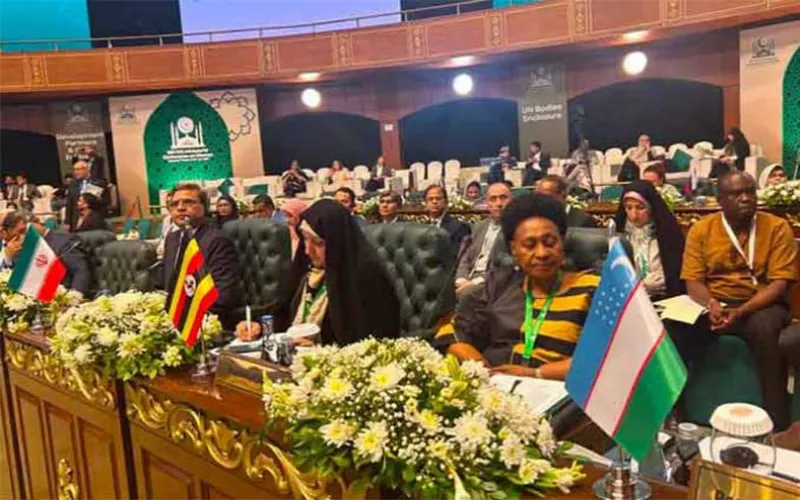
This coincides with the 9th OIC Ministerial Conference on Women being held in Islamabad.
The summit itself opened on Sunday with technical-level sessions before moving into ministerial discussions on Monday. Organised by Pakistan’s human rights ministry, the conference carried the theme “Socio-Economic and Political Empowerment of Women in the OIC Countries: Challenges and Way Forward.”
Speaking to reporters on the sidelines, Syrian Minister of Social Affairs and Labour Hind Kabawat called her attendance a meaningful moment, saying the event reflected unity among women across the Muslim world and offered a real chance to push forward on empowerment, rights and cooperation between countries.
Pakistan’s Law Minister, Azam Nazeer Tarar, used his address to focus on technology. He urged OIC member states to make sure women and girls have equal access to emerging tools like artificial intelligence, warning that without deliberate effort, digital innovation could end up widening inequality rather than closing it.
Tarar described women’s empowerment as both a social responsibility and an economic necessity, arguing that no country can reach its full potential while half its population is denied equal chances to learn, work, innovate and lead. He pointed to the long history of Muslim women serving as scholars, educators, entrepreneurs, judges and community leaders, and said that legacy continues today across science, business, academia and public service.
He also spoke about women living through conflict and crisis, paying tribute to the resilience of women and girls in Gaza, and referencing the situations faced by women in Afghanistan and Indian-occupied Jammu and Kashmir. Empowerment, he said, isn’t only about opportunity. It’s also about protection, dignity, justice and hope.