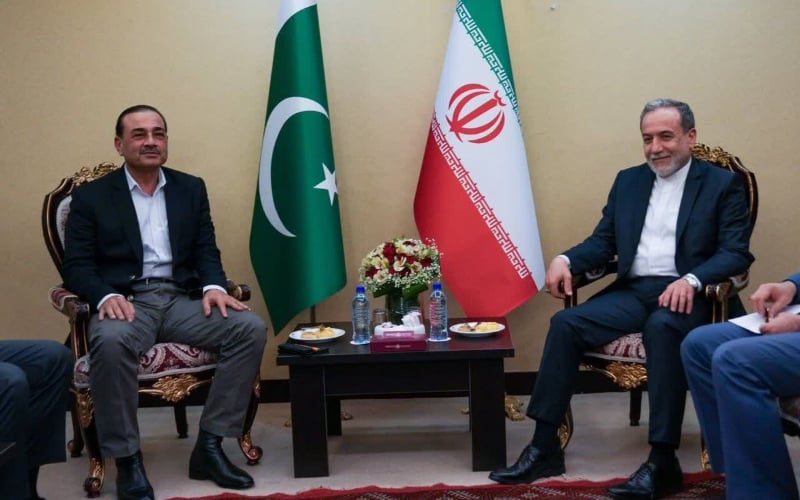
Iran’s state news agency IRNA reported that both sides held detailed discussions on diplomatic efforts aimed at preventing further escalation and strengthening peace, stability, and security across the Middle East.
Field Marshal Asim Munir, Commander of the Pakistan Army, met FM @araghchi in Tehran to discuss diplomatic efforts aimed at preventing further escalation and promoting peace, stability, and security in West Asia. #Iran #Pakistan pic.twitter.com/NccIMh3DD5
— Government of the Islamic Republic of Iran (@Iran_GOV) May 23, 2026
The meeting, held on Friday and continuing late into the night, focused on ongoing regional diplomatic initiatives, efforts to de-escalate tensions, and broader approaches to restore stability in West Asia amid continuing conflict dynamics. Pakistan’s role in facilitating dialogue and supporting communication channels between Iran and other relevant stakeholders was also discussed.
Earlier, the Inter-Services Public Relations (ISPR) stated that Field Marshal Syed Asim Munir’s visit to Tehran is part of Pakistan’s continuing diplomatic and mediation efforts aimed at promoting regional peace and constructive engagement.
Upon arrival, the Field Marshal was received by Iranian Interior Minister Eskandar Momeni, while Federal Interior Minister Mohsin Naqvi was also present at the reception.
According to ISPR, the visit reflects Pakistan’s broader engagement in encouraging regional dialogue, particularly through diplomatic communication channels involving Iran and other parties.
During the visit, Field Marshal Asim Munir is scheduled to hold further high-level meetings with senior Iranian officials to review regional security developments, enhance diplomatic coordination, and discuss matters of mutual interest.
Pakistan has continued to support dialogue-based initiatives in recent months to help reduce regional tensions and encourage long-term stability.
The wider regional conflict escalated after strikes by the United States and Israel on Iran on February 28, which Iranian authorities say targeted senior leadership as well as civilian infrastructure, including residential areas and public institutions.