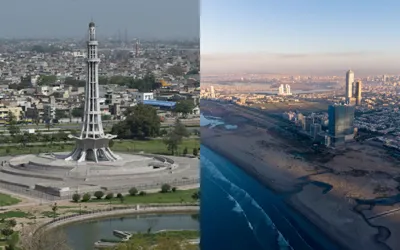
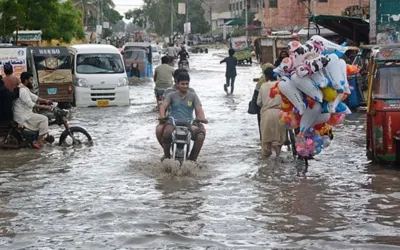
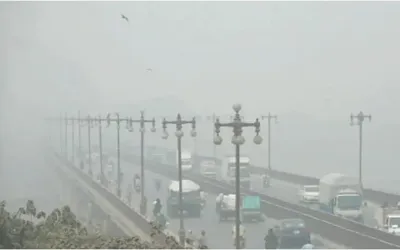
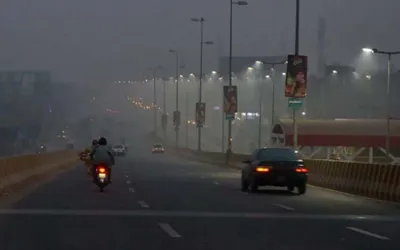
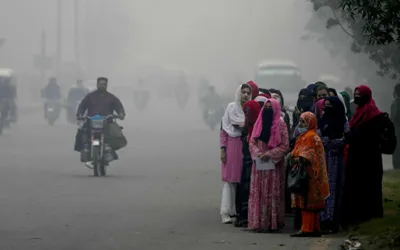
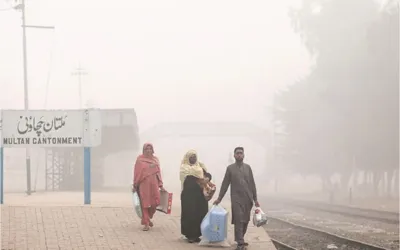
ISLAMABAD: Five Pakistani cities are among the world’s 10 least resilient to climate risks, according to a new report assessing the vulnerability and adaptive capacity of 72 major cities.
Hyderabad, Pakistan, ranked second on the list of cities least resilient to climate risks, followed by Multan in third place. Lahore ranked fifth, Faisalabad seventh and Karachi eighth.
India’s Ahmedabad topped the ranking of the least resilient cities, underscoring the particularly high climate vulnerability of major urban centers across South Asia.
The report by AlphaGeo, a geospatial analytics company, distinguishes between a city’s physical exposure to climate hazards and its resilience-adjusted risk, or RAJ. The assessment aims to identify cities where adaptation capacity may not be sufficient to offset their exposure to climate-related threats.
The report said the six highest-risk major cities in its assessment were all in South Asia: Ahmedabad; Hyderabad, Pakistan; Multan; Dhaka; Kolkata; and Lahore. It attributed much of the risk in these cities to high exposure to extreme heat and said their adaptation rates remained relatively low compared with the scale of their physical risks.
Dhaka recorded the highest physical exposure in the assessment, with a physical risk score of 60. Despite an adaptation delta of 24 points, the Bangladeshi capital retained a RAJ score of 36, placing it among the cities facing the highest residual climate risk.
The report warned that high climate-risk scores could have significant implications for property values, infrastructure durability and business operations. It said investors in real assets should closely examine exposure to potential damage, reduced infrastructure lifespans and disruptions to operations.
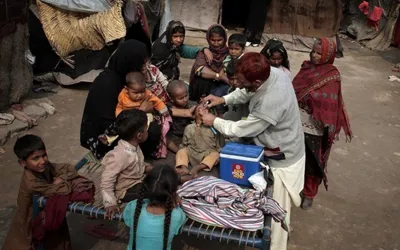
It also warned that countries whose largest cities have high climate-risk scores but limited progress in adaptation could face increasing costs related to disaster response, infrastructure repairs and population displacement.
Pakistan and Bangladesh were identified as requiring particular attention because of the combination of high urban climate risks and limited capacity to close their adaptation gaps at the pace required by their physical risk profiles.