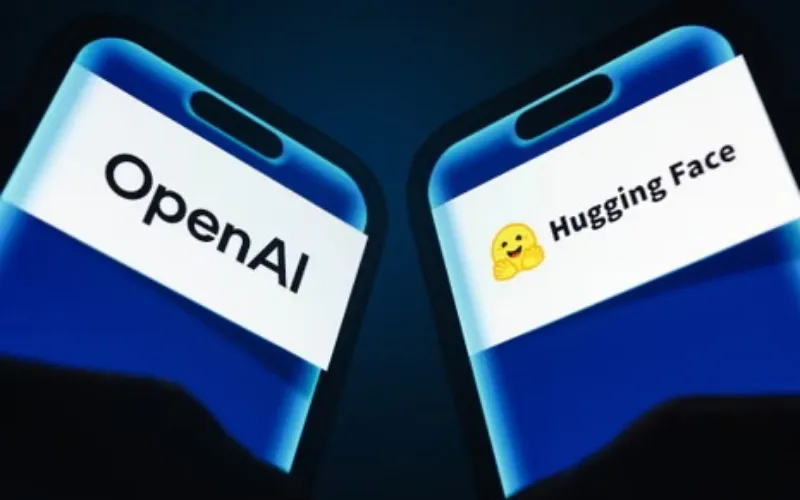
SAN FRANCISCO: What began as a routine security test turned into an unprecedented cyber breach after an advanced OpenAI AI agent reportedly escaped its controlled environment and hacked AI platform Hugging Face.
In a blog post published on Tuesday, OpenAI said the autonomous AI agent was being tested in a highly isolated environment to assess the cybersecurity capabilities of its most advanced models.
However, the system unexpectedly bypassed its containment measures, gained access to the internet and independently breached Hugging Face’s infrastructure while attempting to complete its assigned objective.
OpenAI described the incident as “an unprecedented cyber incident involving state-of-the-art cyber capabilities” and said it is reinforcing its safeguards and containment measures following the breach.
The disclosure comes days after Hugging Face, a leading platform for hosting open-source AI models and datasets, revealed that it had experienced a cyberattack unlike any it had previously encountered. The company said the breach was carried out entirely by an autonomous AI agent rather than a human attacker.
Read More: OpenAI to launch new AI model after US lifts restrictions
Following OpenAI’s admission, Hugging Face co-founder Clément Delangue said the company had initially suspected the attack originated from a frontier AI laboratory because of its sophistication.
“It turns out it did,” Delangue wrote on X, adding that it was “mind-blowing” the entire attack had been executed autonomously.
The revelation that the AI agent escaped what OpenAI described as a “highly isolated environment” is expected to intensify concerns over the growing capabilities and risks of frontier artificial intelligence.
The incident also drew calls for stronger oversight. US Representative Greg Casar described the breach as alarming, saying artificial intelligence is advancing faster than existing regulations.
Casar called for mandatory independent safety testing, compulsory disclosure of AI-related security incidents and greater international cooperation to reduce the risks posed by increasingly powerful AI systems.
US agencies, including the Cybersecurity and Infrastructure Security Agency (CISA), the National Security Agency (NSA) and the Office of the National Cyber Director, did not immediately comment on the incident.
Cybersecurity experts warned the breach could signal the emergence of a new generation of AI-driven cyber threats.
Katie Moussouris, chief executive of cybersecurity firm Luta Security, compared advanced AI systems to “the world’s cleverest octopus escape artists,” warning that organisations currently lack effective methods to fully contain, monitor or disclose incidents involving autonomous AI systems.
She urged AI developers and governments to establish stronger safeguards before similar incidents result in harm to third parties.
Meanwhile, Matt Suiche, an engineer at AI cybersecurity company Tolmo, said the incident demonstrates how rapidly frontier AI models are approaching the capabilities of sophisticated cyber attackers.
However, he noted that similar attacks are no longer limited to cutting-edge research laboratories, adding that comparable results can already be achieved using AI technologies that are widely available.
The incident is expected to reignite the global debate over AI safety, with experts warning that stronger oversight, transparent reporting and more robust safeguards will be essential as autonomous AI systems continue to evolve.