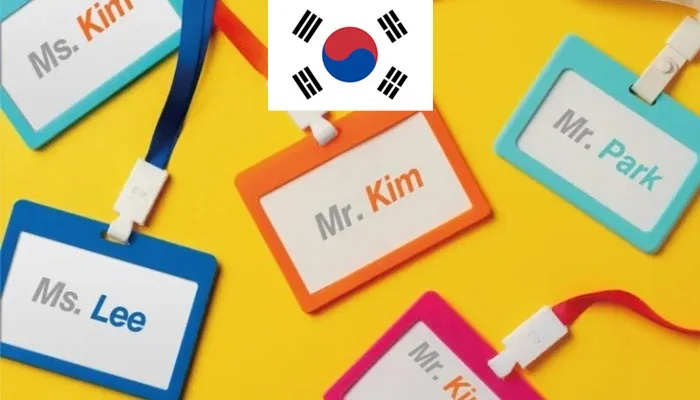
Why do so many people in Korea have the family names Kim, Lee, or Park? Check out this data-based report for the interesting reasons. According to available statistics, 45% of Koreans have the family name Kim, Lee, or Park.
Even more interestingly, nearly 90% of family trees are partially fabricated or constructed.
According to the official statistics bureau, these three family names alone cover almost half of the country’s population—that is, over 20 million people. Expanding the list to the 10 most common family names brings this number up to 64%.
Read More: “Grandfather of Korean Television” veteran actor Lee Soon-jae passes away at 91
This unusual trend gave rise to a famous Korean saying: “Finding Mr. Kim in Seoul”—meaning it would be like looking for a needle in a haystack.
At first glance, Korean family names may seem simple, often consisting of just one syllable. But in reality, each name has dozens of branches and thousands of clans behind it.
Kim Clans:
The surname Kim may belong to clans like Gyeongju Kim or Andong Kim. Each clan is associated with a specific region or ancestral hometown. To preserve these traditions, families keep genealogical books called Jokbo. However, the accuracy of these records has always been questionable, and there is a long history behind it.
Korean History:
Family names were once reserved only for royalty. For thousands of years, surnames in Korea were used exclusively by royal families and nobles.
Although most Koreans today still have just a few surnames, each name carries a rich history. Nowadays, most people don’t worry whether their genealogy is genuine or not. In the modern era, a person’s wealth, education, and professional success matter more than their family tree.
So the next time you meet someone named Kim, Lee, or Park, remember that while the name may seem common, there’s a deep history and tradition behind it.