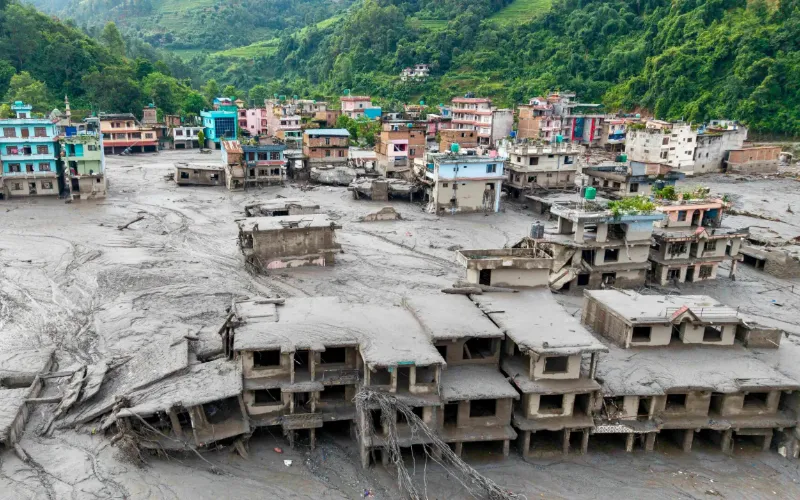
KATHMANDU: The death toll from catastrophic flooding and mudslides along the Nepal-China border has risen to at least 750, with more than 3,000 people still missing, authorities said Sunday, as rescue operations entered their fifth day.
Nepal’s disaster management agency reported 734 confirmed deaths on its side of the border, with 2,498 people unaccounted for. In China’s Tibet Autonomous Region, state media confirmed 16 fatalities and 546 missing following Wednesday’s glacier collapse. India also reported recovering seven bodies from rivers flowing out of Nepal, though those are not yet included in the official regional tally.
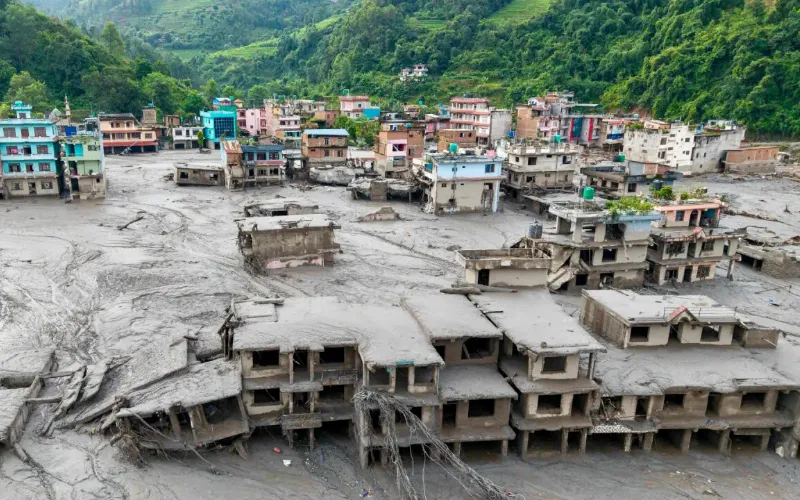
The disaster was triggered when a glacier broke loose in the Himalayas, unleashing a devastating torrent of ice, rock, mud, and debris that swept through river systems on both sides of the frontier. The cascade destroyed buildings, bridges, and hydropower stations, and inundated large swaths of mountainous terrain.
Among Nepal’s missing are 589 foreign nationals, up from 517 reported Saturday. The list includes 933 workers employed on hydropower projects along the affected rivers, according to the National Disaster Risk Reduction and Management Authority. Rescue teams have so far saved 8,186 people, including 227 foreigners, the agency said.
On the Tibetan side, Chinese officials said 261 foreign nationals from 23 countries are missing, with the largest numbers coming from Nepal (104), India (49), Latvia (33), the United States (18), and the United Kingdom (15). Beijing has notified foreign missions, officials said at a press conference Saturday.
Chinese state broadcaster CCTV reported that the mudslide took just six to seven minutes to travel from the Nepalese side to the Gyirong border crossing. Surveillance footage showed torrents of water and debris engulfing buildings as people fled.
China has linked the disaster to climate change, with CCTV citing scientists who attributed the glacier collapse to “glacier instability under the long-term effects of global warming,” calling it a “new and prominent feature of cryosphere disasters” on the Tibetan Plateau.
Chinese Foreign Minister Wang Yi told his Nepalese counterpart in a phone call Saturday that the event was their “most severe cross-border disaster” in recent years, with rescue efforts facing unprecedented difficulty and complexity, CCTV reported.
Beijing has deployed more than 2,100 emergency workers and allocated at least 220 million yuan ($32.7 million) for relief efforts. China is also providing emergency cash aid, disaster supplies, satellite and hydrological data, and tunnel rescue experts to Nepal, according to state media.
Nepal’s finance minister told Reuters the impoverished nation of 30 million people would need an estimated $4 billion to $5 billion for reconstruction and has appealed for specialized foreign assistance.
The International Federation of Red Cross and Red Crescent Societies estimated that more than 90,000 people may have been affected by the floods.
In a sign of ongoing danger, local police told Reuters that water levels in the Trishuli River had risen in recent hours, prompting residents and rescue workers to move to higher ground.
Chinese and Nepalese authorities said they are cooperating to identify missing citizens and foreign nationals, and to strengthen disaster prevention, mitigation, and climate-change response efforts.