TEHRAN: Iran launched missiles at Israel on Sunday, prompting retaliatory strikes from Israel and threatening a tenuous ceasefire between Washington and Tehran that has been in place since early April. IRGC said it targeted Israel’s Nevatim and Tel Nof bases.
The Israeli military said it identified incoming missile fire and activated air defense systems. Early Monday local time, the Israel Defense Forces announced on X that it had struck military targets in western and central Iran.
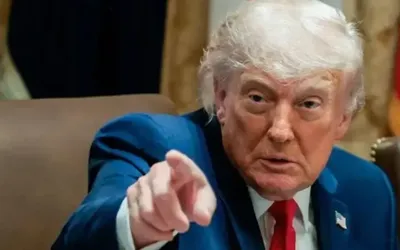
The missile exchange marks the first time Iran has fired at Israel since the ceasefire began. President Donald Trump has been briefed on the renewed fighting, the White House confirmed to MS NOW, a notification first reported by Axios. Trump later told Fox News that the attacks are “certainly not going to help negotiations.”
Iranian Parliamentary Speaker Mohammad Bagher Ghalibaf said on X that the U.S. “naval blockade and violation of agreements regarding Lebanon” amount to breaches of the ceasefire. He added that the military activity in Lebanon and the ongoing blockade have made “American and regime bases and assets in the region into legitimate targets,” according to a translation of his post.
Trump was initially expected to urge Israeli Prime Minister Benjamin Netanyahu against retaliatory strikes, Axios reported, though Israel ultimately proceeded with its own military response.
In a phone call with the Financial Times, Trump said Netanyahu “won’t have any choice” but to accept a deal the U.S. negotiates with Iran because the U.S. president “calls the shots.”
But an Iranian official linked to the talks told MS NOW that “a deal with President Trump is no longer feasible at this stage,” blaming the U.S. president for the situation in Lebanon and the escalating hostilities.
A White House official, granted anonymity to speak candidly, told MS NOW that Trump had underestimated Iran’s willingness to restart the conflict, saying the recent negotiations “have exposed a fundamental miscalculation from Trump and the White House.” The official added that Iran’s “erratic behavior” has left the president with no imminent off-ramp.
Iran’s Islamic Revolutionary Guard Corps said in a statement to The New York Times that the ceasefire “was conditional on a cease-fire on all fronts,” calling Sunday night’s operation “a warning” and adding that “if aggressions are repeated, the responses will be broader.”
The fragile U.S.-Iran ceasefire has been complicated by ongoing fighting between Israel and Iran-backed Hezbollah in Lebanon. Iran has demanded an end to hostilities in Lebanon and a halt to the U.S. naval blockade, while the U.S. is demanding Iran surrender its nuclear material and agree to never obtain a nuclear weapon.
The Trump administration is reportedly considering redirecting Iranian assets to allied Gulf states to pay for rebuilding damage from Iranian strikes. Iran’s Deputy Foreign Minister Kazem Gharibabadi responded on X that regional governments were “not in a position to demand reparations,” writing that Iran’s assets were “neither war spoils for Washington nor a payment fund for its allies,” Reuters reported Sunday.
Oil prices rose Monday amid heightened tensions. International benchmark Brent crude futures for July advanced 3.18% to $96.05 per barrel, while U.S. West Texas Intermediate futures for August gained 3.46% to $93.67 a barrel.
Meanwhile, OPEC+ agreed to increase output targets by 188,000 barrels per day starting in July, according to an OPEC statement, marking the fourth such hike since the closure of the Strait of Hormuz.