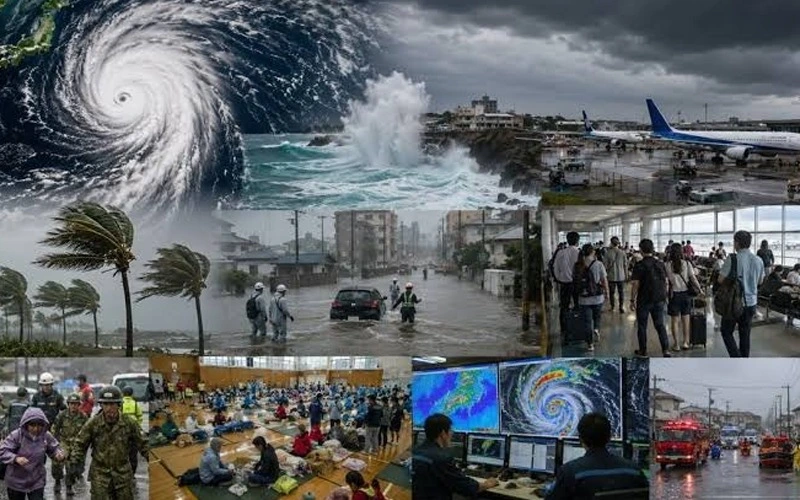
Southwestern Japan faced a fresh weather threat on Friday as Typhoon Dolphin approached with powerful winds and heavy rain, forcing thousands of families to leave their homes and disrupting air travel across the region.
The Japan Meteorological Agency (JMA) said Typhoon Dolphin, a Category 1 storm, was nearing the chain of islands between Kyushu and Okinawa Prefecture with maximum sustained winds of 144 kilometres per hour and gusts reaching 198 kilometres per hour.
Authorities issued evacuation orders for nearly 260,000 residents in Kagoshima and Okinawa prefectures, warning communities about possible flooding, structural damage, and dangerous conditions caused by the slow-moving storm.
The approaching typhoon disrupted transport across the region, with more than 500 flights cancelled on Friday as airlines responded to worsening weather conditions.
Automaker Toyota also suspended operations at nine factories as a precautionary measure due to safety concerns.
Read More: Japan earthquake death toll reaches 13 as rescue efforts continue
The JMA warned that Typhoon Dolphin was expected to maintain its strength while approaching Okinawa, increasing the possibility of strong winds capable of damaging buildings and infrastructure.
Weather officials warned that a linear rain band a narrow area of intense rainfall and thunderstorms could develop, increasing the risk of flooding in vulnerable locations.
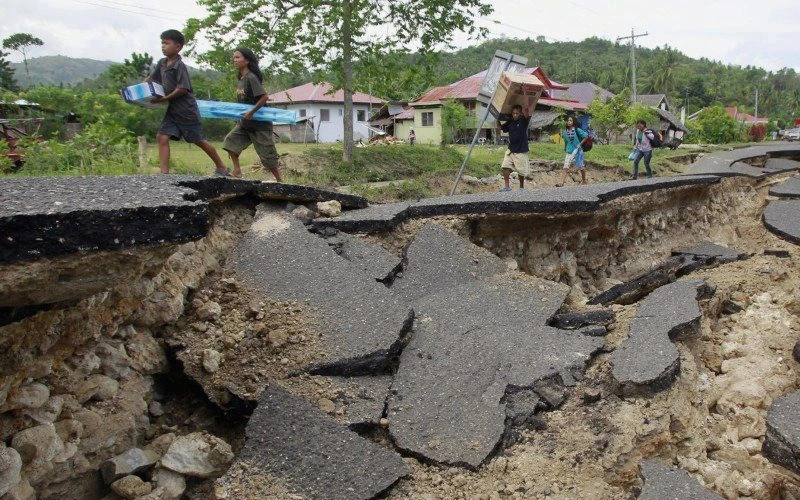
The storm was also affecting parts of Kyushu, including Kumamoto Prefecture, which is still recovering from last week’s magnitude 7.1 earthquake.
Around 6,700 residents in Kumamoto remain in evacuation centres after several homes collapsed during the earthquake, adding further challenges for communities already affected by the disaster.
Officials have advised residents in affected areas to remain alert, follow evacuation instructions, and avoid unnecessary travel as the typhoon moves closer.
The JMA also warned of possible heatstroke risks, with temperatures expected to reach 36 degrees Celsius in some areas despite the approaching storm system.