LAHORE: Pakistan agriculture sector showed strong recovery in fiscal year 2025-26. The sector grew by 2.89%, compared to 1.53% during the same period last year.
This growth is important because the country faced severe monsoon floods in 2025. The floods affected many farming areas and raised concerns about crop production. However, timely government support helped farmers manage the situation and protect agricultural output.
Agriculture remains a key part of Pakistan economy. It contributes 23.4% to the country GDP and provides jobs to 33.1% of the workforce. The government also strengthened food security planning through the National Agriculture and Food Security Council. These efforts helped improve confidence in the sector and supported overall growth.
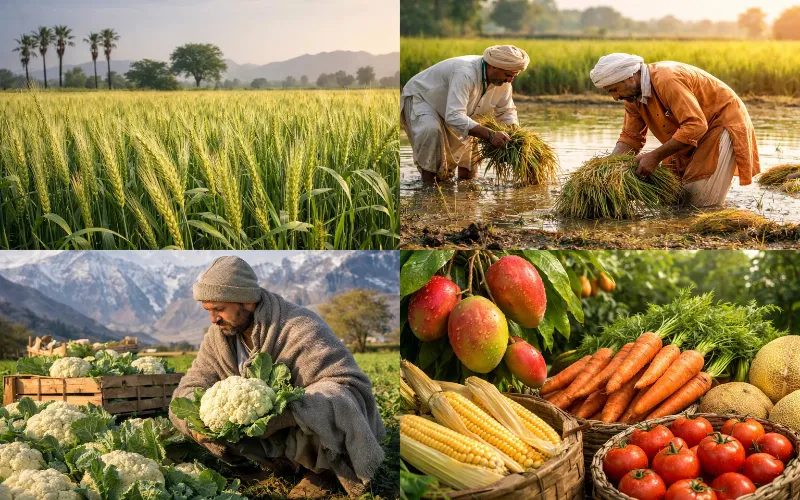
The crop sector returned to positive growth after a difficult year. It expanded by 1.44% in 2025-26 after shrinking by 1.01% in the previous year. Major crops recorded overall growth of 0.65%.
This was a major improvement from last year sharp decline. Strong production of sugarcane, wheat, and rice helped drive the recovery. These gains balanced weaker results in cotton and maize.
Sugarcane was the best performing major crop. Production increased by 6.2% and reached 89.45 million tons. The rise came from a larger cultivated area and better crop yields. Wheat production also performed well.
Output grew by 4.3% to 29.61 million tons. Government policies, certified seeds, and better fertilizer availability supported this increase. Rice production rose by 2.8% and reached 9.99 million tons. Higher yields helped offset a reduction in cultivated land.
Cotton and maize faced challenges during the year. Cotton production fell slightly by 0.5% to 7.05 million bales.
Many farmers shifted to crops that offered better profits. Maize production dropped by 2.7% to 8.79 million tons because of flood related damage.
Despite these declines, other crops performed strongly. Pulse production jumped by 31.4%, vegetable output increased by 12.6%, and fruit production grew by 2.8%.
The livestock sector also recorded solid growth. It expanded by 3.75%, compared to 2.95% last year. Livestock now accounts for 62.4% of agriculture’s value and contributes 14.6% to national GDP.
The sector achieved this growth despite lower green fodder availability. Better animal care and government support helped increase overall production.
Milk production reached 74.69 million tons, up from 72.34 million tons last year. Meat production also increased to 6.31 million tons. Poultry meat recorded the strongest growth among livestock products.
Pakistan’s poultry industry continues to expand and now employs more than 1.5 million people. The country is also the world’s eleventh-largest poultry producer.
The government plans to turn livestock into a major export sector. Meat exports have already increased from $196 million in 2015 to more than $500 million in FY25.
The National Meat Sector Transformation and Export Council aims to raise exports to nearly $700 million by 2028. Meanwhile, forestry and fishing sectors also posted growth of 2.02% and 1.66%, respectively.
Agricultural inputs showed positive trends during the year. Fertilizer nutrient off take increased by 11.4% during July-March 2025-26 and reached 3.8 million tons. Nitrogen use rose by 14.8%, while potash consumption increased by 26.2%.
These figures suggest stronger farmer confidence and higher investment in crop production. However, phosphate use declined by 1.9% because of rising prices.