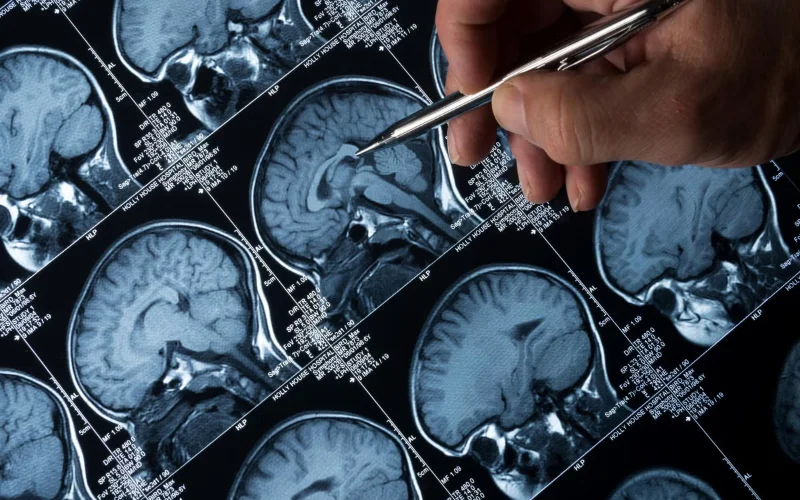
HEIDELBERG, Germany: Scientists have developed an advanced artificial intelligence (AI) system capable of diagnosing brain tumors in just 12 minutes, a dramatic improvement over the current average diagnostic time of about 12 days.
Researchers in Heidelberg, Germany, created the AI platform, known as Heteros, which can identify and classify brain tumors with remarkable speed and accuracy. Experts say the technology has the potential to transform the diagnosis of brain cancer worldwide.
In recent years, researchers have found that many brain tumors can only be accurately diagnosed through detailed analysis of both their molecular characteristics and microscopic structure.
However, such testing is often complex, requires specialized equipment, and can take up to two weeks to produce results.
To address these challenges, German scientists developed the AI-powered system to make brain cancer diagnosis faster, simpler, and more accessible.
Moritz Gerstung, a researcher at the German Cancer Research Center and one of the leaders of the project, said Heteros demonstrates how AI-enabled digital pathology can revolutionize medical diagnostics.
He said the technology allows for rapid and widely accessible diagnostic methods that previously required highly sophisticated technical resources, potentially improving patient care and speeding up treatment decisions for those with brain cancer.
More read, New mRNA vaccine aims to stop cancer before it starts
Earlier, Researchers at the University of Oxford and pharmaceutical company Moderna have developed an experimental mRNA vaccine aimed at preventing cancer in people at high risk of developing bowel and ovarian cancers.
The vaccine, however, has yet to undergo clinical testing and remains in the trial phase.
Scientists say the vaccine is based on mRNA technology, which could eventually be used to prevent a wider range of cancers in the future.
The research focuses on people with Lynch syndrome, an inherited condition that significantly increases the risk of several cancers, including those affecting the bowel, uterus, ovaries, stomach, pancreas, kidneys and skin.