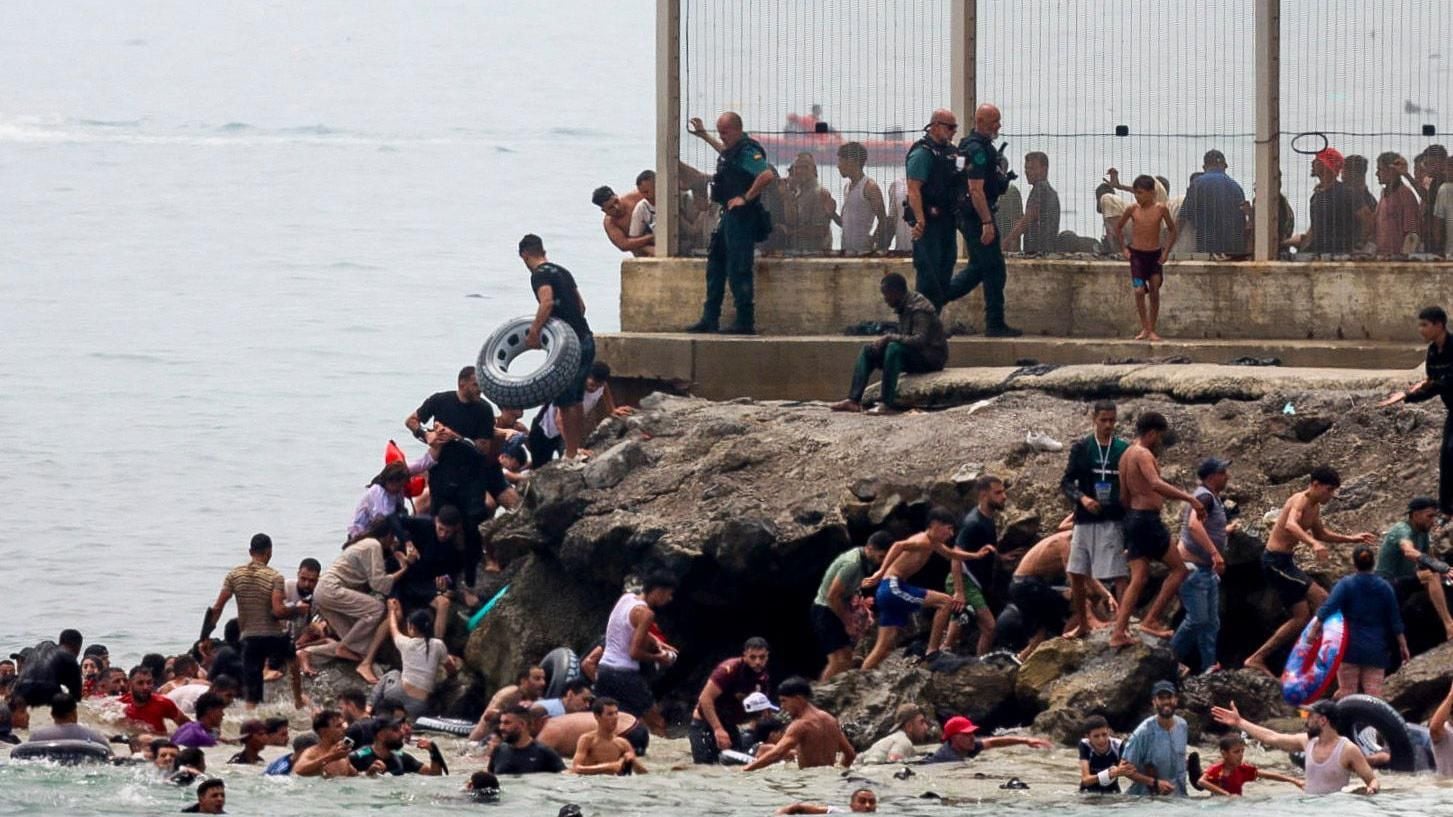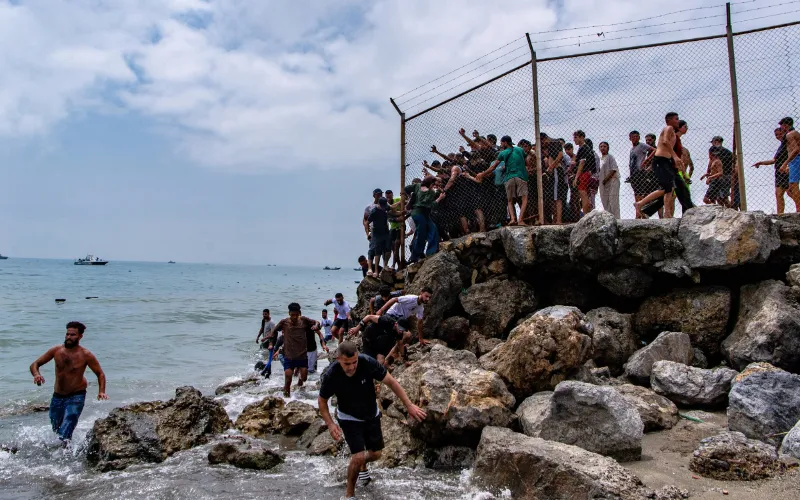
At least 72 people have died in recent days during the large influx of migrants into Spain’s Ceuta enclave after tens of thousands of people, most of whom swam around the border from Morocco, entered the territory, local officials said Sunday.
Most of the nearly 60,000 migrants who crossed into Spain’s North African enclave have now returned to Morocco following the largest mass migrant crossing ever recorded in Ceuta.
“The latest figure we have is 72,” Spain’s government delegate to Ceuta, Miguel Angel Perez Triano, told reporters when asked about the death toll. The previous official death toll was 67.
By Sunday, Spanish police and military personnel were patrolling the streets as Ceuta gradually returned to normal after the sudden influx of migrants between Wednesday and Friday.
Only small groups of migrants remained after most of those who crossed the border barrier voluntarily returned to Morocco within 48 hours.
AFP journalists on Saturday saw several migrant children gathered in an abandoned industrial park in Ceuta, while others were sleeping on the sidewalks nearby.
“All the children here want to go to mainland Spain,” said Aziz Dabch, a 41-year-old Moroccan man who was one of the few adults at the site.
The record number of migrants entering the enclave has sparked an international dispute for Spain, with several European partners criticizing Madrid over its immigration policies.
Near Ceuta’s port, Spanish soldiers detained a group of nine exhausted migrants who were sitting on the pavement. They were guarded by troops alongside an armored vehicle, an AFP reporter said.
Rescue teams also used small inflatable boats to patrol the waters near the border barrier extending into the Mediterranean Sea, where a new 500-meter (1,640-foot) floating barrier has been installed to strengthen security.
Members of Spain’s Civil Guard were also taking migrants off buses and escorting them to the border crossing so they could return to Morocco.
The border crossing remained calm, with cleanup crews collecting trash, clothing and other items left behind during the large-scale crossing.