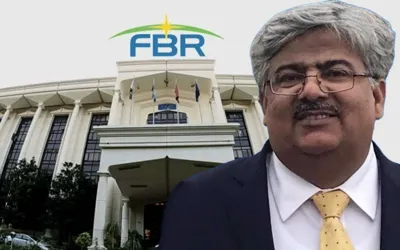
KARACHI: The government intends to completely abolish the Super Tax, with its rate already reduced by 2 percentage points and work underway on its gradual elimination, Federal Board of Revenue (FBR) Chairman Rashid Mahmood Langrial said.
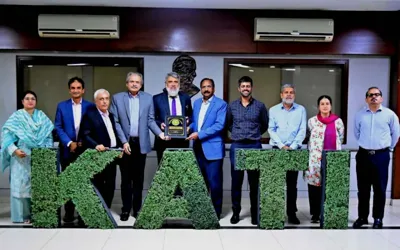
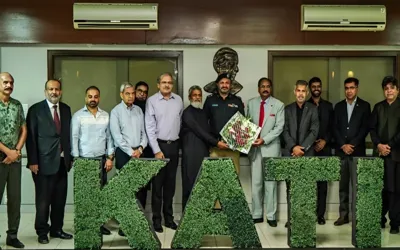
Langrial announced the plan during a visit to the Korangi Association of Trade and Industry, where he also said an FBR office would be established at KATI to address tax-related issues facing industrialists in the Korangi Industrial Area. He added that the FBR would consult stakeholders to fix shortcomings in the raw material import system and that the scope of the FBR help desk would be extended from Karachi to Sukkur.
The FBR chairman said meetings would be held to resolve border trade-related issues faced by the leather industry and discussed implementing a model similar to the Drug Regulatory Authority of Pakistan for the pharmaceutical industry to make the Track and Trace System more effective.
He said the FBR's objective was to improve the tax system and facilitate the business community, urging industrialists to cooperate in identifying and eliminating tax evasion so the system could be made more transparent and effective. During the meeting, he listened to issues raised by industrialists from various sectors and issued on-the-spot instructions for their resolution, an initiative widely appreciated by the business community and KATI.
KATI President Sheikh Umer Rehan expressed gratitude to Prime Minister Shehbaz Sharif for directing the FBR chairman to visit Karachi every month to improve the economy and address industrialists' difficulties. He said that if the federal cabinet and ministers also devoted time to Karachi, following the FBR chairman's example, it would help strengthen Pakistan's economy.
Rehan observed that coordination and mutual cooperation between the FBR and KATI had improved considerably and said effective implementation of the FBR's progressive policies, faceless assessment system and digitalisation could significantly expand the tax net and increase revenue collection. He proposed establishing a joint committee between the FBR and KATI to ensure prompt resolution of industrialists' tax-related issues.
The KATI president highlighted extraordinary delays in tax refunds as one of the major challenges confronting industrialists, saying billions of rupees belonging to export-oriented industries and regular taxpayers remained stuck with the FBR for extended periods. He urged the FBR to strictly adhere to prescribed timelines for refund payments, strengthen the automated system for disbursing genuine and verified refunds, and ensure legitimate claims were not withheld under the pretext of unnecessary audits or documentation requirements. He also called for maximum automation of tax procedures to minimise unnecessary interaction between tax officials and business representatives.
KATI Deputy Patron-in-Chief Zubair Chhaya called for the appointment of an FBR focal person at KATI to ensure prompt action on tax-related matters concerning industries. He said the business community was also facing difficulties due to frequent changes in various SROs, notifications and tax laws, and proposed a comprehensive review of unnecessary SROs. He stressed that relevant industrial associations and stakeholders must be consulted before introducing any new tax policy, duty or SRO.
KITE Limited Chairman Zahid Saeed, former KATI chairman Rashid Siddiqui, Mian Zahid Hussain and Zubair Tufail emphasised the need to broaden the tax net by bringing untaxed sectors into the formal tax system rather than imposing additional burdens on existing taxpayers.
The event was also attended by KITE Limited CEO Saleem-uz-Zaman, Senior Vice President Farukh Qandhari, Vice President Nasir Sheikh, former chairmen and presidents Muhammad Ikram Rajput, Junaid Naqi, Johar Qandhari, Ehteshamuddin and Syed Farukh Mazhar, FBR Member Inland Revenue Operations Zubair Bilal, Member Customs Operations Syed Shakeel Shah, Chief Collector Appraisement (South) Wajid Ali, Pakistan Vanaspati Manufacturers Association Chairman Chaudhry Naveed Ahmed, and a large number of industrialists and KATI members.