Pakistan’s headline inflation is expected to rise to around 11.2% in June 2026, according to a report by Insight Securities, driven mainly by a low base effect along with higher food and housing costs.
Report added that, inflation stood at about 3.2% in the same month last year and 11.7% in May 2026, indicating a slight moderation on a monthly basis but continued pressure on prices overall.
On a month-to-month basis, inflation is projected to decline by around 0.2%, mainly due to lower fuel prices following a drop in global crude oil rates and reduced electricity charges supported by favorable quarterly tariff adjustments, despite higher fuel cost adjustments. However, food prices are expected to rise by around 0.5%, driven by increases in perishable items.
The report said the annual average inflation for fiscal year 2026 is likely to reach around 7.0%, compared with 4.6% in fiscal year 2025. Core inflation remains sticky, with estimates of around 9.7% in urban areas and 8.8% in rural areas.
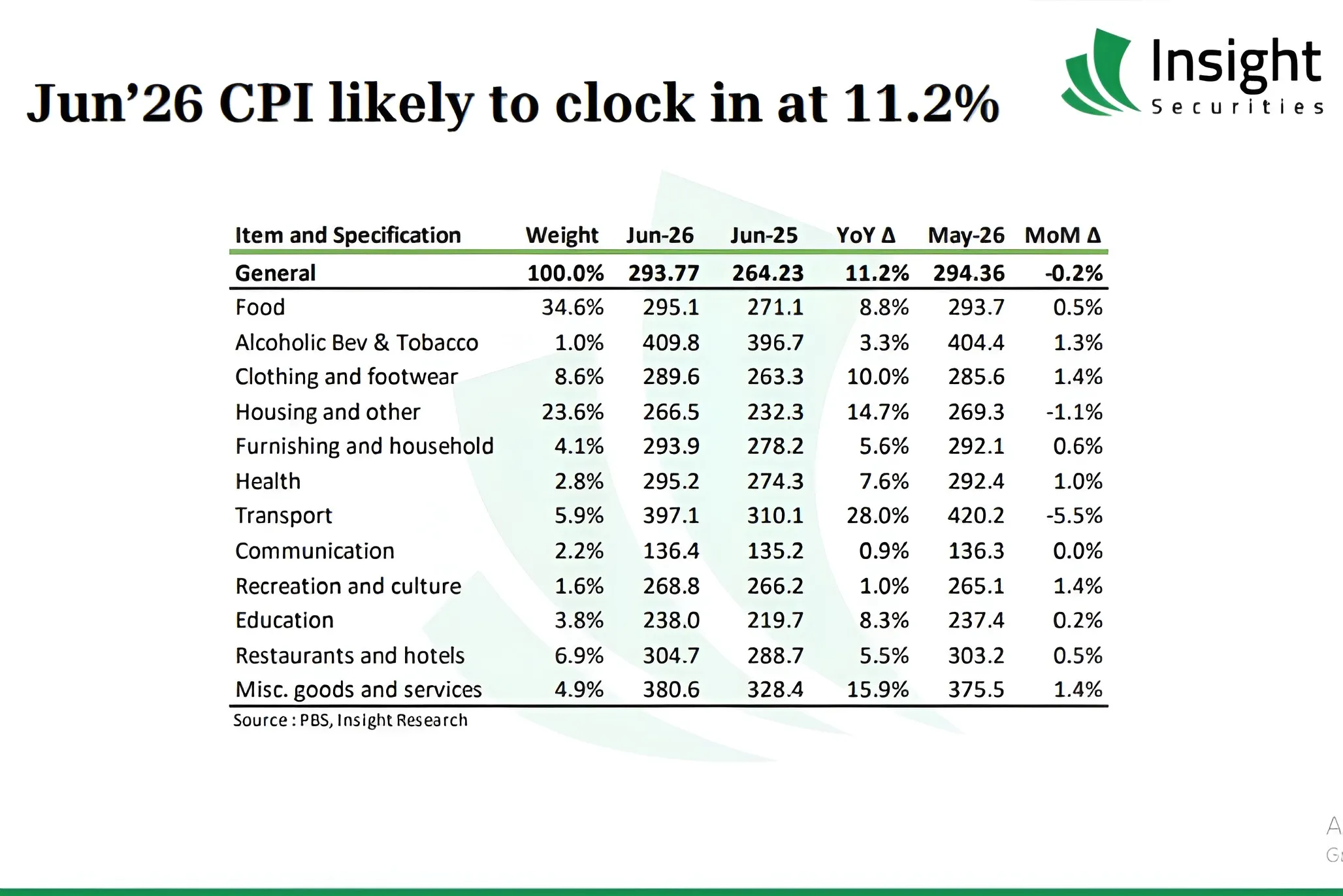
A breakdown of the Consumer Price Index shows mixed trends across categories. Transport recorded a sharp annual increase of 28%, while housing and utilities rose 14.7%. Clothing and footwear increased 10%, and food inflation stood at 8.8%. Other categories, including health, education and miscellaneous goods, also recorded moderate gains.
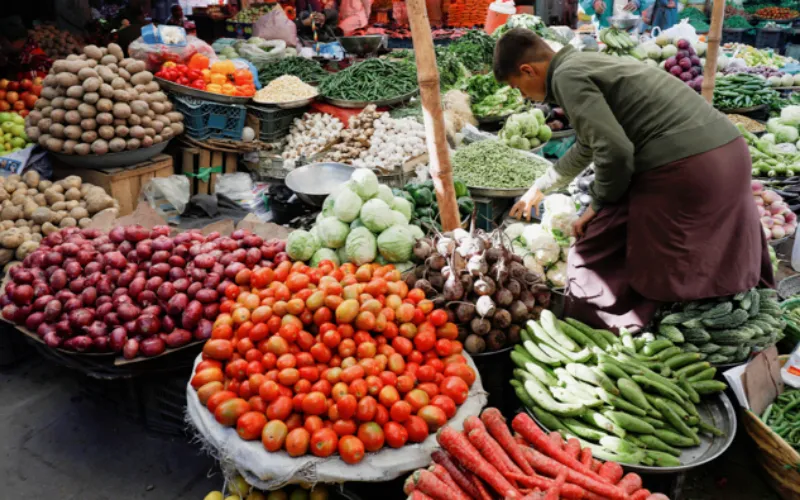
Within food items, prices of tomatoes surged by 85.4%, potatoes by 33.2%, onions by 25.8%, wheat by 1.7% and vegetable ghee by 1.5%. On the other hand, prices of chicken fell by 17.6%, fresh vegetables by 15.4%, motor fuel by 11.6%, eggs by 8.9% and pulse moong by 2.2%.
The report highlighted that global oil prices have eased following the partial reopening of the Strait of Hormuz and a memorandum of understanding between the United States and Iran. It added that while geopolitical risks remain, the likelihood of prolonged escalation has declined, supporting a more stable inflation outlook.
It also noted that Pakistan’s external position has remained resilient, supported by strong remittance inflows that have helped maintain foreign exchange liquidity.
Looking ahead, the report said future inflation trends and possible interest rate cuts will depend on global economic conditions, monetary policy decisions by major central banks and domestic weather-related risks, which could affect food supply.