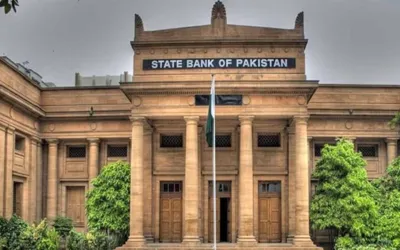
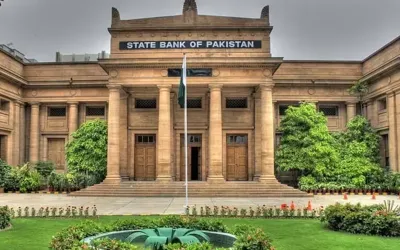
KARACHI: The State Bank of Pakistan (SBP) raised its key policy rate by 50 basis points to 12% on Monday, bringing the benchmark rate to a 17-month high, the central bank said.
Nine of the 10 monetary policy committee members voted in favor of the increase, the SBP said. The central bank said it expects the current account deficit to remain in the vicinity of zero to 1% of GDP.
Topline Securities said the central bank had raised the policy rate "in line with our expectations."
The policy rate had previously stood at 11.5%. The central bank had held the rate steady since raising it by 100 basis points in April in response to rising global energy prices and supply chain risks — its first increase in nearly three years.
Before that, the central bank had maintained the rate at 10.5% in January and March after a surprise 50-basis-point cut in December 2025.
The SBP has cut the key rate by a cumulative 1,050 basis points since mid-2024, from a record 22% reached in June 2023, as inflation cooled sharply from multi-decade highs.
SBP expressed concerns that the Middle East crisis could intensify inflationary pressures and delay efforts to bring price increases under control.
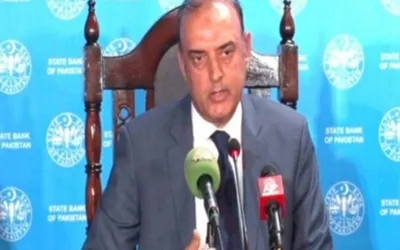
Governor Jameel Ahmad said the economic outlook had changed significantly since the previous monetary policy meeting, prompting the committee to reassess inflation risks and consumers' expectations of future prices.
Pakistan's inflation reached 11.1% in August, up from 9.2% in July, before easing to 10.26% in September.
Ahmad said inflation had previously been expected to ease toward the upper end of the SBP's target range of 5% to 7% by the end of the current fiscal year in June 2027. However, recent developments have made that outlook more uncertain.
"More time will be required to bring inflation within the target range," the governor said.
He explained that although inflation had initially shown signs of improvement, the potential effects of the Middle East crisis remained a concern. The committee also considered consumers' inflation expectations when deciding to increase the rate, Ahmad said.
A 50-basis-point increase is equivalent to half a percentage point, taking the policy rate from 11.5% to 12%. A higher policy rate can make borrowing more expensive for businesses and consumers while helping the central bank contain demand and limit inflationary pressures. The decision reflects the SBP's concern that external shocks, particularly those linked to the Middle East crisis, could make it harder to maintain price stability.
The central bank raised its remittance forecast for fiscal 2026–27 to $45 billion, up from its previous projection of $44 billion. Ahmad said remittances were close to $11 billion in the first quarter of the current fiscal year.
The SBP expects imports to reach $71 billion during the fiscal year, while exports are projected at $32.5 billion to $33 billion. Ahmad also said the current account deficit was expected to remain within the central bank's existing target of 0% to 1% of GDP.
Remittances are an important source of foreign currency for Pakistan, helping households meet expenses and supporting the country's external finances.
At its September monetary policy meeting, the SBP had projected economic growth of 3.5% to 4.5% for the current fiscal year. The latest interest rate decision comes as the central bank balances risks to inflation against the need to support economic activity.