Thursday, September 10, 2026
Watch Live
Headlines
Anthropic researcher warns AI could wipe out human within a decade Ukrainian sea drones hit Russia’s Sochi, injuring 28 as explosions rock resort city Sindh home minister apologizes over AG office interference Taylor Swift breaks the internet as newly discovered insect genus named in her honor Global gas and LNG boom sparks massive investment as Asia powers the next energy wave Instagram’s ChatGPT-powered 1980s AI trend sparks a craze among users Shakira and Maluma spark fan fervor with tease of new song 'Agua' PKR projected to hold near 278 per dollar through 2026, BMI Says Apple unveils first foldable iPhone Duo along with iPhone 18 Pro at annual launch event Trump promises $5,000 to Americans if GOP wins midterms Philippine ferry fire leaves five dead, dozens missing Saudi-Houthi conflict deepens with fresh strikes PCB unveils President’s Trophy schedule and squads Pakistan Senate panel approves 'General Cosmetics Bill 2026' to clamp down on unsafe beauty products Anthropic researcher warns AI could wipe out human within a decade Ukrainian sea drones hit Russia’s Sochi, injuring 28 as explosions rock resort city Sindh home minister apologizes over AG office interference Taylor Swift breaks the internet as newly discovered insect genus named in her honor Global gas and LNG boom sparks massive investment as Asia powers the next energy wave Instagram’s ChatGPT-powered 1980s AI trend sparks a craze among users Shakira and Maluma spark fan fervor with tease of new song 'Agua' PKR projected to hold near 278 per dollar through 2026, BMI Says Apple unveils first foldable iPhone Duo along with iPhone 18 Pro at annual launch event Trump promises $5,000 to Americans if GOP wins midterms Philippine ferry fire leaves five dead, dozens missing Saudi-Houthi conflict deepens with fresh strikes PCB unveils President’s Trophy schedule and squads Pakistan Senate panel approves 'General Cosmetics Bill 2026' to clamp down on unsafe beauty products

New AI tool detects brain tumors in minutes instead of days

Heteros demonstrates how AI-enabled digital pathology can revolutionize medical diagnostics.

Web Desk June 11, 2026 Add Bol News as a trusted source

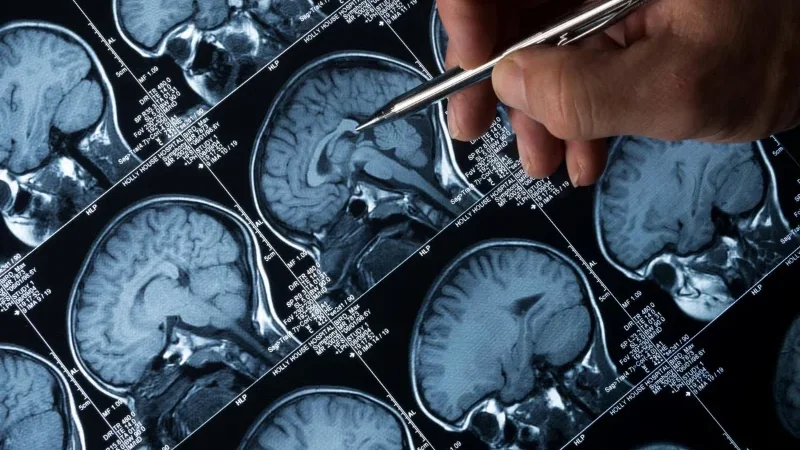
HEIDELBERG, Germany: Scientists have developed an advanced artificial intelligence (AI) system capable of diagnosing brain tumors in just 12 minutes, a dramatic improvement over the current average diagnostic time of about 12 days.

Researchers in Heidelberg, Germany, created the AI platform, known as Heteros, which can identify and classify brain tumors with remarkable speed and accuracy. Experts say the technology has the potential to transform the diagnosis of brain cancer worldwide.

In recent years, researchers have found that many brain tumors can only be accurately diagnosed through detailed analysis of both their molecular characteristics and microscopic structure.

However, such testing is often complex, requires specialized equipment, and can take up to two weeks to produce results.

To address these challenges, German scientists developed the AI-powered system to make brain cancer diagnosis faster, simpler, and more accessible.

Moritz Gerstung, a researcher at the German Cancer Research Center and one of the leaders of the project, said Heteros demonstrates how AI-enabled digital pathology can revolutionize medical diagnostics.

He said the technology allows for rapid and widely accessible diagnostic methods that previously required highly sophisticated technical resources, potentially improving patient care and speeding up treatment decisions for those with brain cancer.

More read, New mRNA vaccine aims to stop cancer before it starts

Earlier, Researchers at the University of Oxford and pharmaceutical company Moderna have developed an experimental mRNA vaccine aimed at preventing cancer in people at high risk of developing bowel and ovarian cancers.

The vaccine, however, has yet to undergo clinical testing and remains in the trial phase.

Scientists say the vaccine is based on mRNA technology, which could eventually be used to prevent a wider range of cancers in the future.

The research focuses on people with Lynch syndrome, an inherited condition that significantly increases the risk of several cancers, including those affecting the bowel, uterus, ovaries, stomach, pancreas, kidneys and skin.

Recommended