ISLAMABAD: Pakistan is celebrating its 79th Independence Day across the country on Friday with flag-hoisting ceremonies, special prayers, cultural programs and patriotic events, as the nation honors the struggle and sacrifices that led to the creation of Pakistan on Aug. 14, 1947.
The day began with a 31-gun salute in Islamabad and 21-gun salutes in the provincial capitals, followed by special prayers at mosques for peace, unity, prosperity and stability.
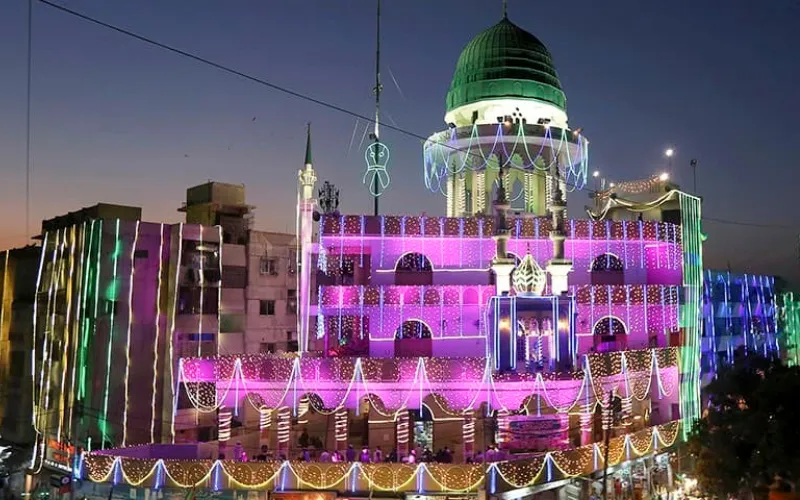
Government buildings, streets, markets and public spaces have been decorated with national flags, buntings and colorful lights, while seminars, exhibitions and cultural programs are being held across the country.
Mazar-e-Quaid Pays tribute to founder
In Karachi, a ceremonial change of guard was held at Mazar-e-Quaid, where cadets of the Pakistan Naval Academy assumed guard duties at the mausoleum of Quaid-e-Azam Muhammad Ali Jinnah.
Commandant Pakistan Naval Academy Rear Adm. Muhammad Umair attended the ceremony as chief guest, laid a floral wreath at Jinnah’s grave and offered Fateha. The annual ceremony honors Jinnah and his leadership in the Pakistan Movement.
Remembering the struggle for Pakistan
Pakistan emerged as an independent state following the end of British rule in the subcontinent. The Pakistan Movement was led by Muhammad Ali Jinnah and the All-India Muslim League, with important contributions from leaders including Allama Muhammad Iqbal, Liaquat Ali Khan, Fatima Jinnah and Chaudhry Rehmat Ali.
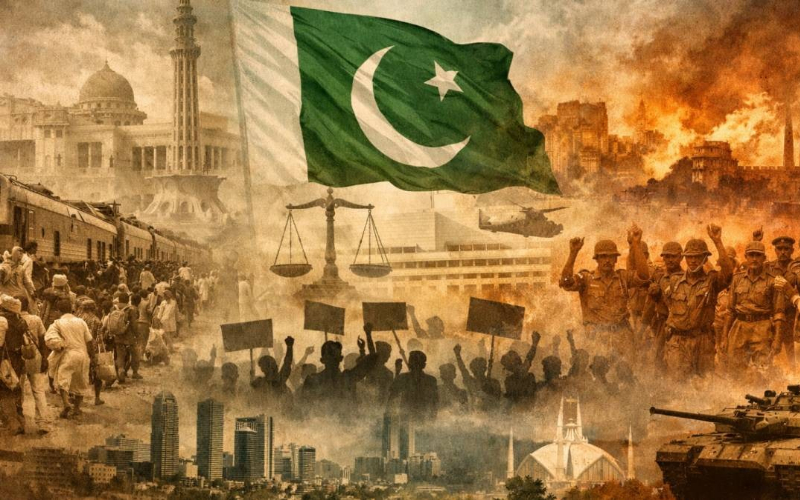
The creation of Pakistan followed years of political struggle and the partition of British India. Millions of people migrated across the newly drawn borders, while families were separated and countless lives were lost amid the violence and upheaval.
The sacrifices of political workers, families and ordinary citizens remain an important part of Independence Day commemorations.
Flag reflects Pakistan’s national identity
The national flag remains at the heart of Independence Day celebrations. Its green field represents the Muslim majority, while the white stripe represents religious minorities. The crescent symbolizes progress, and the five-pointed star represents light and knowledge.
The flag was adopted by the Constituent Assembly on Aug. 11, 1947, shortly before independence. It is displayed prominently on homes, schools, government buildings, vehicles and public spaces across the country.
Anthem carries a lasting national legacy
Pakistan’s national anthem was officially adopted on Aug. 13, 1954, with music composed by Ahmed G. Chagla and lyrics written by Hafeez Jullundhri.
The anthem runs for about 80 seconds and is written in highly Persianized Urdu. It is performed at state functions, official ceremonies and major national events, with citizens traditionally standing respectfully when it is played.
National symbols reflect heritage
Pakistan’s state emblem, adopted in 1954, represents the country’s ideological foundation, agricultural economy and cultural heritage. Its shield features four major crops, while the surrounding wreath reflects the country’s cultural traditions and the national motto, “Faith, Unity, Discipline.”
The markhor is Pakistan’s national animal, the chukar partridge is the national bird and jasmine is the national flower. The markhor is associated with strength and Pakistan’s mountainous landscape, while the chukar symbolizes beauty and courage. Jasmine represents purity and simplicity.
The deodar is Pakistan’s national tree and is native to the Himalayan region. It is associated with strength and longevity.
Hockey highlights Pakistan’s sporting legacy
Field hockey is Pakistan’s national sport and has played a major role in the country’s international sporting history.
Pakistan has won four Hockey World Cup titles and three Olympic gold medals, making hockey one of the country’s most successful sports on the global stage.
Pakistan’s political journey continues
Yadgar-e-Fatah marks national resolve
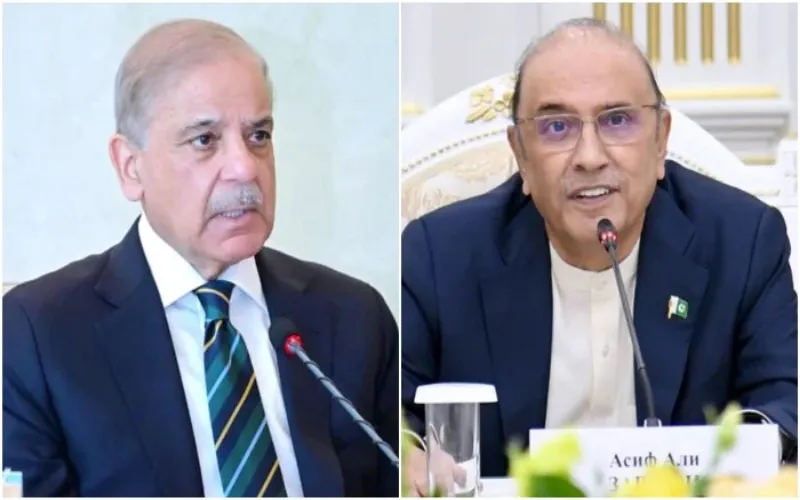
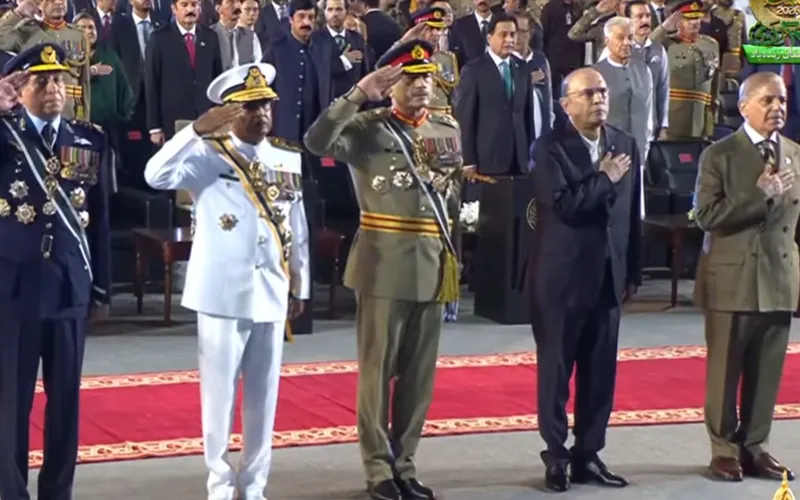
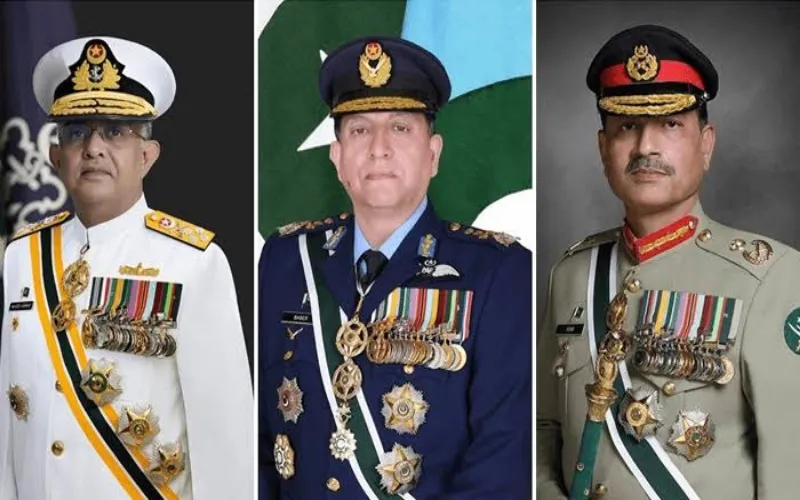
On the eve of Independence Day, President Asif Ali Zardari, Prime Minister Shehbaz Sharif, and Chief of Defence Forces and Chief of Army Staff Field Marshal Asim Munir jointly inaugurated Yadgar-e-Fatah in Islamabad.
The monument commemorates Pakistan’s military performance during the May 2025 conflict with India. The fighting ended with a cease-fire on May 10 after several days of hostilities between the two nuclear-armed neighbors.
ISPR releases new patriotic song
The Inter-Services Public Relations (ISPR) has released a new national song, “Mera Pyara Watan Pakistan,” to mark Independence Day.
The song features Gilgit-Baltistan-based singer Majid Ahmer and celebrates love for the homeland, national unity and loyalty to Pakistan. It also highlights the region’s scenic valleys and natural beauty.
Celebrations sweep across Pakistan
Independence Day is being observed with traditional zeal across Pakistan, including Azad Jammu and Kashmir and Gilgit-Baltistan.
From major cities to smaller towns, streets and public spaces are reflecting the national spirit through flags, lights and decorations, while people participate in ceremonies, cultural events and patriotic activities.
As Pakistan marks 79 years as an independent state, Aug. 14 serves as both a celebration of freedom and a reminder of the struggle, sacrifices and responsibilities that have shaped the country’s journey.