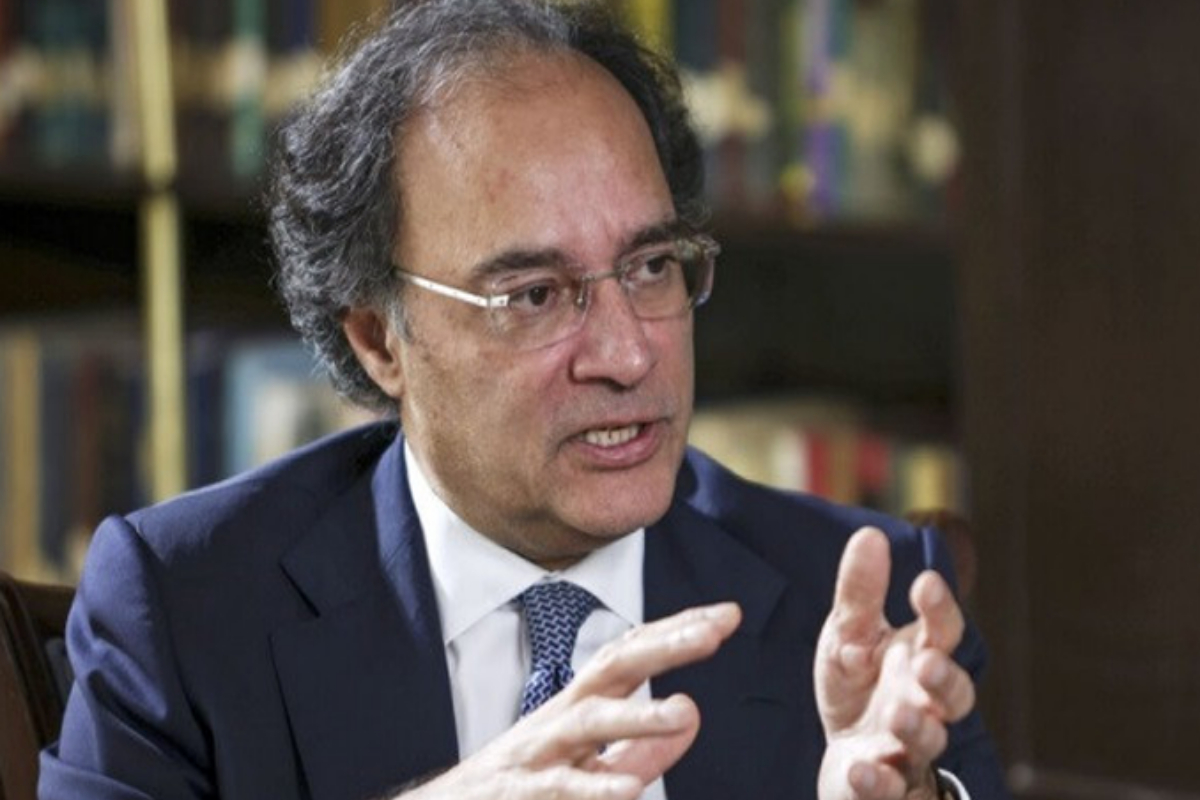
KARACHI: Pakistan’s economy grew at 3.7% during the current fiscal year, falling short of the government’s 4% target but demonstrating resilience amid global uncertainty and domestic challenges, Finance Minister Muhammad Aurangzeb said Thursday while presenting the Economic Survey 2025-26.
The country’s total economic output surpassed $452 billion, Aurangzeb said, with the services sector leading expansion at 4.9% growth, followed by petroleum at 5% and agriculture at 2.89%.
“Despite internal and external challenges, the national economy performed well,” the finance minister said, citing monsoon disruptions and U.S. tariff pressures among the headwinds faced during the year.
Overseas remittances emerged as a pillar of external stability, exceeding $33 billion in the first 10 months of the fiscal year, a 9% increase over the prior period. Foreign exchange reserves stood above $17 billion and were expected to reach $18 billion by the end of June, Aurangzeb said.
Investment in Roshan Digital Accounts, a government initiative targeting the diaspora, reached $12.7 billion. The government also successfully issued a Panda Bond during the period.
The fiscal deficit narrowed sharply to 0.7% of GDP, which Aurangzeb attributed to strict fiscal discipline. FBR tax revenues rose 10.1%, with overall tax collections up 11.3%. FBR Chairman Rashid Langrial said collections had increased 46% over two years.
Average inflation declined to 6.7%, continuing a downward trend over the past two years. The current account deficit fell to $252 million.
Improvement was recorded in 16 of 22 large-scale manufacturing sectors. Cement demand rose 10% and fertilizer demand climbed 17%. Agricultural loans increased 15%, while dairy and livestock continued to dominate farming output, accounting for 60% of the agricultural economy.
The number of registered companies reached 300,000, and the literacy rate stood at 63%, according to the survey.
Pakistan-made footballs are set to be used at the FIFA World Cup, Aurangzeb noted, citing it as an example of the country’s manufacturing credentials on the global stage.
Planning Minister Ahsan Iqbal used the occasion to call for sustained economic policymaking, warning that frequent political disruptions had cost the country decades of potential growth.
“We have suffered due to a lack of continuity in policies,” Iqbal said. “Development is a Test match, policies need to be given time to succeed.”
Iqbal drew a sharp contrast between Pakistan’s foreign investment performance and that of regional peers, noting that Vietnam, with roughly 100 million people, attracts $38 billion in foreign direct investment annually, while Pakistan, with 250 million people, draws only $1.5 to $2 billion.
He said nine million Pakistanis abroad send $40 billion in remittances annually, while 250 million people living inside the country export the same amount underscoring what he described as a fundamental failure to build an export-driven economy over 70 years.
Chairman Arif Habib Group, Arif Habib said the budget, expected to be presented Thursday, should prioritize employment creation and export growth. “If the economy improves, the common man will get relief,” he said.