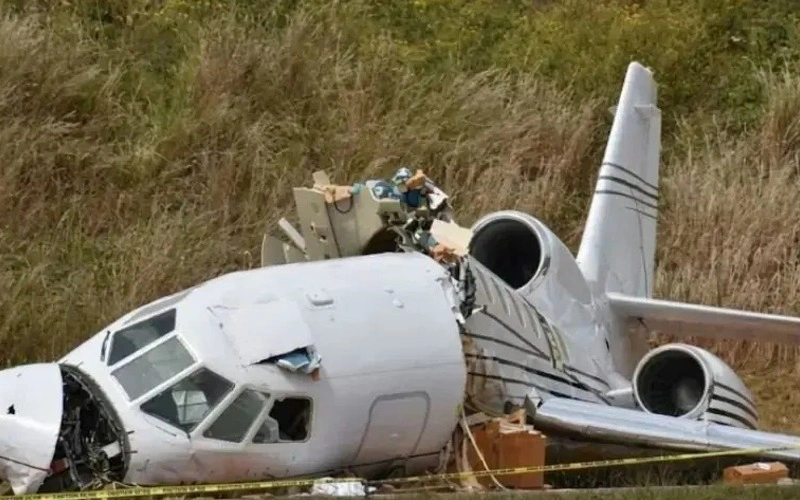
Alaska: A charter flight carrying eight people ended in tragedy Thursday when the aircraft crashed near a remote U.S. military radar facility in western Alaska, killing everyone aboard and triggering an investigation into the cause of the accident.
The twin-engine Cessna 441, operated by Anchorage-based Security Aviation, was flying from Ted Stevens Anchorage International Airport to Cape Newenham when it crashed west of the Cape Newenham Long Range Radar Site Airport at about 12:15 p.m. local time, according to the Federal Aviation Administration.
The aircraft was carrying two pilots and six passengers, National Transportation Safety Board Alaska region chief Clint Johnson said.
The flight was a civilian-contracted aircraft supporting work connected to the remote radar facility, although officials have not disclosed the specific mission being carried out by those on board.
The Cape Newenham facility is about 450 miles west of Anchorage and forms part of a network of remote radar sites used to monitor aircraft operating in Alaska’s airspace and along its borders. The site is managed by the Pacific Air Forces Regional Support Center and is served by military and authorized charter flights.
Read More: Alaska deep-sea “Golden Orb” mystery unlocked by researchers
The crash brought a rapid response from search and recovery personnel operating in the remote area. The Alaska Rescue Coordination Center had launched a search-and-rescue operation after receiving a report of an aircraft incident near the radar site.
U.S. Air Force Lt. Gen. Robert Davis, commander of Alaskan Command, the Alaskan North American Aerospace Defense Command Region and the 11th Air Force, described the deaths as a “devastating loss” for the military community and the communities it serves.
“These individuals were dedicated professionals carrying out a vital mission in a demanding environment,” Davis said. He said the military’s immediate priority was providing support to the victims’ families, friends and colleagues.
Davis also expressed appreciation for the search and recovery teams who responded to the crash, calling their efforts swift and tireless.
The incident has drawn attention to the challenges of operating aircraft in Alaska’s remote regions, where long distances, rugged terrain and limited access can complicate emergency response and recovery operations.
Officials have not yet determined what caused the aircraft to crash. The FAA and NTSB are investigating, and authorities are expected to examine the aircraft’s flight path, weather conditions, mechanical systems and other factors as they work to establish what happened.
The identities of those killed had not been publicly released as of Friday as authorities continued working through the notification process and the investigation remained in its early stages.
The crash is another painful loss for Alaska’s aviation community, where charter aircraft play an important role in connecting remote facilities and communities that are difficult to reach by road. The investigation is expected to provide more details about the circumstances surrounding the flight and the moments before the crash.